
Species Guide
The Complete Guide to Wild Pacific Halibut
Firm, white-fleshed, and clean-tasting. The wild Pacific halibut we add to a Popsie box.
Key Takeaways
- The largest flatfish in the Pacific Ocean — mature halibut commonly weigh 25–100 pounds and can exceed 500 pounds in rare cases.
- Mild, sweet, clean flavor with firm white flesh — halibut is often called the “steak of the sea” and is the top choice for people who don’t like fishy-tasting fish.
- Exceptional protein source — a 6 oz cooked serving delivers about 38 grams of protein with under 3 grams of fat (USDA), making it one of the leanest wild fish available.
- Alaska halibut season runs March through November — with peak harvest in June through August. Flash-frozen halibut is available year-round.
- Don’t forget the cheeks — halibut cheeks are the most tender, sweetest cut on the fish and a hidden gem most consumers never discover.
- The #1 cooking mistake is overcooking — halibut is lean and dries out fast. Many cooks pull it at 130–135°F; the FDA recommends cooking seafood to 145°F, and pregnant women, young children, older adults and anyone with a weakened immune system should follow that advice. Always add a fat source (butter, oil, sauce).
In This Guide
1. Species Overview & Identification
Pacific halibut — scientifically known as Hippoglossus stenolepis — is the largest flatfish in the Pacific Ocean and one of the most commercially valuable fish species in North America. The name “halibut” derives from Middle English haly (holy) and butte (flatfish), because it was traditionally eaten on Catholic holy days. Among fishermen and seafood lovers, it has earned a more evocative title: the steak of the sea.
Quick Facts at a Glance
Identifying Pacific Halibut
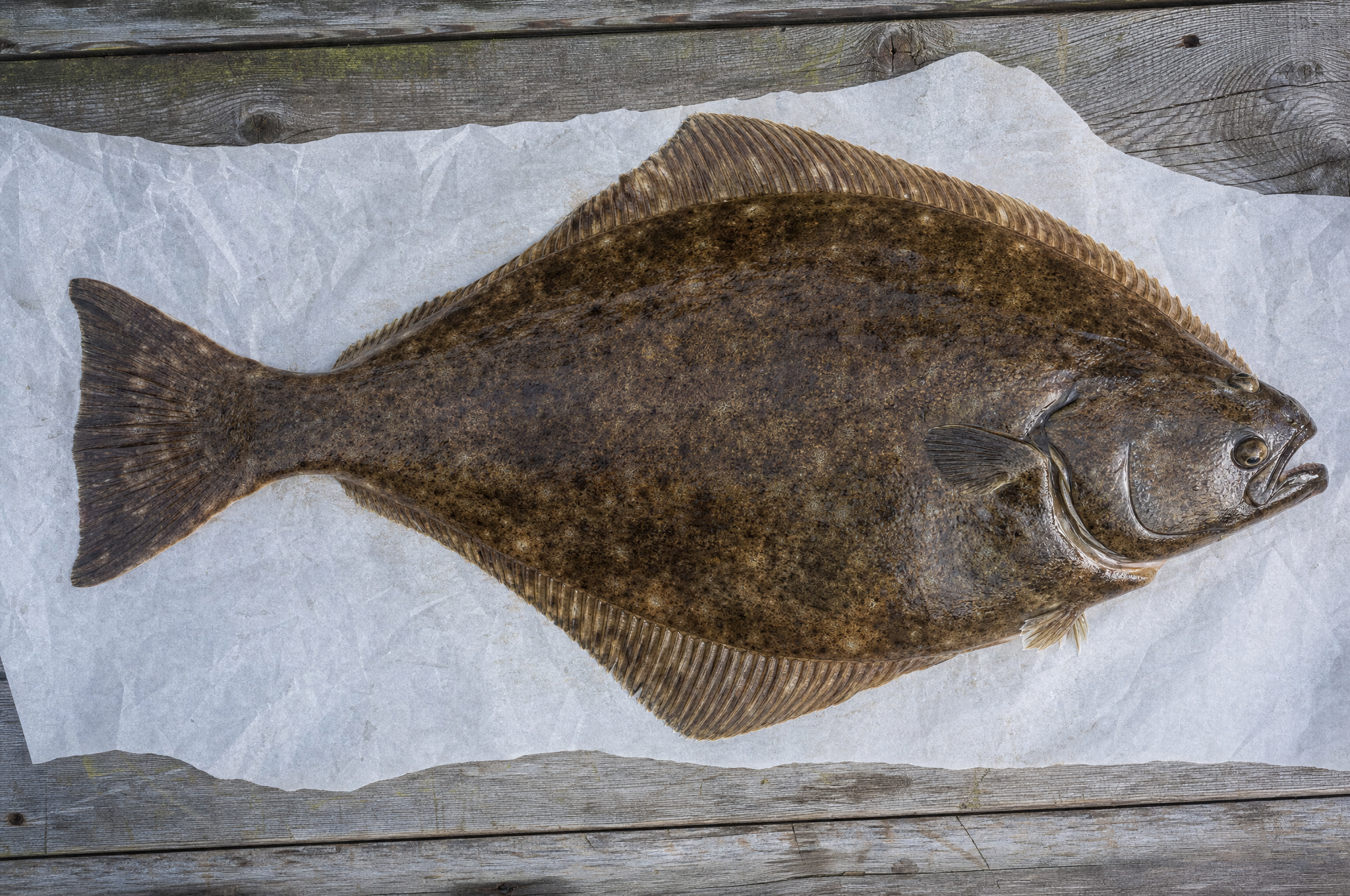
Halibut are flatfish, which means they live and swim on their sides along the ocean floor. An adult Pacific halibut has a diamond-shaped body that is dark brown to olive green on its “top” side (the eyed side that faces up) and pure white on its “bottom” side (the blind side that rests against the seafloor). This two-toned coloring is a form of camouflage: the dark upper side blends with the ocean floor when viewed from above, while the white underside blends with the bright surface when viewed from below.
Pacific halibut are truly massive fish. While the average commercially harvested halibut weighs between 25 and 100 pounds, the species can grow far larger. Females (which grow much bigger than males) regularly exceed 200 pounds, and the largest documented Pacific halibut weighed over 500 pounds and measured more than 8 feet long. A 300-pound halibut is roughly the size of a barn door — and fishermen in Alaska sometimes call the biggest ones exactly that: “barn doors.”
The Remarkable Life Cycle of a Flatfish
Halibut begin life looking nothing like the flat, bottom-dwelling adults they will become. When a halibut egg hatches, the larva looks like a normal, symmetrical fish with one eye on each side of its head. Over the first six months of life, something extraordinary happens: the left eye migrates across the top of the skull to the right side. The young fish simultaneously rotates its body and settles to the ocean floor, now swimming flat with both eyes facing upward. This metamorphosis is one of the most dramatic physical transformations in the vertebrate world.
Pacific halibut are slow-growing, long-lived fish. They can live up to 55 years, though most commercially harvested halibut are between 8 and 15 years old. Females grow significantly larger than males — a 15-year-old female may weigh 80–100 pounds, while a male of the same age might only reach 25–40 pounds. Halibut spawn in deep water (600–1,500 feet) during the winter months, from November through March. A single large female can release 2 to 3 million eggs per spawning event, though very few survive to adulthood.
Range and Habitat
Pacific halibut range across the northern Pacific Ocean from the coasts of Northern California and Oregon northward through British Columbia, across the Gulf of Alaska, throughout the Aleutian Islands, and into the Bering Sea. Some populations extend westward to the coasts of Russia and Japan. However, Alaska is the heartland of the Pacific halibut fishery, producing the vast majority of the U.S. commercial harvest.
Adult halibut are bottom-dwellers, living on the continental shelf at depths ranging from about 20 feet to more than 3,000 feet. They prefer sandy, gravelly, or muddy bottoms where they can lie flat and ambush prey. Despite their size and flat body shape, halibut are active, aggressive predators. They feed on a wide range of prey including cod, pollock, rockfish, octopus, crab, shrimp, and other flatfish. Their large mouths and powerful jaws allow them to take surprisingly large prey.
Why Halibut Is Called the “Steak of the Sea”
The comparison to steak is not arbitrary. Halibut shares several qualities with a premium cut of beef: it has a firm, dense, meaty texture that holds up to any cooking method. It can be sliced into thick steaks. It has a clean, mild flavor that appeals to people who find other fish too “fishy.” And like a good steak, the quality of halibut comes down to sourcing and preparation — a well-cooked piece of wild Pacific halibut is one of the finest eating experiences in all of seafood.
The gateway fish: If someone in your life says they “don’t like fish,” Pacific halibut is the fish most likely to change their mind. Its mild, sweet, completely non-fishy flavor and steak-like texture make it the most approachable premium seafood available. Start here, and you may create a seafood lover for life.
Halibut Cheeks: The Hidden Gem
Most consumers buy halibut as fillets or steaks and never encounter the cheek — which is a shame, because halibut cheeks are arguably the single finest cut on the entire fish. Each halibut has two cheeks, circular medallions of dense muscle removed from either side of the head. On a large halibut, each cheek can weigh 4–8 ounces.
What makes halibut cheeks special is their texture. The cheek muscle works constantly as the fish opens and closes its mouth, giving the meat an incredibly dense, almost scallop-like texture that is more tender and sweeter than any fillet. Pan-seared halibut cheeks, browned and crispy on the outside with a buttery center, are considered a delicacy in Alaska and the Pacific Northwest. If you see them on a restaurant menu or at a fish counter, do not pass them up.
Shop Wild Halibut2. Flavor, Texture & Culinary Profile
If king salmon is the Wagyu of the sea, Pacific halibut is the filet mignon — lean, clean, refined, and universally appealing. Halibut is the fish that wins over the people who insist they do not like fish, and it is the species that professional chefs turn to when they want a white-fleshed canvas that elevates any preparation.
What Halibut Tastes Like
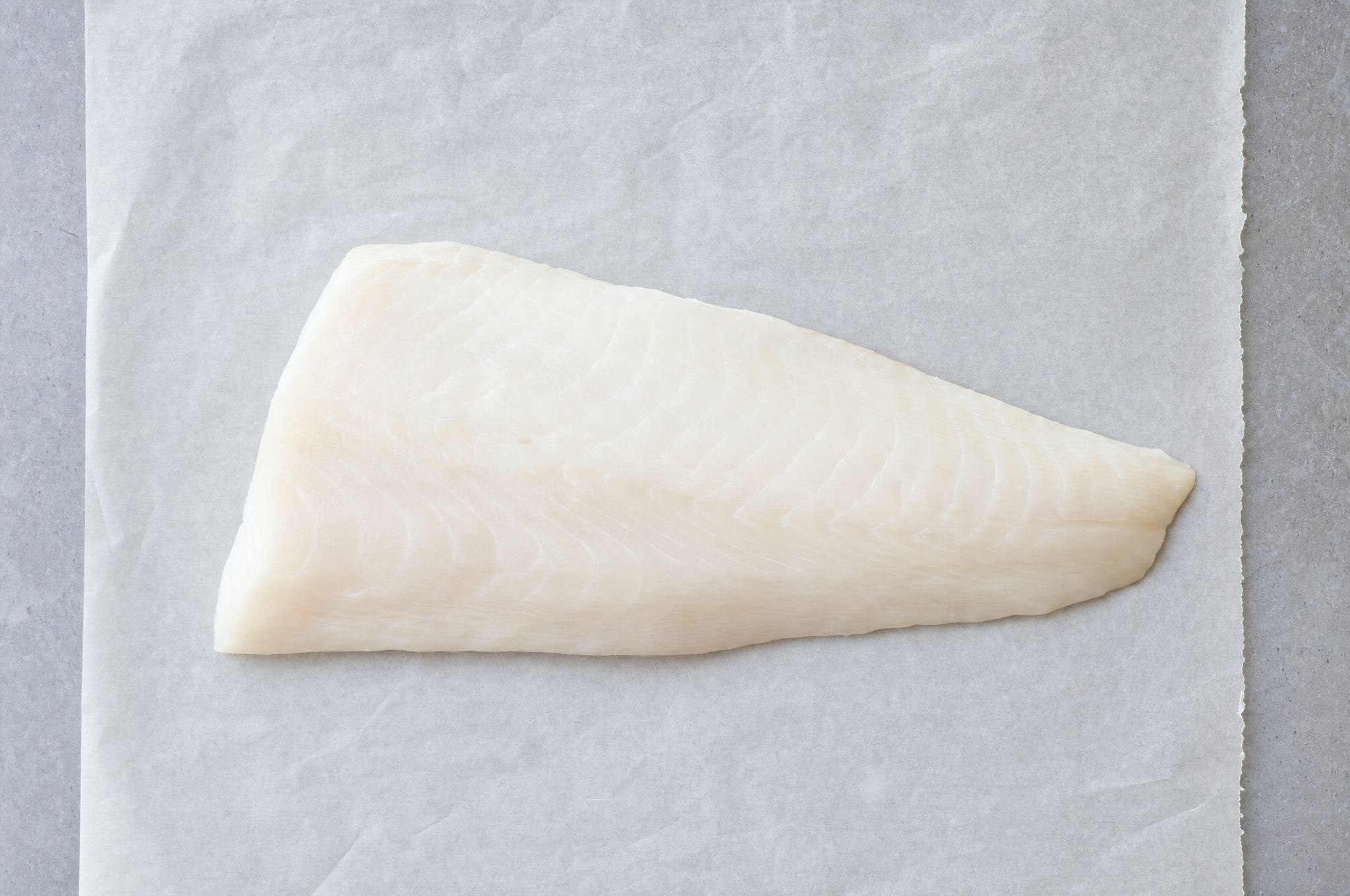
Pacific halibut has a mild, sweet, clean flavor with virtually no “fishy” taste. The flesh is pure white when raw and cooks to a pearlescent, snowy white. The sweetness is subtle — not sugary, but a natural, delicate sweetness that emerges especially when the fish is pan-seared or roasted. The flavor is gentle enough to pair with almost any seasoning, sauce, or cuisine, yet distinctive enough that a perfectly cooked piece of halibut needs nothing more than salt, pepper, and a squeeze of lemon.
The texture is where halibut truly distinguishes itself. The flesh is firm, dense, and meaty — much firmer than cod, snapper, or tilapia. Halibut flakes into large, clean, satisfying pieces that hold their shape on the plate and feel substantial in the mouth. There is a pleasant density to each bite that explains why so many people compare it to steak. Unlike flaky, delicate white fish, halibut can be grilled, skewered, and even sliced into thick steaks without falling apart.
The Gateway Fish for Non-Fish Eaters
Halibut occupies a unique position in the seafood world: it is the fish most likely to convert someone who claims not to enjoy fish. The reasons are straightforward. There is no fishiness whatsoever. The aroma is clean and oceanic, not pungent. The texture is meaty and familiar, not soft or slimy. And the flavor is mild enough that it does not challenge the palate the way a strong-flavored fish like mackerel, sardine, or even salmon can.
If you are cooking for a mixed audience — some seafood lovers, some skeptics — halibut is your safest premium choice. It reads as special-occasion quality to the people who appreciate great fish, while remaining approachable to those who are still warming up to seafood.
How Halibut Compares to Other White Fish
- Halibut vs. Cod: Cod is flaky, soft, and mild. Halibut is firmer, denser, sweeter, and commands a higher price. Cod falls apart easily; halibut holds its structure. Both are mild, but halibut has more presence on the plate.
- Halibut vs. Mahi Mahi: Mahi mahi is a tropical fish with a slightly stronger, more assertive flavor and a pink tinge to the flesh. Halibut is milder, sweeter, and has a more refined texture. Both grill well, but halibut is the premium choice.
- Halibut vs. Grouper: Grouper has a similar firmness and mild flavor, but a slightly coarser texture. Halibut is cleaner in taste, finer in flake, and harder to find outside coastal areas. Both are excellent for grilling and pan-searing.
- Halibut vs. Sea Bass: Chilean sea bass (Patagonian toothfish) is rich, buttery, and high in fat — the opposite end of the spectrum from lean halibut. Sea bass is forgiving to cook due to its fat; halibut requires more care to keep moist but rewards you with a lighter, cleaner eating experience.
The versatility factor: Halibut may be the most versatile fish in the ocean. It can be pan-seared with a golden crust, baked with a simple herb topping, grilled over charcoal, deep-fried into the world’s finest fish and chips, poached in court-bouillon, broiled under high heat, turned into ceviche, or even served as sashimi. No other white fish spans that many cooking methods with equal success.
3. Complete Nutritional Breakdown
Halibut is one of the most nutrient-dense lean proteins available. It delivers an exceptional amount of complete protein with very little fat, along with significant amounts of B vitamins, selenium, and omega-3 fatty acids. For anyone focused on high-protein, low-fat eating — whether for fitness, weight management, or general health — halibut is hard to beat.
Nutrition Per 6 oz (170g) Cooked Serving
| Nutrient | Amount | % Daily Value |
|---|---|---|
| Calories | 189 | — |
| Protein | 38 g | 77% |
| Total Fat | 2.7 g | 4% |
| Omega-3s (EPA + DHA) | About 400 mg | — |
| Vitamin B12 | 2.2 mcg | 92% |
| Vitamin D | 9.9 mcg (390 IU) | 50% |
| Selenium | 94 mcg | 171% |
| Potassium | ~900 mg | ~19% |
| Saturated Fat | ~0.6 g | ~3% |
| Cholesterol | 102 mg | 34% |
Nutritional values from USDA FoodData Central: halibut (Atlantic and Pacific), cooked, dry heat (FDC 174201); USDA has no Pacific-only halibut entry, and there is no Daily Value for omega-3s. Exact amounts vary by individual fish, preparation method, and portion size.
The Protein Powerhouse
Halibut’s protein-to-calorie ratio is remarkable. With about 38 grams of protein per 6 oz cooked serving and about 190 calories, halibut delivers a lot of protein for very few calories. For athletes, bodybuilders, or anyone tracking macros, it is one of the most efficient protein sources available.
The protein in halibut is complete, meaning it contains all nine essential amino acids in the proportions your body needs. It is also highly bioavailable — your body absorbs and utilizes a larger percentage of fish protein compared to plant-based protein sources.
Omega-3s in Halibut
While halibut has far less omega-3 than salmon (wild sockeye has about 3.7 times halibut’s EPA + DHA, gram for gram), it still provides a meaningful dose of EPA and DHA — about 400 mg per 6 oz cooked serving (USDA). There is no official U.S. daily target for EPA and DHA. Halibut also has the advantage of being very low in total fat and saturated fat, making it an excellent choice for people who want omega-3 benefits without the caloric density of fattier fish.
Selenium: The Standout Mineral
Halibut is one of the best dietary sources of selenium, providing about 171% of the Daily Value per 6 oz cooked serving. Selenium is an essential trace mineral that functions as an antioxidant, supports thyroid function, boosts immune response, and plays a role in DNA synthesis. Selenium also has a well-documented relationship with mercury — it binds to mercury in the body and may help reduce mercury’s potential effects, which is relevant for any discussion of seafood safety.
Mercury Considerations
Pacific halibut has moderate mercury levels, placing it in the FDA’s “Good Choices” category (one step below “Best Choices”). For people who are pregnant or breastfeeding, the FDA/EPA advice is 1 serving a week from this category and no other fish that week. In FDA testing, halibut averages 0.241 ppm mercury (median 0.188 ppm) — about 11 times salmon (0.022 ppm) but much lower than swordfish (0.995 ppm) or king mackerel (0.73 ppm).
The mercury in halibut is influenced by the fish’s size and age — larger, older halibut tend to accumulate more. Eating halibut once a week fits within the FDA/EPA advice; if you are pregnant or breastfeeding, make it your only fish that week.
4. Best Cooking Methods for Halibut
Halibut is one of the most versatile fish in the kitchen, but it has one critical vulnerability: it is lean, which means it dries out quickly when overcooked. The number one mistake home cooks make with halibut is treating it like a forgiving, fatty fish such as salmon. Halibut has roughly one-eighth the fat content of king salmon, so it needs more attention, more added fat, and a lower target temperature. Respect the lean, and halibut rewards you with one of the finest eating experiences in all of seafood.
The golden rule of halibut: Don’t cook past your target. Many cooks prefer an internal temperature of 130–135°F, where the flesh is opaque, moist, and holds together in firm, beautiful flakes. The FDA recommends cooking seafood to 145°F, and pregnant women, young children, older adults and anyone with a weakened immune system should follow that advice. Whichever target you use, take the fish off the heat as it gets there and let it rest for 2–3 minutes. And always, always, add fat: butter baste in the pan, olive oil before baking, or a rich sauce on the plate.
Pan-Searing (Most Popular)
The best way to showcase halibut. Heat a cast-iron or stainless steel skillet with oil until shimmering. Pat fillets bone-dry. Sear presentation-side down for 3–4 minutes until deeply golden. Flip, add butter, garlic, and fresh thyme. Baste continuously for 2–3 minutes. The butter baste is not optional — it is what keeps lean halibut moist and adds richness.
Medium-High Heat 3–4 min + 2–3 min basteBaking (Weeknight Easy)
The most forgiving oven method. Preheat to 375°F. Place seasoned fillets on a parchment-lined sheet pan, drizzle generously with olive oil or dot with butter. Bake until the center is just opaque. For extra moisture, bake on a bed of sliced tomatoes, onions, and olives — the vegetables release steam and flavor that keep the fish moist.
375°F 12–16 min for 1" filletsGrilling (Needs Care)
Halibut steaks are better for the grill than fillets — the bone helps hold the fish together. Oil the grates thoroughly, oil the fish thoroughly, and use direct medium heat. Do not move the fish until it releases naturally. Halibut can stick and dry out on the grill, so watch it closely and err on the side of undercooking. A grill basket or cedar plank can help.
Medium Direct Heat 4–5 min per sidePoaching (Gentle & Elegant)
Court-bouillon poaching produces the most delicate, moist halibut possible. Bring a shallow pan of water, white wine, lemon, peppercorns, and aromatics to a bare simmer (not a boil). Slide in the fillets and poach gently until just cooked through. The fish absorbs subtle flavor from the liquid while staying perfectly moist. Serve with a beurre blanc or herb sauce.
170–180°F Liquid 8–12 minDeep Frying (Fish & Chips)
Halibut is the premium choice for fish and chips — its firm texture holds up perfectly inside a crispy batter. Use a light beer batter or tempura-style coating. Fry at 375°F until deep golden, about 4–5 minutes depending on thickness. The firm flesh stays moist inside the hot, crunchy shell. Serve with malt vinegar and tartar sauce.
375°F Oil 4–5 minBroiling (Quick High Heat)
Position a rack 6 inches from the broiler. Place seasoned fillets on a foil-lined sheet pan, brush generously with butter or oil. Broil without flipping — the intense top heat caramelizes the surface while the interior stays moist. This is an excellent method for glazed preparations: miso glaze, honey-soy, or Dijon-herb.
High Broil (500°F+) 6–9 min for 1" filletsWhy Halibut Needs Added Fat
Halibut contains about 3 grams of fat per 6 oz cooked serving, compared to about 23 grams in the same portion of king salmon. This lean profile is great for nutrition but challenging in the kitchen. Without added fat, halibut goes from perfectly cooked to dry, chalky, and unappetizing in just a minute or two of extra cooking. The solution is simple: always cook halibut with a generous amount of added fat.
- Butter baste: The classic technique. Add butter to the pan after searing and spoon it continuously over the fish. This is the single most important thing you can do for pan-seared halibut.
- Olive oil drizzle: Before baking, coat halibut generously with good olive oil. It prevents sticking and adds moisture throughout cooking.
- Compound butter: Place a disk of herb butter (parsley, chives, lemon zest) on top of the cooked fillet and let it melt over the fish at the table.
- Rich sauces: Beurre blanc, lemon cream, romesco, pesto, or brown butter with capers. A sauce on the plate is both flavor and insurance against any dryness.
- Bacon or pancetta wrap: Wrapping halibut in thin-sliced bacon before baking or grilling adds fat, flavor, and a crispy exterior.
Common Mistakes to Avoid
- Overcooking: The number one mistake by a wide margin. Lean halibut dries out quickly once it passes your target. Many cooks prefer 130–135°F; the FDA recommends cooking seafood to 145°F, and pregnant women, young children, older adults and anyone with a weakened immune system should follow that advice. Use an instant-read thermometer until you develop a feel for the timing.
- Skipping the fat: Cooking halibut without added butter, oil, or sauce is a recipe for dry fish. This is not salmon — halibut cannot carry itself on its own fat.
- Using too-thin pieces: Thin tail-end portions overcook almost instantly. Ask for center-cut fillets at least 1 inch thick for the most forgiving cooking experience.
- Not drying the surface: Pat fillets completely dry before pan-searing or grilling. Surface moisture prevents browning and causes sticking.
- Moving it too soon: Whether on a grill or in a pan, let the fish develop its crust before attempting to flip. It will release naturally when ready.
- Cooking straight from the fridge: Let halibut sit at room temperature for 15–20 minutes before cooking. A cold center means the outside overcooks before the interior is done.
5. How to Buy Halibut
Understanding the different cuts, what to look for at the fish counter, and how Popsie’s halibut fits into our mix-and-match system will help you get the best value and the best eating experience from every purchase.
Cuts of Halibut: Cheeks vs. Fillets vs. Steaks
- Fillets (boneless portions): The most common cut. Fillets are taken from the four quadrants of the halibut — two from the top (eyed) side and two from the bottom (blind) side. Center-cut fillets (1–1.5 inches thick) are the best all-purpose choice for home cooking because they cook evenly.
- Steaks (bone-in cross-cuts): Cut across the body, halibut steaks include a section of the central bone. Steaks hold together better on the grill and the bone adds flavor during cooking. They are slightly more forgiving than fillets because the bone slows cooking near the center.
- Cheeks: The hidden gem. Each halibut has two cheek muscles, removed from the sides of the head. On a large fish, each cheek weighs 4–8 ounces. Cheek meat is the most tender, sweetest, densest cut on the entire fish — often compared to the texture of a large sea scallop. If you have never tried halibut cheeks, start here. Pan-sear them in butter and prepare to be amazed.
- Collar: The collar section (behind the gills) is another underrated cut. It has more connective tissue and fat than the fillets, making it incredibly flavorful when grilled or broiled. Popular in Japanese cuisine as kama.
The halibut cheek secret: Most grocery stores and even many fish markets do not carry halibut cheeks because they are a small yield per fish and most consumers do not know to ask for them. The cheeks are typically snapped up by restaurants and in-the-know seafood lovers. Popsie sells halibut portions, not cheeks, so if you spot cheeks at a fish counter or on a menu, try them — they are the single best-kept secret in the halibut world.
What to Look For: Freshness Indicators
- Color: Fresh halibut flesh should be translucent white to slightly off-white with a faint pearlescent sheen. Avoid any pieces with browning, yellowing, or dullness at the edges — these signs indicate age.
- Firmness: Press the flesh gently with your finger. Fresh halibut should spring back immediately. If the indentation holds, the fish is past its prime.
- Smell: Good halibut smells like clean ocean air — mild, briny, and fresh. Any strong, sour, or ammonia-like odor means the fish has turned. Fresh halibut has very little smell at all.
- Moisture: The surface should be moist but not slimy. A sticky or tacky surface is a sign of bacterial growth.
- Gaping: Look at the seams between the muscle fibers. If they are separating (called “gaping”), the fish has been mishandled or is old. Fresh halibut has tight, smooth fibers.
Fresh vs. Frozen: The Quality Question
As with salmon, properly flash-frozen halibut is often equal to or better in quality than “fresh” halibut at the fish counter. Wild Pacific halibut is caught in remote Alaskan waters. By the time a “fresh” fillet travels from boat to processor to distributor to your local store, it may be 7–12 days post-catch. Meanwhile, halibut that is flash-frozen within hours of harvest locks in peak freshness at the point of catch. When you thaw it at home, the quality often surpasses what you would find at even a good fish counter.
Price Context: Understanding the Premium
Halibut is a premium fish — it is typically the most expensive white fish at the counter, and its price reflects several factors: the remoteness of the fishery, strict catch limits under the IFQ system, the short season, and strong demand from restaurants and consumers alike. However, when you calculate the cost per gram of protein, halibut is surprisingly competitive. At about 38 grams of protein per 6 oz cooked serving with almost no waste, halibut delivers more usable protein per dollar than many cuts of premium steak. You are paying for quality, purity, and one of the best-managed fisheries on Earth.
Popsie’s Halibut & Mix-and-Match Pricing
Popsie Fish Co offers wild Pacific halibut through our current seafood and box-size options. Review the live product page for available cuts, quantities, and prices before ordering.
- Starter Box (5 lbs): Perfect for trying halibut for the first time or adding a few portions to your freezer.
- Value Box (10 lbs): The most popular option. Mix halibut with salmon for variety.
- Family Box (15 lbs): Stock your freezer and save more per pound. A great option for families who eat fish weekly.
- Freezer Pack (20 lbs): The best per-pound price — ideal for serious seafood households.
6. Storage & Thawing Guide
Proper storage and thawing are critical for halibut — even more so than for fattier fish. Because halibut is so lean, any loss of moisture from poor handling shows up immediately as dry, chalky texture. Treat it right and it will taste like it just came off the boat.
Freezer Storage
Vacuum-sealed wild Pacific halibut keeps its best quality for 6–12 months in a standard home freezer (0°F / -18°C or below). After 12 months, the fish remains safe to eat but may develop freezer flavors and a drier texture. Store packages in the coldest part of your freezer — against the back wall, away from the door. Avoid stacking heavy items on top of halibut portions, as pressure can damage the cellular structure.
Thawing Methods
Refrigerator Thaw (Recommended)
Before refrigerator thawing, open or remove the vacuum packaging. Place the halibut in a shallow covered container, keep it refrigerated, and follow any package or processor instructions. This slow, gentle thaw preserves the cellular structure and minimizes moisture loss.
Cold Water Thaw (Quick Method)
Place the sealed package in a bowl of cold water. Change the water every 30 minutes to maintain a safe temperature. Most halibut portions thaw in 1–2 hours. This is the best option when you forgot to move the fish to the fridge the night before. Never use warm or hot water — it partially cooks the exterior and creates uneven texture.
Cook From Frozen
Halibut can be baked directly from frozen. Add approximately 50% more cooking time. This works best for baking (400°F, 20–25 min for 1-inch fillets) and works well with a glaze or sauce that adds moisture. Not recommended for pan-searing or grilling from frozen — the exterior overcooks before the center thaws.
Never Microwave Thaw
Microwave thawing is especially damaging to lean fish like halibut. It creates hot spots that partially cook the edges while leaving the center frozen. The result is rubbery patches, uneven texture, and significant moisture loss. Avoid this method entirely for halibut.
After Thawing
- Once thawed, cook within 1–2 days, or use within 24 hours for raw dishes. Keep refrigerated at all times.
- Open or remove the vacuum packaging before refrigerator thawing — place the halibut in a shallow covered container and keep it refrigerated until ready to cook. Follow any package or processor instructions.
- Pat fillets completely dry with paper towels before cooking — this is especially important for halibut, where surface moisture prevents the golden sear that makes pan-seared halibut exceptional.
- Bring halibut to room temperature for 15–20 minutes before cooking for more even results.
- Do not refreeze thawed halibut. The lean flesh is particularly sensitive to the cell damage caused by repeated freeze-thaw cycles.
7. Halibut vs. Other White Fish
Choosing between white fish options can be confusing. These comparison tables break down the key differences to help you pick the right fish for your meal and your budget.
Halibut vs. Cod
This is the most common comparison shoppers face. Both are mild white fish, but the similarities end there.
| Attribute | Pacific Halibut | Pacific Cod |
|---|---|---|
| Flavor | Mild, sweet, clean | Very mild, neutral |
| Texture | Firm, dense, meaty — large flakes | Soft, delicate, flaky — falls apart easily |
| Protein (6 oz cooked) | 38 g | 32 g |
| Fat (6 oz cooked) | 2.7 g | 0.8 g |
| Best Cooking Methods | Pan-sear, grill, bake, broil, fry | Bake, fry, poach, stew |
| Price Point | Premium ($$$$) | Moderate ($$) |
| Best For | Centerpiece protein, special meals | Fish and chips, tacos, casseroles |
Halibut vs. Salmon
Halibut and salmon could not be more different. Choosing between them is not about which is better; it is about what you are in the mood for.
| Attribute | Pacific Halibut | Wild King Salmon |
|---|---|---|
| Flavor | Mild, sweet, clean — no fishiness | Rich, buttery, full — distinctly salmon |
| Flesh Color | Pure white | Deep red-orange (or ivory) |
| Fat (6 oz cooked) | 2.7 g (very lean) | 23 g (very rich) |
| Protein (6 oz cooked) | 38 g | 44 g |
| EPA + DHA (6 oz cooked) | ~400 mg | ~3,000 mg |
| Cooking Forgiveness | Low — dries out if overcooked | High — fat keeps it moist |
| Best For | Non-fish-eaters, lean protein, versatile preparations | Omega-3s, bold salmon flavor, grilling |
Wild Pacific Halibut vs. Atlantic Halibut
There are two species of halibut in the world, and the distinction matters for sustainability.
| Attribute | Pacific Halibut | Atlantic Halibut |
|---|---|---|
| Scientific Name | Hippoglossus stenolepis | Hippoglossus hippoglossus |
| Sustainability Status | Well-managed; healthy stocks; US North Pacific fishery MSC-certified | Endangered / overfished in most of range |
| Primary Source | Alaska, British Columbia, Pacific Northwest | Norway, Iceland (farmed); limited wild |
| Max Size | 500+ lbs, 8+ feet | 700+ lbs, 15 feet (largest flatfish on Earth) |
| Availability | Abundant — well-managed commercial fishery | Rare wild; increasing farmed production |
| Recommendation | Best choice — wild, sustainable, available | Avoid wild-caught; farmed is acceptable |
Halibut vs. Mahi Mahi
| Attribute | Pacific Halibut | Mahi Mahi |
|---|---|---|
| Flavor | Mild, sweet, clean | Mild-moderate, slightly sweet, firmer flavor |
| Texture | Firm, dense, large flakes | Firm, lean, coarser flake |
| Flesh Color | White | Pinkish-white, darkens when cooked |
| Habitat | Cold North Pacific, bottom-dwelling | Tropical/subtropical, surface-swimming |
| Best Cooking Methods | Pan-sear, bake, grill, poach, fry | Grill, blacken, pan-sear, tacos |
| Price Point | Premium ($$$$) | Moderate ($$$) |
8. Sustainability & Fishery Management
The Alaska Pacific halibut fishery is one of the most carefully managed fisheries in the world. When you buy wild Pacific halibut from Alaska, you are supporting a system that has been designed from the ground up to ensure this fishery will be productive for generations to come.
The IPHC: International Stewardship
Pacific halibut is managed by the International Pacific Halibut Commission (IPHC), a bilateral organization established by treaty between the United States and Canada in 1923 — making it one of the oldest fisheries management bodies in the world. The IPHC conducts annual stock assessments, sets total allowable catch limits for each regulatory area, and monitors the fishery through comprehensive data collection from both commercial and sport fishing.
Individual Fishing Quotas (IFQs): A Model System
Since 1995, the Alaska halibut fishery has operated under an Individual Fishing Quota (IFQ) system. Each qualifying fisherman holds a share of the total allowable catch, which they can harvest at any time during the season. This system replaced the old “derby” style of fishing, where the entire fleet raced to catch as much as possible in a short opening (sometimes just 24–48 hours).
The IFQ system transformed the fishery in several important ways. Fishermen can now choose when to fish based on weather and market conditions, which improves safety and product quality. There is no incentive to rush, which means fish are handled more carefully and reach consumers in better condition. And because each fisherman has a personal stake in the long-term health of the resource, there is strong industry support for conservation measures.
Why Pacific Halibut Sustainability Matters
- Annual stock assessments: The IPHC conducts the most extensive flatfish survey in the world, sampling thousands of stations annually to monitor population health, growth rates, and recruitment.
- Catch limits adjusted yearly: Total allowable catch is set based on the latest science, not political or economic pressure. When stocks decline, catch limits are reduced. Period.
- Bycatch monitoring: Halibut bycatch in other fisheries (especially trawl fisheries) is carefully tracked and managed to reduce unintended mortality.
- Habitat protection: Alaska’s cold, clean ocean waters remain largely free of the pollution, development, and habitat degradation that threaten fisheries in other parts of the world.
- Constitutional mandate: Like all Alaska fisheries, halibut management is governed by the Alaska Constitution’s sustained-yield requirement — sustainability is the law.
Popsie’s commitment: Our halibut is wild Alaska halibut, caught by Alaska’s commercial halibut fishermen under IPHC management and packed under the Popsie name. Every fish is handled with care, processed rapidly, and flash-frozen to lock in peak quality. When you buy halibut from Popsie Fish Co, you are getting the best-managed white fish on Earth, handled by fishermen who depend on the long-term health of this resource for their livelihood.
9. Seasonal Availability Calendar
Pacific halibut has one of the longer fishing seasons among Alaska species, running from March through November. Peak supply and quality hit during the summer months. Flash-frozen halibut is available year-round.
Pro tip: Order during peak summer harvest (June–August) when supply is highest and prices are most competitive. Stock your freezer with flash-frozen halibut and enjoy peak-quality fish all winter long.
10. Halibut Recipes
Ready to cook? Here are our favorite halibut recipes organized by occasion, each designed to showcase the mild sweetness and firm texture of wild Pacific halibut.
Weeknight
Pan-Seared Halibut with Brown Butter & Capers
Golden crust, nutty brown butter, briny capers. The essential weeknight halibut recipe — 20 minutes, one pan.
Weeknight
Baked Halibut with Parmesan Herb Crust
A crispy Parmesan-herb topping adds flavor and protects the fish from drying out. Set it and forget it — 15 minutes in the oven.
Classic
Beer-Battered Halibut Fish & Chips
The gold standard. Light, crispy batter surrounding tender, flaky halibut. Serve with malt vinegar and hand-cut fries.
Classic
Pan-Seared Halibut Cheeks
The hidden gem, showcased simply: seared in butter until golden, finished with lemon and fresh herbs. Scallop-like texture, unforgettable flavor.
Global
Halibut Coconut Curry
Halibut poached in a fragrant Thai-inspired coconut curry with lemongrass, ginger, and lime leaves. Serve over jasmine rice.
Global
Halibut Ceviche with Citrus & Avocado
Fresh halibut cured in lime juice with red onion, cilantro, and creamy avocado. A bright, no-cook preparation perfect for summer.
Meal Prep
Halibut Grain Bowls with Tahini Dressing
Baked halibut over quinoa, roasted vegetables, and greens with a creamy tahini drizzle. Four lunches, 30 minutes of prep.
Meal Prep
Grilled Halibut Tacos with Mango Salsa
Seasoned halibut on warm tortillas with fresh mango salsa, cabbage slaw, and chipotle crema. A crowd-pleasing meal prep favorite.
11. Frequently Asked Questions
Pacific halibut has a mild, sweet, clean flavor with virtually no fishiness. The flesh is pure white, firm, and dense with large, satisfying flakes. It is often described as the most approachable premium seafood — mild enough for people who do not typically enjoy fish, yet refined enough to stand as the centerpiece of an elegant meal. Many people compare the texture to a lean filet of steak, which is why halibut has earned the nickname “the steak of the sea.”
Extremely. A 6 oz cooked serving of halibut provides about 38 grams of complete protein with about 190 calories and under 3 grams of fat (USDA). It is one of the most protein-dense foods available. Halibut is also an excellent source of selenium (171% DV) and vitamin B12 (92% DV), and provides vitamin D (50% DV) and potassium (19% DV). It provides about 400 mg of EPA + DHA omega-3s per serving. FDA and EPA list halibut as a “Good Choice”: 1 serving a week, with no other fish that week if you are pregnant or breastfeeding.
Several factors contribute to halibut’s premium price. The fishery is managed under strict Individual Fishing Quotas (IFQs) that limit total harvest. The fish is caught one at a time using longlines in remote Alaskan waters, which is labor-intensive. Strong demand from restaurants drives prices higher. And the season, while long (March–November), still limits supply. However, when you calculate cost per gram of protein, halibut is competitive with premium steak — and Popsie’s live product page lets you compare current box sizes and per-pound prices before ordering.
Pan-searing is the most popular and arguably the best method. Heat a cast-iron skillet with oil, sear presentation-side down for 3–4 minutes until golden, flip, then baste with butter, garlic, and herbs for 2–3 minutes. The butter baste is essential — halibut is lean and needs added fat. Other excellent methods include baking (375°F, 12–16 min), poaching in court-bouillon, deep frying for fish and chips, and grilling (use steaks or a grill basket). The key with all methods: don’t overcook it, and never skip the fat. Many cooks pull halibut at 130–135°F; the FDA recommends cooking seafood to 145°F, and pregnant women, young children, older adults and anyone with a weakened immune system should follow that advice.
Three rules. First, do not overcook it — take halibut off the heat as soon as it reaches your target. Many cooks pull it at 130°F and let it rest to 135°F; the FDA recommends cooking seafood to 145°F, and pregnant women, young children, older adults and anyone with a weakened immune system should follow that advice. Second, always add fat: butter baste in the pan, olive oil before baking, compound butter on the finished fillet, or a rich sauce. Halibut has only about 3 grams of fat per 6 oz cooked serving and cannot carry itself like salmon. Third, use center-cut portions at least 1 inch thick — thin pieces overcook too fast. Let the fish sit at room temperature for 15–20 minutes before cooking for more even results.
Halibut cheeks are exceptional — many chefs and serious seafood lovers consider them the finest cut on the entire fish. Each halibut has two cheeks (4–8 oz each on a large fish), which are circular medallions of dense muscle from the sides of the head. The texture is remarkably tender and dense, often compared to a large sea scallop. The flavor is sweeter and more concentrated than fillet meat. Pan-sear them in butter until golden on both sides for one of the best seafood experiences available. If you see halibut cheeks on a menu or at a fish counter, always order them.
Yes — the Alaska Pacific halibut fishery is one of the best-managed fisheries in the world. It is overseen by the International Pacific Halibut Commission (IPHC), established by treaty in 1923. Since 1995, Alaska has used an Individual Fishing Quota (IFQ) system that gives each fisherman a share of the total allowable catch, eliminating destructive derby-style fishing. The IPHC conducts annual stock assessments and adjusts catch limits based on the latest science. Alaska’s constitution mandates sustained-yield management. When you buy wild Pacific halibut from Alaska, you are supporting one of the gold standards in global fisheries management.
Yes. Halibut is excellent raw — it has a clean, sweet flavor and firm texture that works beautifully as sashimi, crudo, or ceviche. “Sushi-grade” is not a government-regulated term; what matters is how the fish is handled and frozen. Our halibut is flash-frozen to meet the FDA’s parasite-destruction freezing guidance for fish eaten raw, so we sell it as sashimi-grade. Thaw it in the refrigerator, keep it cold, and use it within 24 hours for raw dishes. For ceviche, dice thawed halibut into small cubes and cure in citrus juice for 20–40 minutes; the acid “cooks” the exterior while the center stays delicate and tender. Citrus in ceviche does not kill parasites; the freezing does. Freezing controls parasites, not bacteria, so the FDA advises pregnant women, young children, older adults and anyone with a weakened immune system to eat seafood cooked to 145°F.
Both are mild white fish, but halibut is firmer, denser, sweeter, and more expensive. Cod has a soft, flaky texture that falls apart easily, while halibut has large, firm flakes that hold their shape on the plate and grill. Halibut has more protein per serving (about 38g vs. 32g per 6 oz cooked serving). Cod works well in preparations where the fish breaks apart (fish and chips, chowder, tacos), while halibut excels as a standalone centerpiece protein where you want structure and presence. Both are excellent fish; halibut is the premium choice.
Vacuum-sealed, flash-frozen wild Pacific halibut keeps its best quality for 6–12 months at 0°F (-18°C) or below. After 12 months it remains safe to eat but may develop freezer flavors and a drier texture. Store in the coldest part of your freezer, away from the door. Once thawed, keep the halibut refrigerated out of its vacuum packaging in a shallow covered container and cook it within 1–2 days, or use it within 24 hours for raw dishes. Follow any package or processor instructions for storage and refreezing.
Explore More Species Guides
Ready to Taste the Steak of the Sea?
Wild Pacific halibut, flash-frozen at peak freshness and shipped directly to your door. Build your custom box — mix halibut with salmon and save.