
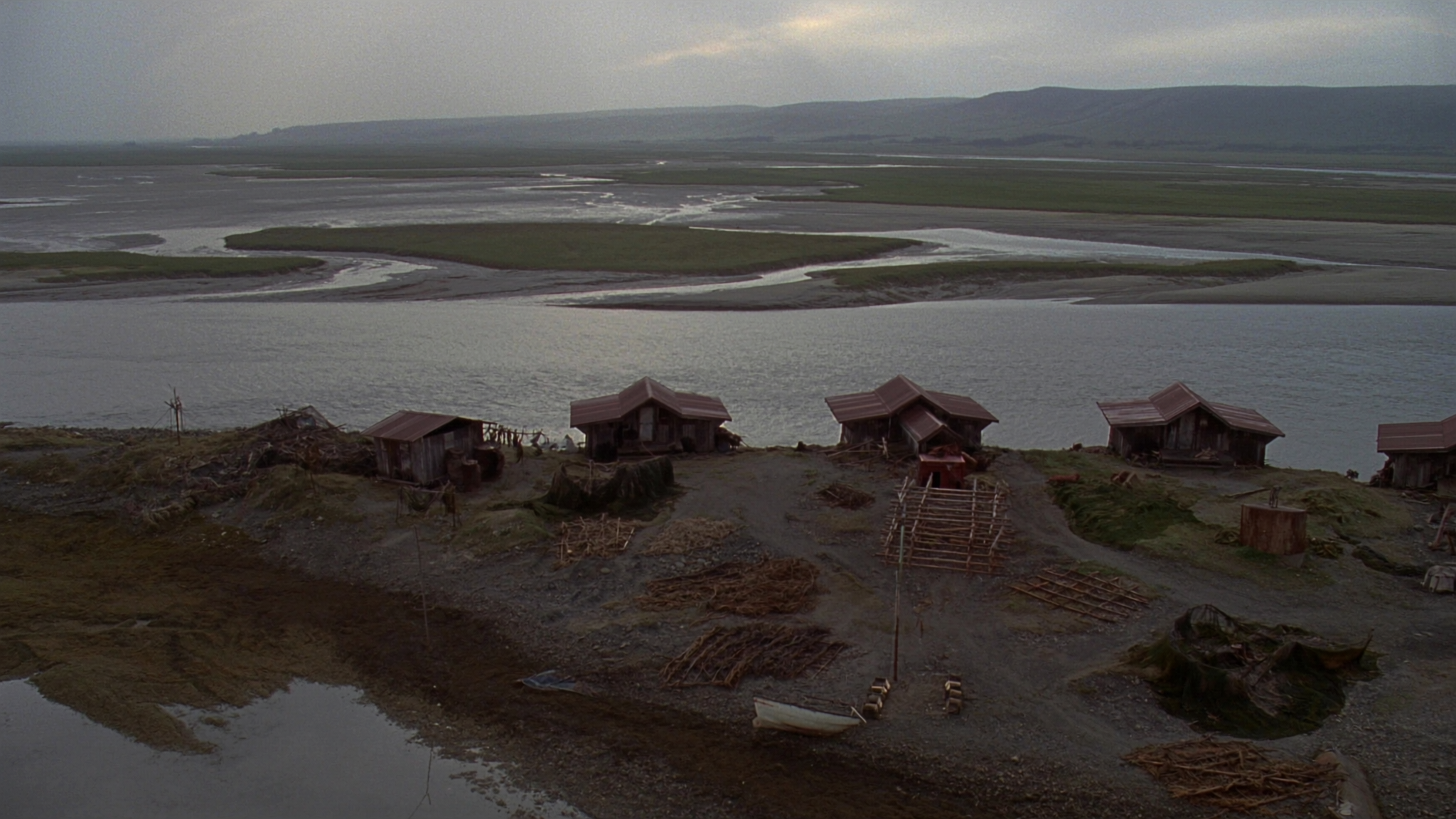
From Bristol Bay
Bristol Bay: The World's Greatest Wild Salmon Fishery
The world's last great wild sockeye run, the river that built it, and the families who fish it.
Key Takeaways: Bristol Bay at a Glance
In This Guide
- What Is Bristol Bay?
- Why Bristol Bay Salmon Is Different
- How the Bristol Bay Fishery Is Managed
- The Fishing Season: June Through July
- From Net to Freezer: The Cold Chain
- The Community of Bristol Bay
- Protecting Bristol Bay: The Pebble Mine Victory
- Bristol Bay vs Other Alaska Fisheries
- Bristol Bay by the Numbers
- The Species of Bristol Bay
- Frequently Asked Questions
What Is Bristol Bay?
Geography: Southwestern Alaska's Crown Jewel
Bristol Bay sits along the southwestern coast of Alaska, an arm of the Bering Sea bordered by the Alaska Peninsula to the south and mainland Alaska to the north and east. The watershed covers more than 40,000 square miles of largely undeveloped wilderness: tundra, boreal forest, volcanic peaks, and some of the cleanest freshwater systems remaining on the planet.
Nine major river systems feed into Bristol Bay, each one a lifeline for returning salmon. The Nushagak, Kvichak, Naknek, Egegik, Ugashik, Wood, Igushik, Togiak, and Alagnak rivers wind through terrain shaped by volcanic activity and glacial forces over millennia. These rivers drain from massive lake systems, including Iliamna Lake (Alaska's largest) and Lake Clark, creating the freshwater nurseries where juvenile salmon spend their first years before migrating to the ocean.
The Numbers: A Fishery Unlike Any Other
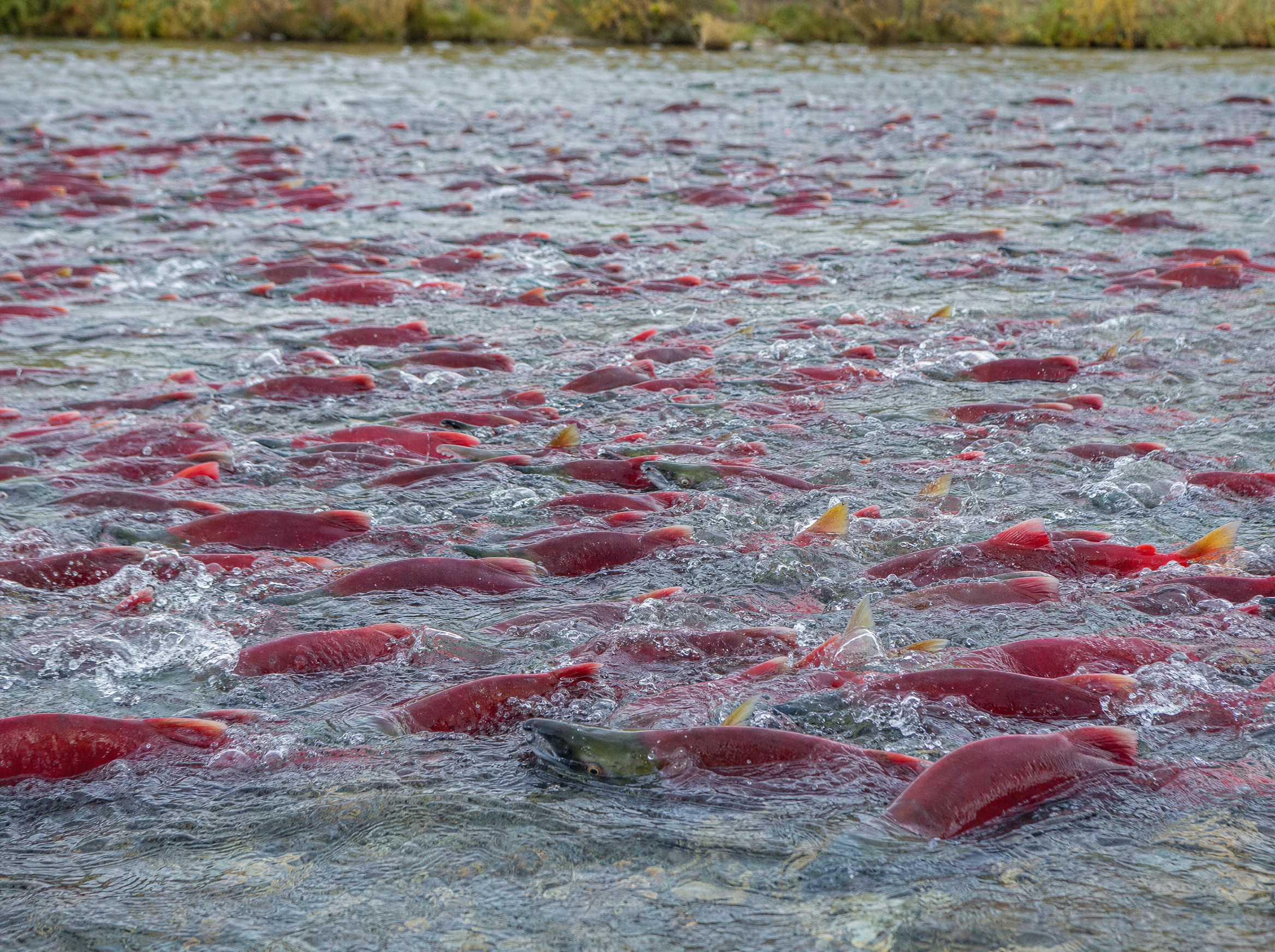
Bristol Bay is the largest wild sockeye salmon fishery on Earth, and it is not close. The fishery produces roughly half of the world's commercial wild sockeye harvest in a typical year. These are not hatchery-supplemented runs. Every fish that returns to Bristol Bay was born wild, migrated to the ocean on its own, and navigated back to its natal river to spawn.
In 2022, approximately 79 million sockeye salmon returned to Bristol Bay, the largest run on record. That single season eclipsed entire annual harvests from most other salmon fisheries worldwide. To put it in perspective: the combined sockeye returns from all other Alaska districts in a strong year total roughly 15 to 20 million fish. Bristol Bay alone can produce four to five times that number.
The fishery's economic footprint is equally staggering. Bristol Bay salmon generates over $2 billion in total economic value annually when accounting for the commercial harvest, sport fishing, subsistence use, and the supply chain of processing, transportation, and retail distribution that the fishery supports.
Five Species, One Extraordinary Watershed
While sockeye salmon are the headliner, all five species of Pacific salmon return to Bristol Bay's rivers:
- Sockeye (Red) Salmon: The dominant species, returning in massive runs from late June through July. Prized for their deep red flesh, firm texture, and rich omega-3 content. Sockeye is the backbone of Bristol Bay's commercial fishery.
- King (Chinook) Salmon: The largest Pacific salmon species, arriving first in late May and June. King salmon from the Nushagak River are legendary among sport fishers and command premium prices in commercial markets. (Not sold by Popsie — see how king compares to sockeye)
- Chum (Keta) Salmon: Returning alongside sockeye, chum salmon are valued for their large size and roe (ikura). They play a critical role in nutrient transport to upstream ecosystems.
- Pink (Humpy) Salmon: The most abundant Pacific salmon species globally, pink salmon return to Bristol Bay on a strong two-year cycle. They are lighter in flavor and commonly canned or smoked. (Not sold by Popsie — see how pink compares to sockeye)
- Silver (Coho) Salmon: The late-season arrival, running from August into September. Coho are prized by sport fishers for their fighting spirit and by consumers for their mild, versatile flavor. (Not sold by Popsie — see how coho compares to sockeye)
This diversity of species is itself a measure of ecosystem health. A watershed that supports thriving populations of all five salmon species, each with different habitat requirements, life-history timing, and food-web roles, is a watershed that is functioning as nature designed it.
4,000 Years of Fishing Heritage
Long before commercial fishing arrived in Bristol Bay, the Yup'ik, Dena'ina Athabascan, and Alutiiq peoples built cultures and communities around the annual salmon return. Archaeological evidence confirms that indigenous peoples have harvested salmon from Bristol Bay's rivers for at least 4,000 years, making this one of the longest continuous fishing traditions on Earth.
For these communities, salmon is not merely food. It is the foundation of cultural identity, spiritual practice, and economic survival. Subsistence fishing remains a legally protected right in Alaska, and the indigenous communities of Bristol Bay continue to harvest, process, and store salmon using methods passed down through generations: smoking, drying, and fermenting fish for year-round sustenance.
This deep cultural connection to the fishery is part of what makes Bristol Bay's stewardship so robust. The people who have lived alongside these salmon runs for millennia understand, at a level that no management plan can fully capture, what it means to protect them.
Why Bristol Bay Salmon Is Different
Clean, Cold, Nutrient-Rich Waters
The quality of wild salmon begins with the quality of its environment, and no environment on Earth rivals Bristol Bay for salmon production. The bay's waters are fed by snowmelt, glacial runoff, and springs that percolate through volcanic soils rich in minerals. Water temperatures remain cold year-round, typically between 38 and 55 degrees Fahrenheit in the rivers during salmon season.
Cold water is critical for salmon quality because it slows bacterial growth, firms the flesh, and promotes the accumulation of omega-3 fatty acids. Salmon that grow in colder waters develop higher fat content and denser muscle tissue compared to fish from warmer environments. This is not marketing. It is basic fish physiology.
Volcanic Soil and Mineral Content
Bristol Bay sits within the Ring of Fire, and the surrounding landscape is shaped by volcanic activity. The rivers that feed the bay flow through soils enriched with selenium, zinc, magnesium, and other trace minerals deposited by millennia of volcanic ash. Juvenile salmon absorb these minerals during their freshwater rearing phase, and adult salmon returning from the ocean carry elevated levels of these micronutrients in their flesh.
Selenium is particularly noteworthy: a 3 oz cooked serving of sockeye has about 30 mcg, 55% of the Daily Value (USDA). And salmon is among the lowest-mercury fish in FDA testing.
Short Food Chain, Low Contaminants
In the ocean, Bristol Bay sockeye feed primarily on zooplankton, small crustaceans, and juvenile fish. This places them low on the marine food chain compared to predatory species like tuna, swordfish, or even farmed salmon (which are fed pellets made from fish meal and fish oil). The shorter the food chain, the less opportunity for bioaccumulation of contaminants like mercury, PCBs, and dioxins.
Salmon is among the lowest-mercury fish: fresh and frozen salmon average 0.022 parts per million in FDA testing (FDA 1990-2012 table), about 45 times below the FDA action level of 1 ppm. This combination of low contaminants and high nutritional density is what makes Bristol Bay salmon such a compelling choice for health-conscious consumers and particularly for pregnant and nursing mothers.
The Spawning Run: How the Journey Concentrates Flavor and Nutrition
The final factor that sets Bristol Bay salmon apart is the spawning migration itself. After spending two to four years feeding and growing in the North Pacific, adult sockeye navigate back to the exact river, and often the exact tributary, where they were born. For Bristol Bay fish, this journey can cover 1,000 miles or more from their ocean feeding grounds.
During this migration, salmon stop feeding entirely. Their bodies convert stored ocean fat into energy for the journey and into the reproductive materials they will need to spawn. The flesh of a Bristol Bay sockeye at the point of commercial harvest, typically as it enters the bay or lower river, is at peak condition: maximum fat content, deepest color, firmest texture. Timing the harvest to this point in the migration is what gives Bristol Bay sockeye its distinctive deep-red flesh and rich, clean flavor.
We've been picking sockeye out of our nets on the Egegik beach since 1987, and a good one still makes me stop and look: bright, firm, and that deep red when you cut it open. Our job is not to mess that up. We bleed every fish the minute it's out of the net and get it into slush ice, so what you taste is Bristol Bay, not our handling.
— Tony Neal, founder, Popsie Fish Co · Bristol Bay setnetter since 1987
This is the provenance story that matters. Bristol Bay salmon are not just wild-caught. They are products of a specific place: glacial rivers running through volcanic soil, cold North Pacific feeding grounds, and a 1,000-mile homeward journey that concentrates everything good about this fish into every fillet. When you order Popsie sockeye, you are getting that place, that journey, and that quality, direct from the fisherman who pulled it from the net.
How the Bristol Bay Fishery Is Managed
Bristol Bay's reputation as the world's greatest wild salmon fishery rests on more than geography and biology. It rests on management. The system that governs Bristol Bay fishing is arguably the most rigorous, science-driven, and responsive fishery management regime on the planet. Understanding how it works reveals why Bristol Bay salmon populations are thriving while fisheries elsewhere have collapsed.
Escapement-Based Management: Fish First, Always
The cornerstone of Alaska's fishery management is the escapement goal system, administered by the Alaska Department of Fish and Game (ADF&G). The concept is straightforward: before a single commercial net enters the water, enough salmon must pass through to spawn and replenish the population for future years.
ADF&G establishes escapement goal ranges for each major river system within Bristol Bay. These goals are based on decades of biological data, population modeling, and field research. For the Kvichak River, the largest sockeye producer in Bristol Bay, the escapement goal might call for 2 to 10 million fish passing through to spawn. The Egegik, Naknek, Ugashik, Nushagak, Togiak, Igushik, and Wood River systems each have their own specific goals calibrated to their capacity.
Commercial fishing opens only after managers have confidence that escapement goals will be met. In practice, this means fishing may be delayed by days or even weeks at the start of the season if early run indicators are below expectations. It also means that fishing can be shut down mid-season if conditions change.
Real-Time Counting: Sonar, Weirs, and Aerial Surveys
Bristol Bay's management system is not based on estimates or projections alone. ADF&G deploys an extensive network of monitoring technology across the watershed to count fish in real time:
- Sonar Towers: Deployed at key points on major rivers, sonar systems generate continuous counts of salmon passing upstream. The Nushagak and Kvichak rivers have particularly sophisticated sonar installations that can differentiate between species and estimate run timing with high accuracy.
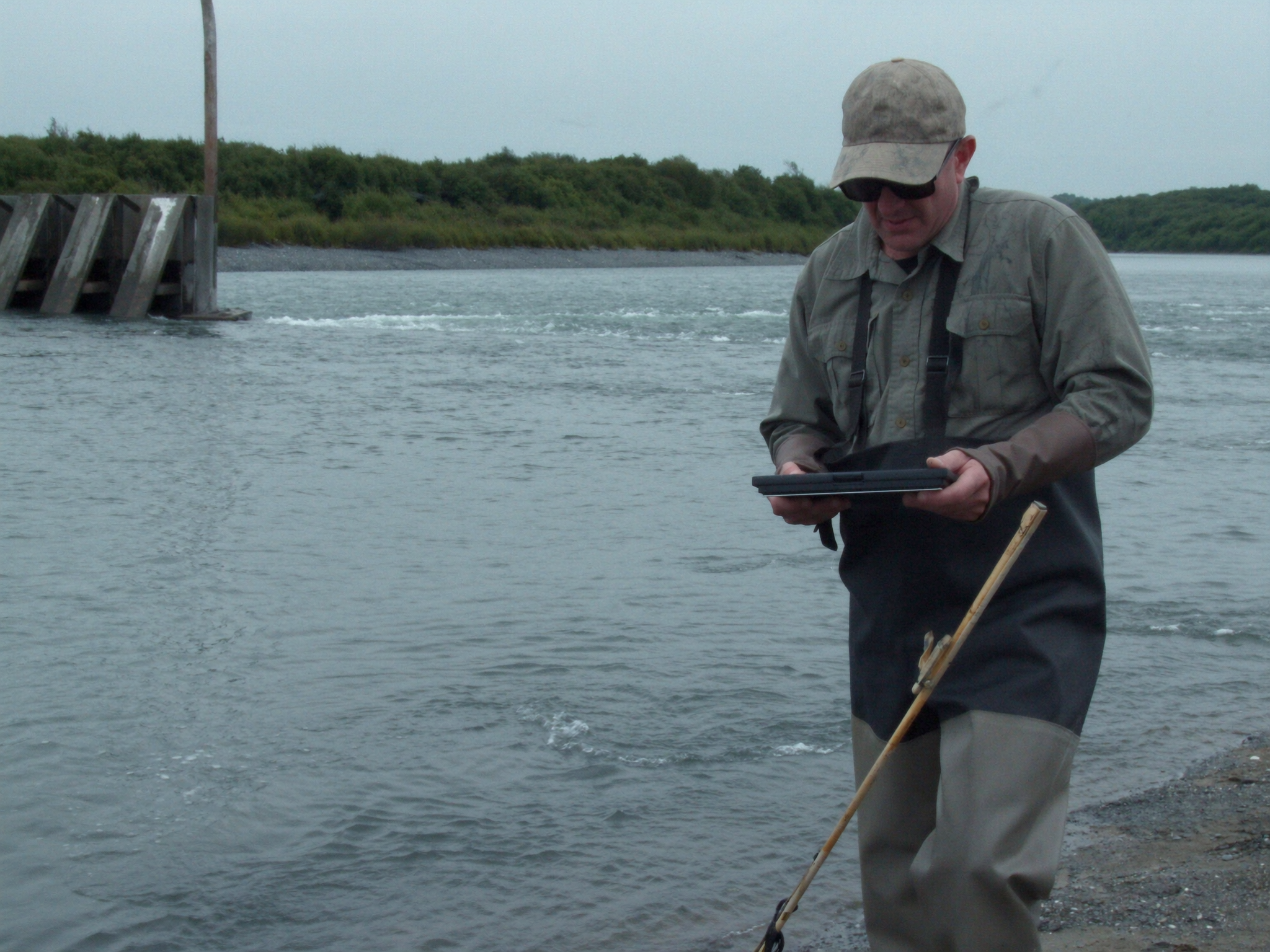
- Counting Weirs: Physical structures that channel fish through narrow passages where they can be visually counted by trained observers. Weirs on smaller tributaries provide ground-truth data that calibrates the broader sonar counts.
- Aerial Surveys: ADF&G biologists conduct regular flights over spawning grounds to assess how many fish have reached their natal streams. These surveys are particularly important later in the season when spawning activity is visible from the air.
- Test Fishing: Small-scale test nets are deployed in the bay and lower rivers to assess species composition, run timing, and fish condition before the commercial fleet begins harvesting.
This data flows to ADF&G managers continuously throughout the season. The result is a management system that operates in near real-time, adjusting harvest levels based on actual fish counts rather than pre-season forecasts.
Emergency Orders: Managing by the Hour
The most distinctive feature of Bristol Bay fishery management is the emergency order system. ADF&G managers have the authority to open and close fishing on extremely short notice, sometimes with just hours of warning to the fleet. These emergency orders are issued based on the latest sonar counts, weather conditions, tidal cycles, and the status of escapement goals.
During the peak of the sockeye run in late June and early July, a typical sequence might look like this: fishing opens at 9 AM Monday, closes at 9 PM Monday, reopens Wednesday at noon, closes Friday at 6 AM. Each opening and closure is a real-time response to how many fish are in the water and whether the escapement targets are being met.
For fishermen, this means living in a state of constant readiness during the season. You cannot plan your week. You cannot guarantee income on any given day. You fish when the managers say fish, and you stop when they say stop. This system is demanding and sometimes frustrating for fishermen, but it is the reason Bristol Bay consistently meets escapement goals while supporting a productive commercial harvest.
Limited Entry: Controlling Fleet Size Since 1973
Alaska established the Bristol Bay limited entry permit system in 1973, recognizing that unrestricted access would eventually overwhelm even the world's most productive salmon fishery. Under this system, only a fixed number of permits allow commercial fishing in Bristol Bay. Roughly 1,800 drift gillnet permits and a smaller number of set net permits exist.
These permits can be bought and sold, but no new permits are created. This hard cap on fishing capacity prevents the "race to the bottom" that has destroyed fisheries worldwide, where an ever-growing fleet chases a shrinking resource. In Bristol Bay, the fleet size is stable and sustainable.
MSC Certification: Third-Party Verification
Bristol Bay sockeye is part of the Alaska salmon fishery, which holds Marine Stewardship Council (MSC) certification, the most widely recognized and rigorous sustainability standard for wild fisheries globally. MSC certification requires demonstrating three core principles:
- Sustainable Fish Stocks: The fishery must maintain healthy population levels and, if depleted, must have recovery plans in place.
- Minimal Ecosystem Impact: Fishing activities must not cause serious or irreversible harm to the broader marine and freshwater ecosystems.
- Effective Management: The fishery must have a governance system that responds to changing conditions, respects local and international laws, and adapts based on scientific evidence.
The Alaska salmon fishery was first certified by MSC in 2000 and has maintained certification through multiple reassessment cycles. MSC certificates run for up to five years, with annual surveillance audits in which independent auditors examine population data, management practices, enforcement records, and ecosystem health indicators. This external accountability adds a layer of verification beyond what the state management system provides.
Why Bristol Bay Is the Gold Standard
When fishery scientists and conservation organizations look for models of sustainable management, Bristol Bay is consistently the example they cite. The combination of constitutional sustainability mandates, escapement-based management, real-time monitoring, emergency order authority, limited entry permits, and third-party MSC certification creates a system with multiple overlapping safeguards.
Compare this to fisheries that have collapsed under less rigorous management: the North Atlantic cod fishery, the Bluefin tuna populations of the Mediterranean, the Chinook salmon runs of the Pacific Northwest (where decades of dam building and habitat destruction have devastated populations despite hatchery programs). Bristol Bay demonstrates that wild fisheries can be both commercially productive and ecologically sustainable when the management framework is designed correctly and enforced consistently.
The Fishing Season: June Through July
Season Timeline
Bristol Bay's commercial salmon season is remarkably compressed. The bulk of the annual harvest occurs within a roughly four-to-six-week window, from mid-June through late July. Every year, this brief window produces one of the largest single-species wild fish harvests on the planet.
King (Chinook) salmon begin entering the Nushagak River system. Sport fishing opens. Commercial fishermen arrive in the bay, readying boats, gear, and nets. Anticipation builds as ADF&G releases pre-season run forecasts.
The first sockeye begin appearing on sonar counters in the lower rivers. ADF&G test-fishes and watches the numbers. The fleet waits. Depending on run strength, the first commercial opening may come in the third week of June.
Peak fishing. The main pulse of the sockeye run hits Bristol Bay. Emergency orders open and close fishing every few days, sometimes multiple times per week. Fishermen work 18 to 20 hour days during openings. Processing plants run around the clock.
The peak begins to taper. Late-run sockeye continue entering the rivers. ADF&G may extend fishing periods as escapement goals are met across most river systems. Chum salmon begin arriving in greater numbers.
Sockeye season winds down. Coho (silver) salmon begin their migration. Some fishermen shift to targeting coho. Others begin breaking down gear and heading home. The bay begins to quiet.
What a Fishing Day Looks Like: Drift Boats and Setnets
When the emergency order announces an opening, the clock starts and it does not stop until the closure. A typical fishing day in Bristol Bay during peak season is an exercise in sustained physical effort and constant decision-making.
Dawn comes early in Bristol Bay in late June. At this latitude, the sun rises around 5 AM and does not set until nearly midnight, giving fishermen almost 20 hours of usable daylight. A drift gillnet fisherman will be on the water before the opening starts, positioning the boat in the fishing district where they expect fish to be running.
The work itself involves repeatedly setting and picking the gillnet, a wall of monofilament mesh that hangs in the water column. Drift gillnetters work from 32-foot boats (the maximum length allowed in Bristol Bay), and the crew is typically two to three people: the permit holder (captain) and one or two crew members. Setting the net means deploying it from the stern, allowing the boat to drift with the current and tide while the net catches fish by the gills. Picking the net means pulling it back aboard, removing each salmon by hand, and storing the fish in the hold on ice.
During a strong run, a boat might pick the net every 30 to 45 minutes, with each pick yielding dozens or hundreds of fish. The physical work is relentless: hauling net, extracting fish, icing the hold, resetting, and doing it again. Weather compounds the challenge. Bristol Bay is known for strong tidal currents, sudden wind shifts, and cold rain even in midsummer. Seas of four to six feet are routine; eight to ten feet is not uncommon.
When the hold is full or the fishing period ends, the boat delivers its catch to a tender vessel or a shore-based processor. Unloading, cleaning, and re-icing typically take an hour or more. Then, if the opening continues, the fisherman heads back out to set again.
Eighteen-hour days are standard during peak fishing. Twenty-hour days happen. Sleep is whatever you can grab between openings, often in four-hour blocks on the boat or in a bunkhouse on shore.
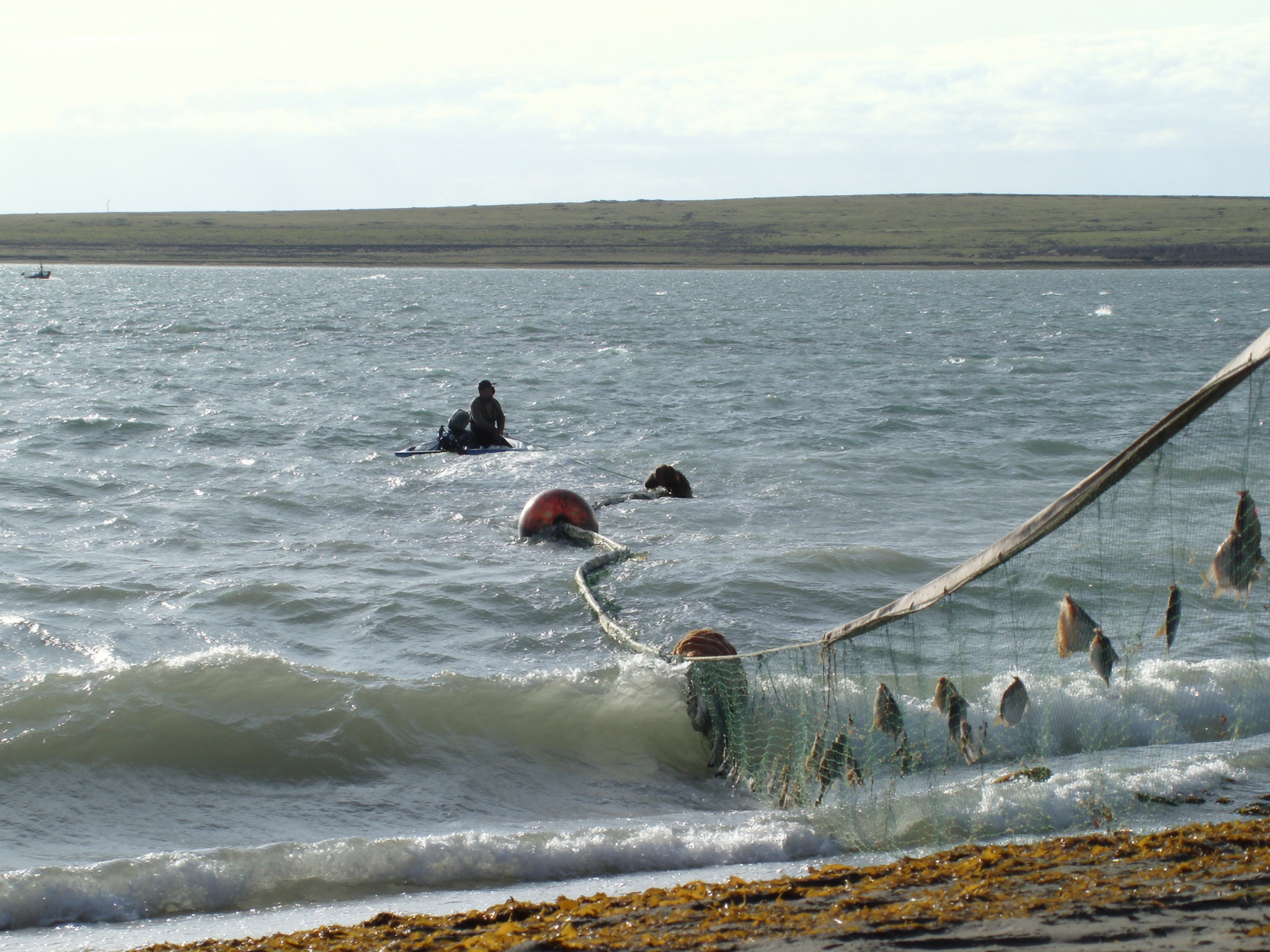
People picture a boat, but we're setnetters. Our nets are anchored off the beach in front of fish camp, and the tide runs the day, not the clock: we set the nets off a four-wheeler trailer before the water comes in, pick every fish by hand from our rafts, and haul the totes up the beach when it goes out. On our biggest days we figured fish were hitting the nets at a thousand pounds a minute, and nobody quits until the tide says so.
— Tony Neal, founder, Popsie Fish Co · Bristol Bay setnetter since 1987
Drift Gillnet vs Set Net: Bristol Bay's Two Methods
Bristol Bay uses two primary commercial fishing methods, both of which are selective and low-impact compared to industrial fishing techniques used elsewhere in the world:
Drift Gillnet
The dominant method in Bristol Bay. Fishermen deploy a gillnet (up to 150 fathoms long) from a boat and drift with the current. The boat and net move together, intercepting salmon as they swim toward the rivers. Drift gillnetting requires constant attention to net position, current, and fish movement.
- Boat limit: 32 feet maximum
- Crew: 2-3 people
- Approximately 1,800 permits
- Operates in open water of the bay
Set Net
Set netters anchor their gillnets to the shore and extend them perpendicular to the beach, intercepting salmon as they travel along the coastline toward river mouths. Set netting is typically a family operation, with nets tended from shore or from small skiffs. It is the method Popsie's family uses on the beach near Egegik, picking every fish by hand from rafts.
- Net anchored to shore
- Crew: often family-based
- Smaller number of permits
- Operates along the shoreline
Both methods are passive: the nets hang in the water and fish swim into them. Neither method involves bottom trawling, dredging, or other habitat-destructive techniques. The mesh size of the nets is regulated to target sockeye-sized fish while allowing smaller species and juveniles to pass through. Bycatch in Bristol Bay gillnet fisheries is among the lowest of any commercial fishery.
From Net to Freezer: The Cold Chain
The quality of wild salmon is determined not only by where it is caught but by how it is handled from the moment it leaves the water. Bristol Bay's processing infrastructure has been refined over decades to move fish from net to freezer as quickly as possible, preserving the texture, flavor, and nutritional integrity that make this salmon exceptional.
Step 1: At the Net
The clock starts the moment a salmon comes out of the net. On a well-run Bristol Bay boat or setnet site, fish are handled quickly and carefully. Each salmon is removed from the gillnet, and the gills are often cut or the fish is bled immediately (a technique called "bleeding" that removes blood from the flesh and improves flavor and texture). Fish are then placed in a slurry of ice and seawater (in a boat's hold, or in totes on the beach) to bring the core temperature down rapidly.
This initial chill is critical. Salmon that sit at ambient temperature for even a few hours begin to deteriorate. Enzymes in the gut start breaking down the flesh, bacteria multiply, and the texture softens. Getting the fish cold, fast, is the single most important quality-control step in the entire chain.
Step 2: Tender Boats and Shore Delivery
When a fishing boat's hold is full, it delivers the catch to either a tender vessel (a large boat that serves as a floating collection point) or directly to a shore-based processing plant. Setnetters like our family haul their fish up the beach by four-wheeler to the processor instead. In Bristol Bay, the distance from fishing grounds to processors is relatively short, meaning fish typically spend no more than a few hours between the net and the processing facility.
Tender boats maintain their own refrigeration systems, keeping fish at near-freezing temperatures during transit. At the processing plant, fish are offloaded, weighed, and graded before entering the processing line.
Step 3: Processing and Flash-Freezing
Modern Bristol Bay processing facilities are engineered for speed and temperature control. Fish move through the processing line in a matter of hours after arriving at the plant:
- Sorting and Grading: Fish are sorted by species, size, and quality. Grade #1 fish (no net marks, firm flesh, bright color) command premium prices. Lower grades are directed to different product lines.
- Heading, Gutting, and Filleting: Depending on the final product form, fish are processed into whole dressed (head and guts removed), fillets, portions, or specialty cuts.
- Flash-Freezing: The processed fish enters a blast freezer or plate freezer that drops the core temperature to -20 degrees Fahrenheit or lower within hours. This rapid freezing creates small ice crystals that preserve cellular structure, preventing the mushy texture that results from slow freezing.
- Glazing and Packaging: Frozen fish receives a thin ice glaze (a protective coating that prevents freezer burn) and is vacuum-sealed or packaged for shipment.
Popsie's Approach: Direct from Fisherman to Customer
What sets Popsie apart from other seafood companies is the elimination of middlemen. Our family catches sockeye on our own Bristol Bay setnet sites, Tony oversees the processing and freezing, and we ship directly to customers. There is no distributor, no broker, no warehouse where your fish sits for weeks waiting to be resold.
This direct model means several things for you:
- Full Traceability: We can tell you which fishing district your sockeye came from and which family's nets caught it. Learn more about how this works in our complete traceability guide.
- Peak Freshness: Because our fish moves directly from the processor to your door, it arrives in the same condition it was in when it left the processing line.
- Fair Pricing: Eliminating middlemen means better margins for the fisherman and better value for the customer. The traditional seafood supply chain adds 200-300% markup between the dock and the retail shelf. Popsie's direct model cuts most of that out.
- Accountability: When the family selling you sockeye is the family that caught it, there is nowhere to hide. Our reputation depends on every single box we ship.
Quality gets decided right there on the beach. Every fish is picked out of the net by hand and bled right away, and nobody picks one up by the tail, because that bruises the meat along the spine. Then it goes under wet burlap and into slush ice so the sun never touches it, and the four-wheelers run it straight up to the processor.
— Tony Neal, founder, Popsie Fish Co · Bristol Bay setnetter since 1987
The journey from Bristol Bay to your kitchen is shorter, colder, and more carefully controlled than any other path wild salmon can travel. This is the advantage of buying direct from a fisherman: not just a story, but a materially better product.
The Community of Bristol Bay
Bristol Bay is not just a fishery. It is a network of communities, families, and traditions that have grown around the annual salmon return for generations. Understanding the human side of Bristol Bay is essential to understanding why this fishery endures and why protecting it matters beyond the economic numbers.
The Towns of Bristol Bay
Several small towns anchor the Bristol Bay region, each with its own character and role in the fishing economy:
- Dillingham: The largest community in Bristol Bay, with a year-round population of roughly 2,300. Dillingham serves as the regional hub for the Nushagak district, with a harbor, processing plants, fuel suppliers, and the infrastructure that supports the seasonal fishing fleet. It is the commercial and logistical center of the western bay.
- Naknek: Located on the Naknek River near the mouth of the bay, Naknek is the gateway to the Naknek-Kvichak fishing district, historically the most productive in Bristol Bay. The town swells from its winter population of about 500 to several thousand during fishing season as processors, fishermen, and crew arrive.
- King Salmon: Named for the fish, not the other way around, King Salmon sits upriver from Naknek and serves as the main air hub for the region. Its airport connects Bristol Bay to Anchorage and the rest of Alaska. King Salmon is also the headquarters for Katmai National Park, which draws visitors to see brown bears catching salmon at Brooks Falls.
- Togiak: A predominantly Yup'ik community on the western side of Bristol Bay, Togiak is one of the region's largest Native villages. Subsistence fishing remains central to daily life, and the Togiak River supports significant commercial and subsistence salmon harvests.
Smaller villages dot the coastline and riverbanks throughout the region: Ekwok, New Stuyahok, Koliganek, Aleknagik, Manokotak, Clark's Point, and others. Most have populations under 500 and are accessible primarily by boat or small aircraft. These communities are deeply connected to the salmon economy and to each other through kinship, trade, and shared cultural practices.
The Seasonal Migration
Every June, Bristol Bay undergoes a transformation that rivals the salmon run itself. More than 10,000 fishermen, crew members, processing workers, and support staff descend on a region whose year-round population numbers in the low thousands. They come from across Alaska, from the Pacific Northwest, from the Midwest, and increasingly from around the world.
This seasonal influx creates a temporary boomtown atmosphere. Harbors that were quiet in winter are packed gunwale to gunwale with fishing boats. Processing plants that stood idle since the previous August roar back to life, running two and three shifts around the clock. Bush planes shuttle between Anchorage, King Salmon, and Dillingham in a continuous loop. Grocery stores sell out. Fuel barges make deliveries. The entire region operates at maximum capacity for six to eight weeks, then gradually empties as the season winds down.
For many fishermen, Bristol Bay season defines the year. The income earned in those few weeks of fishing supports families for the remaining months. The relationships forged during long days on the water, in bunkhouses, and at the processing docks create bonds that span decades. Crew members return to the same boats year after year, and fishing families pass permits and knowledge from one generation to the next.
Economic Impact
The economic footprint of Bristol Bay extends far beyond the dockside price of salmon. The fishery generates over $2 billion in total economic value annually when all direct and indirect contributions are accounted for:
- Commercial Harvest: The ex-vessel value (price paid to fishermen) of the Bristol Bay sockeye harvest typically ranges from $200 million to $350 million per year, depending on run size and market conditions.
- Processing and Distribution: Processing, packing, cold storage, and transportation add substantially to the total value as raw fish is transformed into consumer products and shipped worldwide.
- Sport Fishing: Bristol Bay's rivers attract sport fishermen from around the world, particularly for king salmon and trophy rainbow trout. Lodges, guides, air taxis, and related services generate tens of millions in annual revenue.
- Subsistence Use: While not captured in commercial statistics, the subsistence salmon harvest is economically essential for rural Alaska communities where the cost of imported food is two to three times the national average.
- Support Services: Marine supply, fuel, equipment maintenance, air transport, housing, food service, and other support industries all depend on the annual fishing season.
Alaska Native Communities and Fishing Rights
For Alaska Native communities in the Bristol Bay region, salmon is more than livelihood. It is identity. The Yup'ik concept of subsistence encompasses a relationship with the natural world that does not translate neatly into English: it is sustenance, cultural practice, spiritual connection, and intergenerational knowledge all woven together.
Under Alaska law, subsistence use of salmon is the highest-priority allocation. When runs are low and harvests must be restricted, subsistence users are the last to face cuts. This legal framework recognizes what Native communities have understood for millennia: the relationship between people and salmon is foundational, and preserving it is a matter of cultural survival as much as food security.
Many Native families in Bristol Bay participate in both subsistence and commercial fishing, with the income from commercial permits supporting households through the long winter months when subsistence harvests provide the primary source of protein. Fish camps along the rivers, where families gather each summer to harvest and process salmon using traditional methods, remain vibrant institutions that connect younger generations to their heritage.
Multi-Generational Fishing Families
Walk down the dock in Naknek or Dillingham during fishing season and you will find families that have been fishing Bristol Bay for three, four, even five generations. Grandparents who remember fishing with sailboats before engines were common. Parents who grew up picking nets before they could drive. Children spending their summers learning the same waters their great-grandparents fished.
This generational continuity is not sentimental nostalgia. It is a form of accumulated knowledge that no management textbook can replicate. Multi-generational fishermen understand the subtle patterns of fish movement, the reading of tides and currents, the interpretation of weather signs, and the handling techniques that produce the best-quality fish. This knowledge is transmitted through practice, not theory, and it is one of Bristol Bay's most underappreciated assets.
We bought our first sites in 1987 from a friend whose family were among the first setnetters on that beach, and we learned the rest on the job. Our neighbors are other fishing families up and down the beach, and between openings we ride the four-wheelers over to visit. Every summer our kids and grandkids come back from all over the country to fish together, and that's what this place means to me.
— Tony Neal, founder, Popsie Fish Co · Bristol Bay setnetter since 1987
Protecting Bristol Bay: The Pebble Mine Victory
The story of Bristol Bay's sustainability is incomplete without the story of the fight to protect it. For more than two decades, the proposed Pebble Mine posed the single greatest threat to the watershed that supports the world's most productive wild salmon fishery. The eventual defeat of the project stands as one of the most significant conservation victories in American history.
The Threat: A Copper-Gold Mine at the Headwaters
The Pebble deposit, located at the headwaters of the Nushagak and Kvichak river systems, is one of the largest undeveloped copper-gold-molybdenum deposits on Earth. Beginning in the early 2000s, a mining consortium led by Northern Dynasty Minerals proposed developing an open-pit mine of extraordinary scale: a pit more than a mile wide and 1,700 feet deep, with a massive earthen dam to contain billions of tons of toxic mining waste (tailings) in perpetuity.
The location could not have been worse for the fishery. The Nushagak and Kvichak rivers are the two most productive sockeye salmon systems in Bristol Bay, together accounting for the majority of the bay's annual returns. The proposed mine site sat directly in the watershed that feeds these rivers. Any failure of the tailings dam, any leaching of heavy metals into groundwater, any disruption of the hydrology that supports spawning habitat would have put the entire fishery at risk.
Mine proponents argued that modern engineering could prevent environmental damage. Opponents pointed out that no tailings dam of the proposed size had ever been built in a seismically active region, that the dam would need to contain toxic waste forever (not for decades, but literally in perpetuity), and that the consequences of failure were catastrophic and irreversible.
The 20-Year Fight
The coalition that opposed Pebble Mine was remarkable for its breadth. Commercial fishermen, Alaska Native tribes, sport fishing guides, conservation organizations, jewelry companies (including Tiffany & Co.), restaurant chefs, and outdoor recreation businesses united in opposition. It was one of the rare environmental battles that cut across traditional political lines: Republican and Democratic politicians, commercial interests and environmentalists, Alaska Natives and non-Native Alaskans all found common cause in protecting Bristol Bay.
The fight played out across multiple fronts:
- Grassroots Organizing: Bristol Bay communities, led by Alaska Native villages and commercial fishing groups, mounted sustained public campaigns, testified at hearings, and traveled to Washington, D.C., to advocate for protection.
- Scientific Review: The EPA conducted a comprehensive scientific assessment of the Bristol Bay watershed, ultimately concluding that the proposed mine posed unacceptable risks to the fishery and the ecosystem.
- Legal Battles: Years of litigation, permit challenges, and regulatory proceedings kept the project in limbo while opponents built the case for permanent protection.
- Economic Arguments: The fishing industry made a powerful economic case: Bristol Bay generates over $2 billion annually in sustainable, renewable value. The mine offered a one-time extraction of finite mineral wealth with permanent environmental risk.
EPA Protection: The 2023 Final Determination
In January 2023, the Environmental Protection Agency issued its final determination under Section 404(c) of the Clean Water Act, effectively vetoing the Pebble Mine by prohibiting the discharge of dredged or fill material at the mine site. This was one of the strongest protections the EPA has ever applied to a specific geographic area.
The determination found that the proposed mine would result in unacceptable adverse effects on fishery areas, including the loss or degradation of miles of streams that support salmon spawning, rearing, and migration. The ruling was based on extensive scientific review and public comment, including input from Bristol Bay communities, fishing organizations, and scientific experts.
What This Means for the Future
The Pebble Mine defeat secured the near-term future of Bristol Bay's salmon fishery, but the broader lesson is equally important: protecting wild fisheries requires perpetual vigilance. The mineral deposits remain in the ground. The economic pressures that drove the mine proposal have not disappeared. Future generations will face their own versions of this fight.
For now, Bristol Bay's watershed is intact and its salmon runs are thriving. The fishermen, indigenous communities, and conservation advocates who spent two decades fighting for this outcome have given the world's greatest salmon fishery the chance to continue producing wild fish indefinitely. It is a victory worth understanding and celebrating.
Bristol Bay vs Other Alaska Fisheries
Alaska is home to multiple world-class salmon fisheries, each with its own character, species mix, and reputation. For a detailed look at the individual species that come from these waters — including king, sockeye, coho, pink, halibut, and cod — see our complete Alaska seafood species guide. Understanding how Bristol Bay compares to other major Alaska fishing regions helps explain why it holds a unique position in both the commercial market and the conservation landscape.
Bristol Bay vs Copper River
The Copper River, located in south-central Alaska near the town of Cordova, is arguably the most famous salmon brand in the United States. Copper River salmon (particularly king and sockeye) commands premium prices and generates intense media attention each spring when the first fish of the season arrives at Seattle's Pike Place Market.
| Attribute | Bristol Bay | Copper River |
|---|---|---|
| Annual Sockeye Returns | 40-80 million | 1-3 million |
| Primary Species | Sockeye, King, Coho, Pink, Chum | King, Sockeye, Coho |
| Marketing Recognition | Lower (region-based, not branded) | Very high (first-of-season hype) |
| Scale | Largest wild sockeye fishery on Earth | Relatively small, boutique |
| Fish Quality | Exceptional (cold water, long migration) | Exceptional (300-mile river migration) |
| Price Point | Premium but accessible | Ultra-premium |
| Fishery MSC-Certified | Yes | Yes |
Copper River salmon earned its reputation through savvy marketing and a genuinely excellent product: the long upstream migration produces high-fat, deeply colored fish. But the scale is not comparable. Copper River produces a fraction of Bristol Bay's volume. In terms of the sheer tonnage of high-quality wild sockeye available to consumers, Bristol Bay is in a category by itself.
The quality difference between Bristol Bay and Copper River sockeye, when both are handled well, is negligible. Both fisheries produce fish from cold, clean waters with long upstream migrations. The primary difference is branding: Copper River has been marketed as a luxury product since the 1980s, while Bristol Bay has historically sold into the commodity market. Companies like Popsie are changing that equation by bringing Bristol Bay's exceptional quality directly to consumers at fair prices.
Bristol Bay vs Southeast Alaska
Southeast Alaska (the Panhandle region around Juneau, Sitka, Ketchikan, and Petersburg) supports diverse salmon fisheries using troll, gillnet, and seine methods. The region is known for its troll-caught king salmon, which are individually hook-and-line caught and command premium prices.
Southeast Alaska's fisheries are well-managed and produce excellent fish, but they differ from Bristol Bay in important ways. The region is more dependent on hatchery-supplemented runs (particularly for pink and chum salmon), and the species mix is more varied. Bristol Bay's advantage is scale and purity: massive wild-origin sockeye runs with no hatchery supplementation and minimal bycatch concerns.
Bristol Bay vs Yukon River
The Yukon River, the longest river in Alaska, once supported large king and chum salmon runs. In recent years, Yukon salmon populations have declined sharply, leading to severe restrictions and, in some years, complete closure of commercial and subsistence fishing. The Yukon situation illustrates the consequences of climate change, ocean condition shifts, and the challenges of managing a transboundary fishery (the Yukon flows through both Canada and Alaska).
The contrast with Bristol Bay is instructive. Both are remote Alaska fisheries dependent on wild salmon, but Bristol Bay's multi-species diversity, robust lake-rearing habitat, and intact watershed have buffered it against the environmental pressures that have devastated Yukon runs. Bristol Bay is not immune to climate change, but its ecosystem has more resilience built in.
Why Bristol Bay Is the Most Sustainable Large-Scale Fishery on Earth
No other fishery on the planet combines Bristol Bay's scale of production with its level of sustainability. Many small, artisanal fisheries are sustainably managed, but they cannot feed millions of people. Many large-scale fisheries produce massive volumes, but at the cost of ecosystem health, bycatch, habitat destruction, or population depletion.
Bristol Bay stands alone: 40 to 80 million wild sockeye returning annually to a pristine, protected watershed, managed by a system that has maintained healthy populations for over 60 years, certified by independent third parties, and producing fish of exceptional quality. There is no farmed equivalent, no hatchery substitute, and no other wild fishery that matches this combination of scale, quality, and sustainability.
This is what you are supporting when you choose Bristol Bay salmon from Popsie: not just great fish, but the proof that wild fisheries and commercial productivity can coexist when the management is done right.
Bristol Bay by the Numbers
Bristol Bay's story is written in data as much as in tradition. These figures capture the scale, heritage, and ecological significance of the world's greatest wild salmon fishery.
These numbers tell a story of abundance that is becoming rarer in the modern world. At a time when fisheries on every continent face depletion, climate stress, and management failure, Bristol Bay is producing record runs of wild salmon. The management model works. The ecosystem is healthy. The fishery is sustainable at scale.
The Species of Bristol Bay
All five species of Pacific salmon return to Bristol Bay's rivers. Each has its own timing, character, and culinary profile. Here is a brief introduction to each, with links to our detailed species guides.
Sockeye (Red) Salmon
Oncorhynchus nerka
Bristol Bay's flagship species. Deep crimson flesh, firm texture, and about 570 IU (14.2 mcg) of vitamin D per 3 oz cooked serving, the most of any salmon USDA lists a value for. Returns in massive runs from late June through July. The foundation of Bristol Bay's commercial fishery and the species most Popsie customers know and love.
King (Chinook) Salmon
Oncorhynchus tshawytscha
The largest Pacific salmon, arriving first in late May and June. King salmon from the Nushagak River are prized for their rich, buttery flavor and generous fat content. Rarer and more expensive than sockeye, king salmon is considered the pinnacle of wild salmon by many chefs and seafood connoisseurs.
Silver (Coho) Salmon
Oncorhynchus kisutch
The late-season arrival, running from August into September. Coho offer a milder, more delicate flavor than sockeye with a lighter orange flesh. Extremely versatile in the kitchen, coho is equally at home grilled, baked, or pan-seared. A favorite of sport fishermen for their aggressive strikes.
Pink (Humpy) Salmon
Oncorhynchus gorbuscha
The most abundant Pacific salmon species globally, pink salmon return to Bristol Bay on a strong two-year cycle. Lighter in color and milder in flavor than sockeye, pink salmon are excellent for smoking, canning, and recipes where salmon flavor complements other ingredients rather than dominating.
Chum (Keta) Salmon
Oncorhynchus keta
Returning alongside sockeye, chum salmon are valued for their large size and premium roe (ikura). The flesh is lighter in color with a mild, clean flavor. Chum play a critical ecological role in Bristol Bay, transporting ocean-derived nutrients deep into freshwater and terrestrial ecosystems as they spawn in upstream tributaries.
Frequently Asked Questions About Bristol Bay
Where exactly is Bristol Bay?
Bristol Bay is an arm of the Bering Sea located in southwestern Alaska. It is bordered by the Alaska Peninsula to the south and the mainland of western Alaska to the north and east. The watershed covers more than 40,000 square miles and is fed by nine major river systems. The main towns in the region include Dillingham, Naknek, King Salmon, and Togiak.
Why is Bristol Bay salmon considered the best in the world?
Bristol Bay salmon benefit from a combination of factors that no other fishery can match: pristine cold waters fed by glacial runoff and volcanic soils rich in minerals, a short food chain that keeps contaminant levels exceptionally low, and a 1,000-mile spawning migration that concentrates flavor and nutrition in the flesh. The fishery is entirely wild with no hatchery supplementation, and fish are harvested at peak condition as they enter the bay.
How many salmon return to Bristol Bay each year?
Annual sockeye returns to Bristol Bay typically range from 40 to 80 million fish, making it the largest wild sockeye salmon fishery on Earth. In 2022, approximately 79 million sockeye returned, the largest on record. Bristol Bay produces roughly half of the world's commercial wild sockeye harvest in a typical year.
Is Bristol Bay salmon sustainable?
Yes. Bristol Bay is widely considered the gold standard for sustainable wild fishery management. Alaska's escapement-based management ensures enough fish spawn before commercial fishing begins. Its sockeye is part of the Alaska salmon fishery, which has held Marine Stewardship Council (MSC) certification since 2000. The fishery is monitored in real time with sonar towers and aerial surveys and has maintained healthy populations for over 60 years. Recent record runs demonstrate the system is working.
What is escapement-based management?
Escapement-based management is the system Alaska uses to ensure long-term fishery health. Before commercial fishing opens, biologists must verify that enough salmon have "escaped" past the fishing grounds to reach spawning habitat and reproduce. ADF&G sets numerical escapement goals for each river system and monitors fish passage in real time. Commercial fishing is only allowed after these goals are being met.
What happened with the Pebble Mine?
The Pebble Mine was a proposed copper-gold mine at the headwaters of Bristol Bay's two most productive salmon rivers. After a 20-year fight by fishermen, Alaska Native communities, and conservation groups, the EPA issued a final determination in January 2023 under the Clean Water Act that effectively blocked the mine from being built. This was one of the most significant conservation victories in U.S. history and protects Bristol Bay's watershed for future generations.
How does Popsie Fish Co connect to Bristol Bay?
Popsie's founders, Tony and Gwen Neal, have setnetted on the beach near Egegik in Bristol Bay since 1987, and three generations of the family now fish there every summer. This is not a marketing relationship or a sourcing arrangement: our family is personally on the beach, catching the sockeye that Popsie sells. When you order Popsie sockeye, you are buying directly from the family that caught it. No brokers, no distributors, no middlemen. Our halibut, Pacific cod and sablefish are wild-caught in Alaska by other Alaska fishermen and sold under the Popsie name.
What species of salmon come from Bristol Bay?
All five species of Pacific salmon return to Bristol Bay: sockeye (red), king (Chinook), silver (coho), pink (humpy), and chum (keta). Sockeye is the dominant commercial species, with annual returns of 40 to 80 million fish. King salmon from the Nushagak River are particularly prized, and coho provide a late-season fishery extending into September.
How is Bristol Bay salmon different from farmed salmon?
Bristol Bay salmon is entirely wild: born in rivers, raised in lakes, grown in the open ocean, and harvested on its return migration. It contains no antibiotics, no added hormones, and no synthetic colorants. Farmed Atlantic salmon, by contrast, is raised in net pens, fed pellets containing wild fish meal, treated with antibiotics when disease outbreaks occur, and given astaxanthin or canthaxanthin in its feed to color its flesh. Wild sockeye is also leaner: 133 calories and 4.7 g of fat per 3 oz cooked serving, versus 175 calories and 10.5 g for farmed Atlantic salmon (USDA). A 2004 study in Science (Hites et al.) found organochlorine contaminants, including PCBs, significantly higher in farmed salmon than in wild. Learn more in our wild vs farmed guide.
When is Bristol Bay salmon season?
The commercial sockeye season typically runs from mid-June through late July, with peak fishing occurring in late June and early July. King salmon arrive earlier (late May through June), and coho salmon extend the season into August and September. The exact timing of commercial openings is determined by ADF&G based on real-time run-strength data and escapement goals.
Continue Exploring
Bristol Bay is one part of a larger story about wild Alaskan seafood, sustainability, and nutrition. Explore these related guides to deepen your knowledge:
Taste Bristol Bay — Direct from Our Family to Yours
You have read about the fishery, the management, the people, and the science. Now experience it. Every box of Popsie salmon is Bristol Bay sockeye, caught by our family and shipped directly to your door. No middlemen, no compromises, no shortcuts.
Wild-Caught Sockeye Salmon
Bristol Bay's flagship species: deep red flesh, firm texture, and about 1,200 mg of EPA + DHA omega-3s per 6 oz portion (raw weight; USDA average). Available as fillets, portions, and ground salmon.
Shop Sockeye SalmonBuild Your Custom Box
Mix sockeye with halibut, cod, sablefish, and more. Choose your species, choose your quantities, and we will ship it all together.
Build Your BoxCatching salmon is a lot easier than selling it, but this is the part I love: the same sockeye our family eats all year is what we pack in your box. From the fisher, that's me, to the fork, that's you. When somebody writes to tell us they can taste the difference, that's the whole point.
— Tony Neal, founder, Popsie Fish Co · Bristol Bay setnetter since 1987
Questions about Bristol Bay, our sourcing, or anything else? Reach out to our team — we genuinely love talking about this place.