
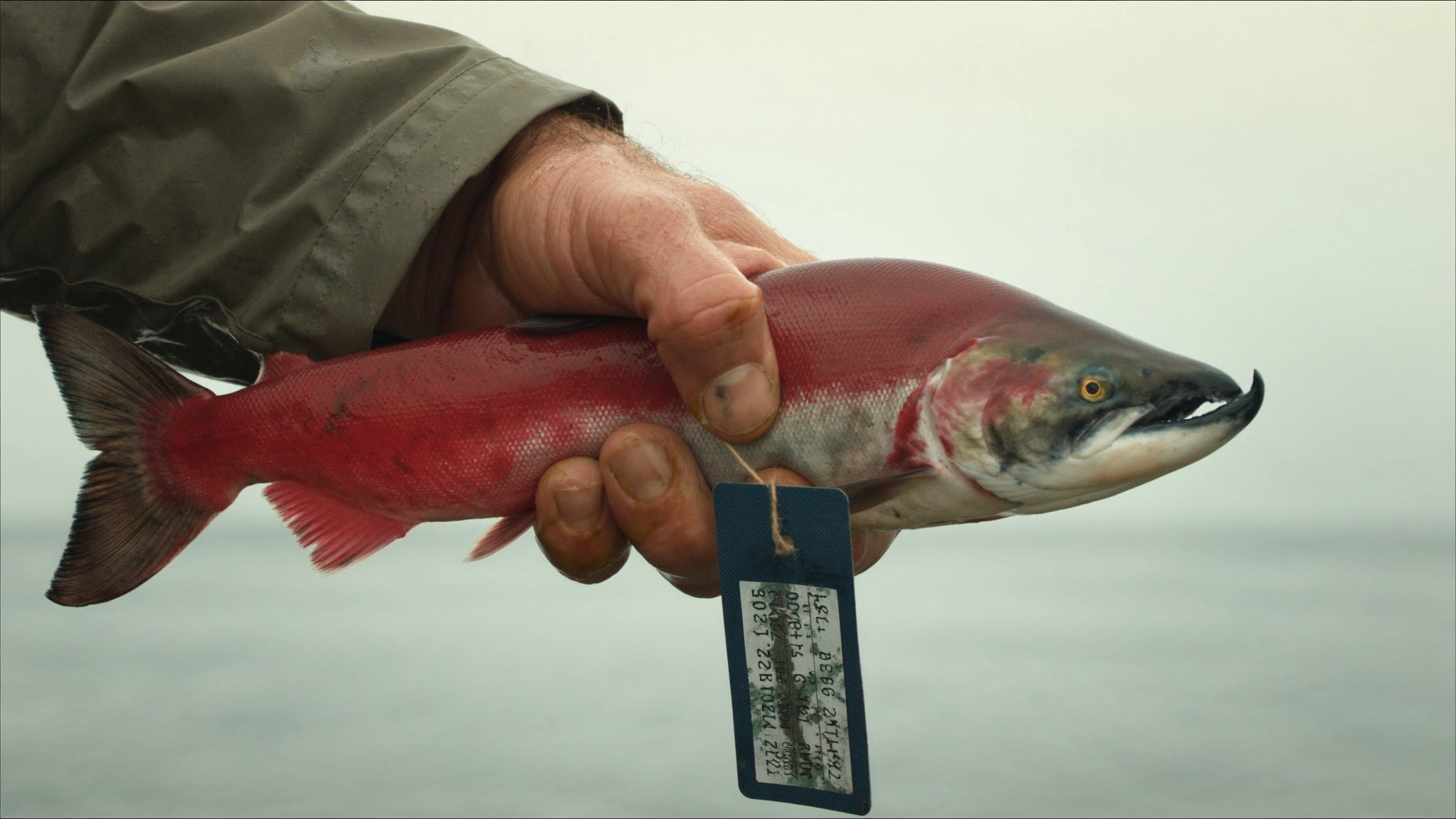
Boat to Door
How We Fish: Traceability from Bristol Bay to Your Door
From our setnet on the Egegik to your front door — every fillet, traced.
Key Takeaways: Seafood Traceability
- Seafood fraud is widespread: Studies have found that 20-30% of imported seafood is mislabeled, meaning consumers often pay premium prices for substituted or misrepresented fish.
- Popsie eliminates the guesswork: Our direct fisherman-to-customer model means zero middlemen and complete chain of custody from Bristol Bay to your freezer.
- Alaska leads the world in traceability: Every commercial catch is documented with fish tickets tracking species, weight, location, date, and permit holder through ADF&G.
- Flash-frozen within hours: Fish are bled, iced, and processed within hours of the catch, then blast-frozen at -40 degrees F to lock in freshness and nutrition.
- You can verify your source: Unlike grocery store seafood with opaque supply chains, Popsie customers know exactly where their fish was caught and who caught it.
- Direct sourcing benefits everyone: Fewer intermediaries means better quality fish for you, fairer prices for fishermen, and lower risk of fraud or mislabeling.
What's in This Guide
- Why Seafood Traceability Matters
- The Popsie Difference: From Our Boat to Your Table
- The Journey of Your Fish: Step by Step
- What Makes Wild Alaska Seafood Traceable?
- How to Verify Your Seafood Is Really Wild
- Seafood Fraud: The Global Problem
- DTC vs Grocery: Why Direct Matters
- How to Read Seafood Labels
- The Future of Seafood Traceability
- Frequently Asked Questions
Why Seafood Traceability Matters
When you pick up a fillet at the grocery store, what do you actually know about it? The label might say "wild salmon," but the journey from ocean to shelf is a black box. The global seafood supply chain is one of the most complex and least transparent food systems in the world, and the consequences land squarely on your plate.
The Scope of Seafood Fraud
Seafood fraud is not a fringe problem. It is a systemic issue spanning every major market. Independent investigations have repeatedly found alarming rates of mislabeling, substitution, and deception across the industry.
What does seafood fraud look like in practice? It takes several forms, each with distinct consequences for consumers:
Species Substitution
A cheaper species sold under a premium name: farmed Atlantic salmon sold as wild Alaskan, escolar (which causes digestive problems) sold as white tuna, tilapia sold as red snapper. The consumer pays premium prices for a categorically different product.
Origin Mislabeling
Fish from well-managed Alaskan fisheries have different nutritional profiles and contaminant levels than fish from poorly managed fisheries. When a fish caught in a questionable fishery is labeled as coming from a pristine one, consumers lose the ability to make informed choices about quality and ethics.
Farmed Sold as Wild
Wild-caught and farmed fish are fundamentally different. Wild salmon develops its color and omega-3 profile through natural diet and ocean migration. Farmed salmon gets color from synthetic astaxanthin, contains higher contaminant levels, and has a different fatty acid profile. Selling farmed as wild is a material misrepresentation.
Health Implications of Mislabeled Seafood
Seafood fraud is not just a financial issue. It poses genuine health risks that most consumers never consider:
- Undisclosed allergens: When one species is substituted for another, allergen information becomes unreliable. A person allergic to a specific fish type may unknowingly consume a triggering species because the label is wrong.
- Contaminant differences: Fish from different regions carry different contaminant profiles. Fish from polluted coastal waters in Southeast Asia have different heavy metal and pesticide levels than fish from the open North Pacific. Mislabeling the origin eliminates the consumer's ability to manage exposure.
- Escolar risks: Escolar, often sold as "white tuna" or "butterfish," contains indigestible wax esters that cause gastrointestinal distress in many people. Accurate labeling would allow consumers to avoid it; mislabeling puts them at risk.
- Antibiotic-resistant bacteria: Some imported farmed fish are raised with antibiotics banned in the United States. When these products enter the US market mislabeled as domestic or wild, consumers are unknowingly exposed to residues that contribute to antibiotic resistance.
Economic Impact on Honest Fishermen
Seafood fraud devastates honest fishermen. When cheap imported fish is sold under premium domestic labels, it undercuts the real product. Bristol Bay fishermen invest in expensive permits, maintain vessels, comply with strict regulations, and fish within managed quotas. They pay the cost of sustainability. When their product competes on price with mislabeled imports, the economics of honest fishing become nearly impossible.
This creates a vicious cycle: fraud depresses prices for legitimate products, tempting others to cut corners, eroding the systems that keep fisheries sustainable. Traceability is not just consumer protection. It is an economic survival mechanism for responsible fishing communities.
The Consumer's Dilemma
The fundamental question is simple: how do you know what you are really getting? The standard grocery supply chain does not give you the tools to verify. Labels can be misleading. Counter staff often do not know the origin. Certifications are helpful but not universal.
For most seafood purchases, the honest answer is: you do not know. That is precisely the problem traceability solves. When you can trace a fish from the specific water where it was caught, through every step, to your door, fraud becomes structurally impossible. Not unlikely. Impossible.
The Popsie Difference: From Our Boat to Your Table
Popsie Fish Co was built on a straightforward premise: eliminate the middlemen and you eliminate the opportunities for fraud, quality degradation, and price inflation. This is not marketing. It is a structural solution to the traceability problems plaguing the seafood industry.
Zero Middlemen. Complete Transparency.
In a conventional supply chain, your fish passes through five to seven intermediaries: catcher, tender, processor, distributor, wholesaler, retailer, and possibly a secondary distributor. Each handoff is an opportunity for mislabeling, quality loss, and price markup. By the time that fillet reaches your grocery store, nobody can tell you who caught it.
Popsie works differently. Our fish goes from the boat to the processor to your door. One intermediary. The fisherman who catches your salmon is the same person whose name is on the company. You are buying from a fisherman, not an anonymous supply chain.
Traditional Supply Chain
- Catcher sells to tender
- Tender delivers to processor
- Processor sells to distributor
- Distributor sells to wholesaler
- Wholesaler sells to retailer
- Retailer sells to you
- 5-7 intermediaries
- Origin unknown by final seller
Popsie Direct Model
- Tony catches the fish
- Processed at trusted facility
- Flash-frozen and vacuum-sealed
- Shipped directly to you
- 1 intermediary total
- Complete traceability
- Fisherman known by name
- Catch details verifiable
Every Box Traced to Bristol Bay
When you open a box of Popsie fish, you are holding a product with a known history. Every piece of fish we sell can be traced back to Bristol Bay, Alaska, one of the most well-managed fisheries on the planet. We do not source from anonymous brokers. We do not mix catches from multiple unknown origins. We do not relabel anything. What you see on the package is exactly what is inside.
This level of traceability is not the norm in the seafood industry. It is the exception. And it is only possible because of our direct sourcing model. When you control the supply chain from catch to customer, you control the information. There are no gaps, no blind spots, and no opportunities for substitution.
Flash-Frozen on the Dock, Shipped Direct
Quality and traceability go hand in hand. Our fish is processed within hours of being caught, blast-frozen at -40 degrees Fahrenheit to preserve cellular structure, vacuum-sealed in individual portions, and stored at -10 degrees F or below until it ships. When you order, your fish travels in insulated packaging with dry ice via expedited shipping.
This matters for traceability because speed and simplicity reduce the number of touch points. Fewer touch points mean fewer opportunities for anything to go wrong, whether that is quality degradation, temperature abuse, or chain-of-custody confusion. Your fish spends less time in the supply chain than any grocery store product, and every minute of that time is accounted for.
[TONY QUOTE PLACEHOLDER: Why I wanted to sell directly to customers -- describe the motivation for building a direct model, frustration with traditional supply chains, desire for customers to know their fisherman]
— Tony, Founder & Fisherman, Popsie Fish CoQuote to be added
This direct relationship between fisherman and customer is not just a selling point. It is the structural foundation that makes traceability possible. When you know your fisherman by name, you do not need a blockchain to verify your seafood. You just need a relationship built on trust and transparency.
The Journey of Your Fish: Step by Step
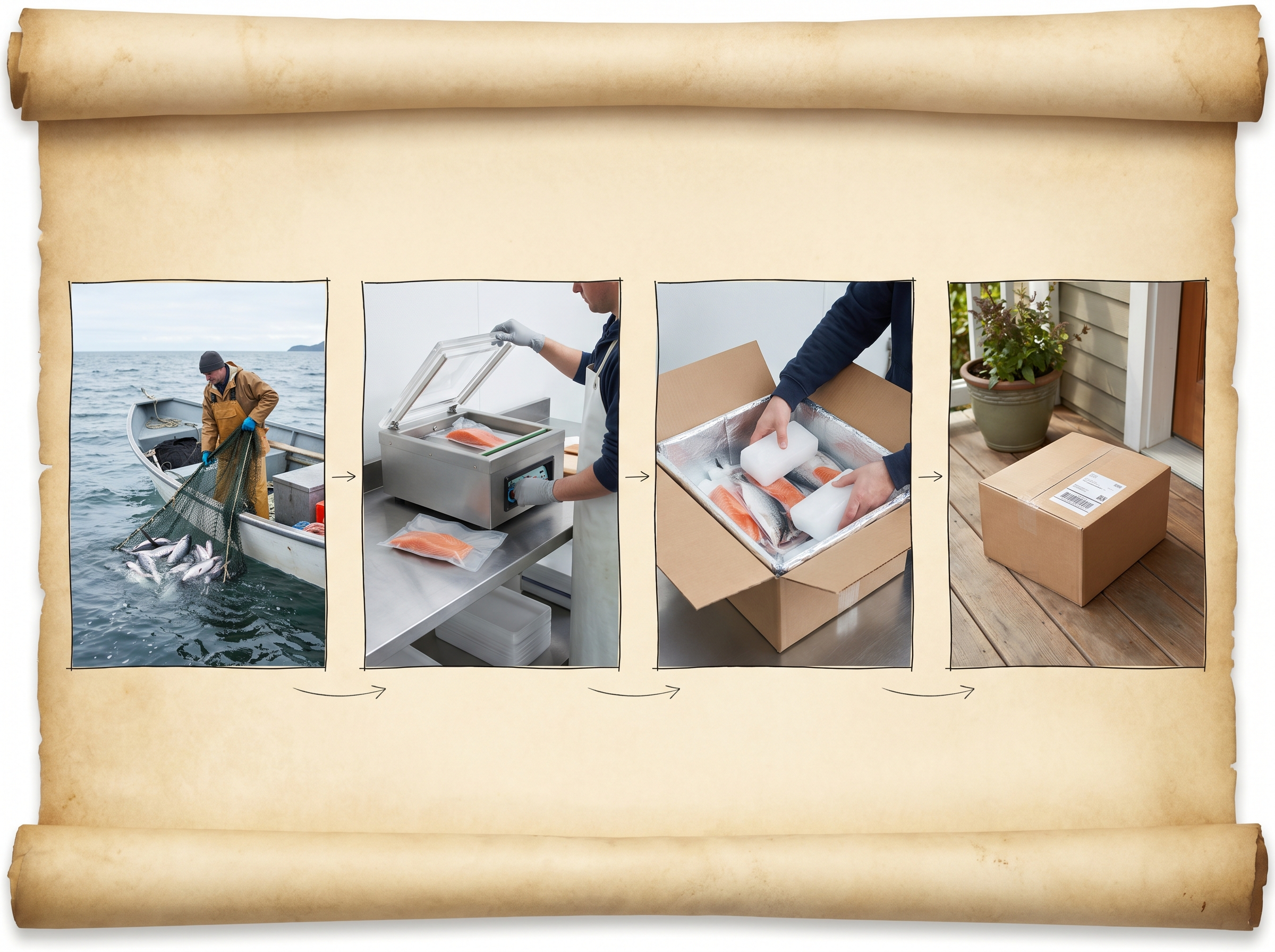
Every piece of Popsie fish follows a carefully controlled path from the cold waters of Bristol Bay to your kitchen. Understanding this journey is what separates truly traceable seafood from everything else. Here is exactly what happens to your fish, from the moment it leaves the water to the moment you open the box.
The Catch: Gillnet Fishing in Bristol Bay
Bristol Bay salmon are caught using drift gillnets, one of the most selective and low-impact commercial fishing methods available. A gillnet is a wall of fine mesh suspended in the water column that targets specific species based on mesh size. Salmon swim into the net and are caught by their gills, allowing non-target species and undersized fish to pass through.
Drift gillnetting in Bristol Bay is tightly regulated by the Alaska Department of Fish and Game (ADF&G). Fishing periods are announced daily based on real-time sonar counts of returning salmon. Fishermen may have only hours-long windows to fish before the period closes. This precision management ensures that enough fish always escape upstream to spawn, maintaining the population for future generations.
The catch happens in the cold, nutrient-rich waters of Bristol Bay, typically during June and July when sockeye salmon return in enormous numbers. Water temperatures hover in the 40s and 50s (Fahrenheit), which is ideal for preserving fish quality from the moment of capture.
Immediate Handling: Bleeding, Icing, and Grading on the Boat
What happens in the first minutes after a fish is caught determines its quality for the rest of its life as a food product. This is where experienced fishermen make the difference. As soon as salmon hit the deck, they are bled immediately. Bleeding removes blood from the flesh, which prevents discoloration, reduces the fishy taste that comes from oxidized blood, and significantly extends shelf life.
After bleeding, fish are placed in slush ice (a mixture of ice and seawater) held at approximately 33 degrees F. This rapid chilling stops enzymatic activity that would otherwise begin degrading the flesh within minutes. The fish are also visually graded for quality. Damaged or bruised fish are separated. This initial handling protocol is what distinguishes premium-quality fish from commodity product, and it is a discipline that Popsie takes seriously.
Tender and Processing: Delivery Within Hours
Bristol Bay fishing boats are relatively small vessels that cannot hold enormous catches for days at sea. Fish are transferred to tender vessels or delivered directly to shore-side processing facilities, typically within hours of being caught. This rapid transfer is critical: it minimizes the time between catch and processing, keeping the fish at optimal temperature throughout.
At the processing facility, fish are weighed, documented on official ADF&G fish tickets (creating the legal record of the catch), and moved immediately into the processing line. The fish ticket records the species, weight, fishing area, date, and permit holder for every delivery, creating an unbroken paper trail from water to processor.
[TONY QUOTE PLACEHOLDER: Personal account of fishing day -- what a typical day looks like on the water, the discipline of immediate handling, why quality starts the moment the fish hits the deck, the pride in doing it right]
— Tony, Founder & Fisherman, Popsie Fish CoQuote to be added
Flash Freezing: -40°F Blast Freezing Locks in Freshness
This is one of the most important steps in the entire chain, and one of the least understood by consumers. Flash freezing (also called blast freezing) involves rapidly lowering the temperature of the fish to -40 degrees F or below in a matter of hours. This speed matters enormously.
When fish freezes slowly (as it does in a home freezer), large ice crystals form within the cells. These crystals puncture cell walls, and when the fish thaws, moisture escapes, resulting in a mushy, waterlogged texture. Flash freezing creates tiny ice crystals that preserve cellular structure intact. When properly flash-frozen fish is thawed, the texture is virtually indistinguishable from fresh fish that was never frozen.
Flash-frozen fish also locks in nutritional value at peak freshness. Omega-3 fatty acids, protein, vitamins, and minerals are preserved at the levels present at the moment of freezing. By contrast, "fresh" fish at a grocery counter may be days or weeks old, with nutritional degradation occurring the entire time.
Vacuum Sealing: Individual Portions, Moisture-Locked
After flash freezing, each portion is individually vacuum-sealed. Vacuum sealing removes air from the packaging, which accomplishes several things simultaneously. It prevents freezer burn (which is caused by air exposure and moisture sublimation). It prevents oxidation of the fats, which would cause off-flavors over time. It creates an individual, sanitary package for each serving. And it makes portion control easy for the customer.
Each vacuum-sealed portion is a self-contained unit with a clear identity. It came from a specific catch, processed at a specific facility, on a specific date. This individual packaging is another layer of traceability: there is no bulk bin where fish from different sources gets mixed together.
Cold Storage: Maintained at -10°F or Below
Properly flash-frozen fish can be stored for extended periods without quality loss, provided the cold chain is never broken. Popsie fish is stored in commercial cold storage facilities maintained at -10 degrees F or below. Temperature is monitored continuously, and the facilities are subject to regular food safety inspections.
This unbroken cold chain is essential. Every time frozen fish is allowed to warm even slightly and then refreeze, ice crystal formation damages the flesh. The difference between commercial cold storage and a retail freezer case (which cycles between temperatures) is significant. Our fish stays at consistently deep-frozen temperatures until it ships.
Shipping: Insulated Packaging, Dry Ice, Expedited Delivery
When you place an order, your fish is packed in insulated shipping containers with dry ice. The packaging is designed to maintain frozen temperatures for the duration of transit, even accounting for delays. Shipments go out via expedited carriers (typically 2-day delivery) and are timed to avoid weekend transit where packages might sit in warm facilities.
The shipping process is the most vulnerable link in any direct-to-consumer frozen food chain, and we engineer it conservatively. Extra dry ice, high-quality insulation, and strategic ship days ensure your fish arrives frozen solid. Tracking information lets you monitor the package in real time so you can get it into your freezer promptly upon arrival.
Your Table: Bristol Bay to Dinner in as Little as 48 Hours from Order
When you open your Popsie box, you are holding fish that has been handled with discipline at every step. From the cold waters of Bristol Bay, through immediate bleeding and icing, rapid processing, blast freezing, vacuum sealing, controlled storage, and insulated shipping, your fish arrives in peak condition. The entire journey from your order to your door can happen in as little as 48 hours.
Compare that to the grocery store, where "fresh" fish may have spent a week or more in transit through multiple distribution centers, thawed and re-iced repeatedly, handled by numerous workers, and finally placed on a display case where it continues to degrade. The fish in your Popsie box has been frozen since hours after it was caught. It has never thawed. It has never been mishandled. And you know exactly where it came from.
What Makes Wild Alaska Seafood Traceable?
Alaska's seafood traceability system did not happen by accident. It was built over decades through rigorous regulation, constitutional mandate, and a culture of stewardship that treats the fishery as a public trust. Understanding this system reveals why Alaskan seafood is inherently more traceable than seafood from almost any other source in the world.
Alaska's Regulatory Framework
The Alaska Department of Fish and Game (ADF&G) operates one of the most sophisticated fishery management systems on Earth. Every aspect of commercial fishing in Alaska is regulated, monitored, and documented:
- Limited Entry Permits: You cannot simply decide to fish commercially in Alaska. The state issues a fixed number of limited entry permits for each fishery, controlling the total number of participants. This prevents overcrowding and overfishing. Bristol Bay drift gillnet permits are highly valuable and tightly held, ensuring that every active fisherman has a significant personal and financial stake in the health of the fishery.
- In-Season Management: ADF&G biologists monitor salmon returns in real time using sonar counting stations, test fisheries, and aerial surveys. Fishing periods are opened and closed daily based on actual fish counts. If returns are below expectations, fishing is restricted or closed entirely. This real-time management ensures escapement goals (the number of fish that must reach spawning grounds) are met every year.
- Gear Restrictions: The type, size, and deployment of fishing gear is strictly regulated. In Bristol Bay, drift gillnets cannot exceed 150 fathoms (900 feet) in length, and mesh size is specified to target the intended species while minimizing bycatch.
Fish Tickets: The Foundation of Traceability
The cornerstone of Alaska's traceability system is the fish ticket. Every time a commercial fisherman delivers a catch to a processor, a fish ticket is generated. This is not optional. It is a legal requirement enforced by the state.
Each fish ticket records:
| Data Point | What It Records | Why It Matters |
|---|---|---|
| Species | Exact species caught (sockeye, king, coho, etc.) | Prevents species substitution at the source |
| Weight | Total pounds delivered | Tracks harvest levels against quotas |
| Fishing Area | Specific statistical area of the catch | Confirms geographic origin down to the district |
| Date | Exact date of catch and delivery | Establishes freshness timeline |
| Permit Holder | Name and permit number of the fisherman | Creates personal accountability for every catch |
| Vessel | Fishing vessel identification | Links catch to specific boat and operations |
| Processor | Receiving processor identification | Documents the first handler in the processing chain |
This fish ticket system creates a legally binding document trail from the water to the first processing step. When combined with processor records and chain of custody documentation, it forms a complete, auditable record of every fish's journey from catch to consumer.
Chain of Custody: Water to Processor to Customer
Beyond fish tickets, the chain of custody extends through the processing and distribution system. Processors maintain records of which incoming catches correspond to which outgoing products. Lot numbers, processing dates, and product codes create linkages that allow any finished product to be traced back to the specific catch or catches it came from.
For Popsie, this chain is remarkably short. The fish goes from the water to the processor to cold storage to your door. There are no secondary distributors, no wholesale markets, no retail repackaging operations. Each link in the chain is documented, and the total number of links is minimal. This simplicity is a feature, not a limitation. The fewer hands that touch your fish, the easier it is to trace and the lower the risk of something going wrong.
MSC Chain of Custody Certification
The Marine Stewardship Council (MSC) adds an additional layer of verification through its chain of custody certification program. MSC chain of custody certification requires that every company handling MSC-certified fish maintains records proving that the product came from an MSC-certified fishery and was not mixed with uncertified product at any point.
Bristol Bay's sustainability certifications are not just environmental credentials. They are traceability tools that give consumers independent, third-party verification that the fish they are eating is exactly what the label says it is.
Why Alaska's System Works Better Than Most
Many countries have some form of fishery documentation. What makes Alaska's system exceptional is the combination of constitutional mandate, dedicated funding, enforcement capacity, and political will. Other key factors include:
- State ownership of fisheries: Alaska's constitution declares fisheries a public resource. This creates a legal framework where the state has both the authority and obligation to manage them rigorously.
- No fish farming: Alaska banned fish farming in 1990. This eliminates the confusion and commingling that occurs in regions where wild and farmed products coexist in the same supply chain.
- Dedicated enforcement: Alaska employs fish and wildlife troopers specifically tasked with enforcing fishery regulations. Violations carry serious penalties including permit revocation, fines, and criminal charges.
- Cultural commitment: Fishing communities in Alaska understand that the fishery is their economic lifeblood. There is strong social pressure to comply with regulations because everyone recognizes that the alternative is collapse.
The result is a traceability infrastructure that most of the world's fisheries cannot match. When you buy Alaskan seafood, you are buying into a system that was designed from the ground up to be transparent, accountable, and sustainable. When you buy Popsie fish specifically, you are buying from a company that leverages every element of that system to deliver complete traceability from water to table.
How to Verify Your Seafood Is Really Wild
Knowing that seafood fraud exists is one thing. Knowing how to protect yourself from it is another. Whether you are shopping at a grocery store, ordering at a restaurant, or buying online, there are concrete steps you can take to verify that the seafood on your plate is genuinely wild-caught and properly sourced.
Labels and Certifications to Look For
Not all labels carry equal weight. Some are backed by rigorous third-party auditing; others are little more than marketing language. Here is what to prioritize:
- Marine Stewardship Council (MSC) Blue Fish Label: This is the global gold standard for wild-caught fishery certification. MSC certification requires independent scientific assessment of fish stock health, ecosystem impact, and management effectiveness. It also requires chain of custody certification through the supply chain. If a product carries the MSC blue fish logo, it has been independently verified as coming from a sustainable, well-managed fishery.
- Alaska Seafood Marketing Institute (ASMI) Logo: The ASMI "Wild Alaska" brand mark indicates the product comes from an Alaskan fishery. Alaska's ban on fish farming means that any fish bearing this mark is genuinely wild-caught. It is backed by the state's regulatory and traceability infrastructure.
- State of Origin: Under COOL (Country of Origin Labeling) regulations, seafood must indicate where it was caught. "Product of USA" or "Wild-caught Alaska" are strong indicators. Be more cautious with vague origin statements.
- Species Name: The FDA maintains the Seafood List, which dictates acceptable market names for fish species. If a label uses a common name that matches the FDA list, the seller is legally bound to that identification. Vague terms like "white fish" or unlabeled fillets are red flags.
Red Flags: When Something Does Not Add Up
Experienced seafood buyers learn to recognize warning signs. Here are the most common indicators that something may be off:
- "Atlantic salmon" is always farmed: There is no commercial wild Atlantic salmon fishery of any significance. If a menu or label says "Atlantic salmon" without specifying farmed, it is farmed. Any claim of "wild Atlantic salmon" should be viewed with extreme suspicion.
- Vague origin labeling: Terms like "imported" or "product of multiple countries" indicate a complex, opaque supply chain. The more specific the origin information, the more confident you can be in its accuracy.
- Uniformly perfect appearance: Wild salmon fillets vary naturally in color, size, and marbling based on the individual fish and its diet. Perfectly uniform color and texture across every piece in a display can indicate farmed fish, which achieves consistency through controlled feed containing synthetic colorants.
- Off-season availability of "fresh" wild: Wild Alaskan salmon season runs roughly June through September (varying by species). If a retailer claims to have "fresh" wild Alaskan salmon in February, it is either previously frozen (which should be disclosed) or not what it claims to be.
- No processor or lot information: Legitimate wild seafood products can typically be traced back to a processor and lot number. If this information is absent or the seller cannot provide it, traceability is poor.
Questions to Ask Your Fishmonger or Online Seller
Do not be afraid to ask questions. A reputable seller will welcome them. A seller who cannot or will not answer should give you pause. Key questions include:
- Where specifically was this fish caught? A good answer names a specific fishery or region (e.g., "Bristol Bay, Alaska"). A bad answer is vague or evasive.
- Is this wild or farmed? This should be answered immediately and definitively. Hesitation or qualifications are concerning.
- When was it caught? For frozen fish, the catch date or season matters. For "fresh" fish, the landing date tells you how old it actually is.
- Was it previously frozen? Much of the "fresh" fish at grocery counters was frozen during transport and thawed for display. There is nothing wrong with this, but it should be disclosed. It also means you should not refreeze it at home.
- What species is this specifically? "Salmon" is not specific enough. Is it sockeye, king (chinook), coho, pink, or chum? Each has different characteristics and price points. A seller who cannot tell you the species does not have good chain of custody documentation.
- Who processed it and where? A traceable product has a known processor. If the seller cannot identify the processing facility, the supply chain has opacity problems.
DNA Testing: The Ultimate Verification
DNA testing has become a powerful tool in the fight against seafood fraud. Scientists and regulatory agencies can extract DNA from a piece of fish and identify the exact species with near-perfect accuracy. This technology has been instrumental in documenting the scale of seafood fraud and holding bad actors accountable.
For individual consumers, DNA testing is not practical for every purchase. However, its existence matters for two reasons. First, it creates a deterrent: sellers who engage in substitution know that their products can be scientifically tested and their fraud exposed. Second, consumer advocacy organizations like Oceana regularly conduct DNA testing surveys, generating public data that helps consumers make informed choices about where to shop.
When you buy from a source with strong traceability like Popsie, DNA testing is a moot point. The chain of custody is short enough and documented well enough that what you receive is definitively what was caught. But for consumers navigating less transparent channels, knowing that DNA verification exists is an important backstop.
Country of Origin Labeling (COOL) Rules
In the United States, COOL regulations require that seafood sold at retail bear a label indicating the country of origin and whether the product is wild or farmed. These rules apply to grocery stores and supermarkets. However, there are significant limitations:
- Restaurants are exempt: COOL does not apply to food served in restaurants, which is where some of the highest rates of seafood fraud have been documented.
- Processing loopholes: Fish caught in one country can be shipped to another country for processing and then re-imported. The labeling rules for these products are complex, and the result is often confusing to consumers. A fish caught in Alaska, processed in China, and sold in the US might be labeled in ways that obscure this journey.
- Enforcement gaps: While COOL exists on paper, enforcement resources are limited. The FDA inspects only a small fraction of imported seafood, and state-level enforcement varies widely.
COOL is a useful tool but an imperfect one. It provides a baseline of information that is better than nothing, but it does not replace the certainty that comes from buying directly from a known source with a short, documented supply chain.
Seafood Fraud: The Global Problem
To appreciate why traceability matters, it helps to understand the full scope of the problem it solves. Seafood fraud is not a niche issue affecting a few bad actors. It is a global, systemic failure that touches every major market and affects billions of consumers.
What the Research Shows
Independent investigations have painted a consistent picture across countries and continents. Mislabeling rates vary by region, species, and retail channel, but the pattern is clear: fraud is everywhere.
| Study / Region | Mislabeling Rate | Key Finding |
|---|---|---|
| United States (National) | 20-30% | Higher rates at restaurants than retail; sushi restaurants show the highest fraud |
| European Union | 23-30% | Processed and prepared products show higher mislabeling than whole fish |
| Canada | ~25% | Particularly high substitution rates for snapper and sole |
| Sushi Restaurants (US) | Up to 74% | Certain species (snapper, tuna) are almost never what the menu claims |
| Grocery Stores (US) | ~18% | Lower than restaurants but still significant; frozen products fare better than fresh counter |
Common Species Substitutions
Certain species are substituted far more frequently than others. The pattern is consistent: cheaper species are sold under the names of more expensive ones.
- Farmed salmon sold as wild: This is one of the most lucrative substitutions because the price differential is significant. The visual differences between farmed and wild salmon (color, fat marbling, flesh texture) can be masked through processing, making detection difficult without DNA testing.
- Escolar sold as "white tuna" or "super white tuna": Escolar is a deep-water fish that contains indigestible wax esters. It can cause significant gastrointestinal distress. Despite this, it is frequently sold as white tuna, particularly in sushi restaurants, because it is cheap, visually appealing, and most consumers cannot distinguish it.
- Tilapia sold as red snapper: Red snapper is a premium-priced species. Tilapia is one of the cheapest farmed fish available. When filleted, the visual difference is subtle enough to fool most consumers. DNA studies have found that a large majority of "red snapper" sold at retail is not actually red snapper.
- Catfish and pangasius sold as grouper or cod: Cheap, mass-farmed freshwater species are routinely substituted for more expensive marine species, particularly when sold as fillets or in prepared dishes where the whole-fish visual cues are absent.
- Farmed shrimp sold as wild or Gulf shrimp: Imported farmed shrimp from Southeast Asia is frequently relabeled as domestic wild-caught product, commanding a significant price premium.
Why Imported Seafood Carries Higher Risk
The United States imports roughly 80-90% of its seafood. This dependence on imports creates structural vulnerability to fraud because:
- Long supply chains: Imported seafood may pass through 5-10 different entities between catch and consumer, crossing international borders, changing packaging, and moving through multiple distribution networks. Each transition is an opportunity for mislabeling.
- Regulatory gaps: The FDA inspects only a small percentage of imported seafood. Many exporting countries have weaker regulatory frameworks, less enforcement capacity, or different labeling standards than the United States.
- Transshipment: Fish caught in one country's waters can be processed in a second country and exported from a third. These complex routes make it extremely difficult to verify origin and species claims.
- Economic incentives: In some regions, the economic incentive to mislabel is enormous. Selling a low-value species under a premium name can multiply the price by 3-5 times. When enforcement is weak, the risk-reward calculus favors fraud.
The Long Supply Chain Problem
At its core, seafood fraud is a supply chain problem. The longer and more complex the chain, the more opportunities exist for mislabeling, substitution, and quality degradation. Consider the journey of a typical imported fish compared to a Popsie product:
An imported fish might be caught in Southeast Asian waters by a vessel with minimal oversight, transferred at sea to a larger ship, landed at a port in one country, trucked to a processing facility in another country, frozen, shipped by container to a US port, cleared through customs (with minimal inspection), distributed to a regional warehouse, redistributed to local markets, and finally placed on a retail shelf. Each step involves different companies, different documentation systems, and different regulatory environments. The potential for error or deliberate fraud at any of these transitions is significant.
By contrast, Popsie fish goes from the Bristol Bay water to a known processor to cold storage to your door. Three links. All domestic. All documented. All within one of the strongest regulatory frameworks on Earth. The contrast could not be starker.
DTC vs Grocery: Why Direct Matters for Traceability
The direct-to-consumer (DTC) seafood model is not just a convenience or a marketing approach. It is a fundamentally different supply chain architecture with profound implications for traceability, quality, and price. Understanding these differences helps explain why buying direct from a fisherman like Popsie delivers a categorically different product than what you find at the grocery store.
The Traditional Grocery Supply Chain
When you buy fish at a typical grocery store, here is what the supply chain usually looks like:
- Catcher: A commercial fishing vessel catches the fish (or a farm harvests it).
- Tender/Processor: The catch is transferred to a tender or delivered to a processing facility.
- Primary Distributor: The processor sells to a large-scale distributor or trading company.
- Secondary Distributor/Broker: The product may pass through one or more additional distribution layers.
- Wholesaler: A regional wholesaler purchases and redistributes to local accounts.
- Retailer (Grocery Chain): The grocery chain receives the product at a distribution center.
- Store Location: Individual store locations receive product from the chain's DC and display it for sale.
That is five to seven intermediaries, each adding cost, time, and opacity to the chain. By the time the fish reaches the display case, nobody in the store can tell you who caught it. Nobody can verify the species through their own chain of custody. And the "freshness" date on the label may reflect when it was packaged at the store, not when it left the water.
The Popsie Direct Model
- Catcher (Tony): Fish caught in Bristol Bay by a known fisherman.
- Processor: Delivered to a trusted processing facility within hours.
- Your Door: Flash-frozen, vacuum-sealed, shipped directly to you.
One intermediary. Complete traceability. No mystery.
How This Affects What You Eat
| Factor | Grocery Store Model | Popsie Direct Model |
|---|---|---|
| Intermediaries | 5-7 | 1 |
| Time from Catch to Customer | 1-4 weeks (longer for imports) | Flash-frozen within hours; ships in 2 days from order |
| Temperature Control | Multiple freeze/thaw cycles common | Unbroken cold chain from dock to door |
| Traceability | Limited; origin often unknown by seller | Complete; catch traced to specific fisherman and date |
| Fraud Risk | Higher; more handoffs create more opportunity | Minimal; short chain eliminates substitution points |
| Price Transparency | Each intermediary adds margin; total markup obscured | Direct pricing; no stacked middleman markups |
| Quality at Arrival | Variable; depends on handling through long chain | Consistently high; controlled handling throughout |
The Quality Equation: Less Handling = Better Fish
Every time fish is handled, transferred, or repackaged, there is a risk of temperature abuse, physical damage, contamination, and quality loss. Thawing and refreezing destroys cellular structure. Exposure to air accelerates oxidation. Extended time in the chain allows bacterial growth even at refrigeration temperatures.
The Popsie model minimizes handling by design. Your fish is touched by the fewest possible hands between the water and your kitchen. This is not a marginal improvement. For nutritional value and eating quality, the difference between a product that has been in a cold chain for 3 days versus 3 weeks is significant and detectable.
The Price Equation: Cutting Middlemen Lowers Cost
Each intermediary in the traditional supply chain adds their margin. By the time a fish reaches a grocery store shelf, the cumulative markup from all those intermediaries can be substantial. The fisherman who caught the fish receives only a fraction of the retail price. The consumer pays a premium that largely funds distribution infrastructure rather than product quality.
The direct model redistributes that value. By eliminating middlemen, Popsie can pay fishermen fairly while offering consumers competitive pricing for a superior product. You are not paying for a distributor's warehouse lease, a broker's commission, and a retailer's overhead markup stacked on top of each other. You are paying for high-quality fish and the cost of getting it to your door. The economics are transparent and efficient.
How Other DTC Models Compare
Popsie is not the only company selling seafood direct to consumers. However, not all DTC models are created equal. Understanding the differences helps you evaluate claims:
- Aggregator DTC brands: Some online seafood companies source from multiple fishermen, processors, and regions, then sell under a single brand. This can provide good products, but traceability depends on how well the company manages its sourcing relationships. The more sources, the more complex the chain of custody.
- Subscription box services: These services curate selections from various suppliers. Quality can be high, but the customer typically does not know who caught each specific item or the full chain of custody. It is still better than grocery store anonymity, but less traceable than a single-source model.
- Grocery delivery with premium positioning: Some grocery delivery services market premium seafood with traceability claims, but the underlying supply chain is often the same as in-store. The product may simply be repackaged and marketed differently.
- Single-fisherman DTC (Popsie model): The most traceable model possible. One fisherman, one fishery, one processor, direct to your door. No aggregation, no multi-source blending, no gaps in chain of custody. This is as close to "buying directly off the boat" as a frozen product can be.
When evaluating any DTC seafood company, ask the same questions you would ask a fishmonger: who caught this fish, where, when, and how does it get to me? The quality of the answers tells you everything about the quality of the traceability.
Our complete buying guide goes deeper into how to evaluate any seafood source, whether online or in person.
How to Read Seafood Labels: A Practical Guide
Seafood labels are your first line of defense against fraud and your primary tool for making informed purchasing decisions. But reading them requires knowing what to look for, what the terms actually mean, and where the loopholes hide. This section breaks down every element of a seafood label so you can shop with confidence.
Wild vs Farmed: What the Label Must Tell You
Under US law, retail seafood must be labeled as wild or farmed. This sounds straightforward, but there are nuances:
"Wild-Caught"
Indicates the fish was harvested from its natural habitat (ocean, river, lake). Wild fish develop their characteristics through natural diet and behavior. In the case of Alaskan salmon, this means years of ocean migration, feeding on natural prey, and developing the deep color and rich omega-3 profile that only wild fish possess.
Strong indicator of quality when paired with specific origin"Farm-Raised" / "Farmed"
Indicates the fish was raised in an aquaculture facility. Farmed fish are fed commercial diets, confined in pens or tanks, and may receive antibiotics or other treatments depending on the country of origin and regulatory environment. Farmed salmon receives synthetic astaxanthin to achieve pink color.
Check country of origin; regulations vary widely"Atlantic Salmon"
This is a species name, not an origin indicator. Virtually all Atlantic salmon sold commercially is farmed, regardless of where it was raised. There is no significant wild commercial Atlantic salmon fishery. If a label says "Atlantic Salmon" it is almost certainly a farmed product, even if the word "farmed" is not prominent on the label.
Almost always farmed; species name used to avoid "farmed" label"Pacific Salmon" / "Alaska Salmon"
Pacific salmon species (sockeye, king, coho, pink, chum) are wild-caught. Alaska banned fish farming in 1990. If the label identifies a specific Pacific species and names Alaska as the origin, you can be confident it is wild. However, "Pacific salmon" without a state origin could come from other Pacific Rim countries with different standards.
Wild by definition when from AlaskaCountry of Origin: What It Does and Does Not Tell You
COOL regulations require country of origin labeling on retail seafood. Here is how to interpret what you see:
- "Product of USA": Caught in US waters and processed in the US. This is the strongest origin claim for domestic seafood. For Alaskan fish, it means the entire chain from catch to processing happened under US regulatory oversight.
- "Product of [Country]": Caught and processed in the named country. The regulatory standards of that country apply to the product.
- "Caught in [Country A], Processed in [Country B]": This is where things get complicated. A significant portion of Alaskan-caught fish is shipped to China or other countries for processing, then re-imported to the US. The fish may be perfectly good, but the processing environment is under a different country's regulatory oversight. If traceability matters to you, this is a flag worth noting.
Certifications and What They Actually Mean
The certification landscape for seafood can be confusing. Here are the major certifications, what they cover, and how to evaluate them:
| Certification | Applies To | What It Verifies | Strength |
|---|---|---|---|
| MSC (Marine Stewardship Council) | Wild-caught fisheries | Sustainable fish stocks, minimal ecosystem impact, effective management, chain of custody | Gold standard for wild fisheries; rigorous third-party auditing |
| ASC (Aquaculture Stewardship Council) | Farmed seafood | Responsible farming practices, environmental impact, social responsibility | The MSC equivalent for aquaculture; meaningful standards |
| BAP (Best Aquaculture Practices) | Farmed seafood | Farm management, environmental responsibility, social accountability, food safety | Industry-developed; generally less stringent than ASC but widely used |
| Alaska RFM (Responsible Fisheries Management) | Alaskan wild fisheries | Compliance with Alaska's fishery management standards based on FAO guidelines | State-backed certification; strong for Alaskan products |
| "Sustainably Sourced" (No Certification) | Self-applied by brands | Nothing verified; no independent audit required | Marketing language only; no regulatory teeth |
The Future of Seafood Traceability
Traceability technology is advancing rapidly, driven by consumer demand for transparency and regulatory pressure to combat fraud. While the fundamentals of Popsie's model (short supply chain, direct sourcing, rigorous documentation) will remain the most reliable approach, emerging technologies are making traceability more accessible across the broader industry.
Blockchain and Digital Traceability
Blockchain technology creates an immutable, distributed ledger that records every transaction in a supply chain. Applied to seafood, this means that every handoff from catcher to processor to distributor to retailer can be recorded in a tamper-proof digital record. Several companies and industry groups are piloting blockchain traceability systems for seafood.
The promise is significant: a consumer could scan a code on their fish and see the entire verified chain of custody, from the GPS coordinates of the catch to the temperature log during shipping. However, the technology has limitations. Blockchain records what people enter into it. If someone enters false data at the point of origin, the blockchain faithfully records that false data. The technology solves the record-keeping problem but does not solve the data-entry honesty problem. This is why short, transparent supply chains remain superior to long, technologically monitored ones.
QR Code Trace-to-Source
QR codes on seafood packaging are becoming more common, linking to web pages or apps that display sourcing information. At their best, these systems let you scan a code and see the boat that caught your fish, the date it was caught, and the processing facility that handled it. This consumer-facing transparency tool is growing in adoption, particularly among premium seafood brands that compete on traceability as a differentiator.
The value of QR traceability depends entirely on what data backs it up. A QR code that links to a generic marketing page about sustainable fishing is not traceability. A QR code that links to lot-specific data showing the fish ticket, processing date, and cold chain documentation is genuine transparency. The distinction matters, and informed consumers should evaluate what they see behind the scan.
Consumer Demand Is Driving Change
The most powerful force reshaping seafood traceability is consumer demand. Surveys consistently show that consumers want to know where their food comes from and are willing to pay a premium for transparency. This market pressure is motivating companies across the seafood industry to invest in traceability infrastructure.
The trend is clear: opacity in seafood supply chains is becoming a competitive disadvantage. Companies that can demonstrate genuine traceability are winning market share from those that cannot. This dynamic creates a virtuous cycle where investment in traceability is rewarded by consumer preference, generating returns that fund further improvement.
For companies like Popsie, which were built on traceability from day one, this shift represents validation of the model. Direct sourcing with complete chain of custody is not just an ethical choice. It is increasingly the market expectation, and companies that cannot meet it will find themselves at a growing disadvantage.
Regulatory Momentum
Governments around the world are tightening seafood traceability requirements. The US SIMP (Seafood Import Monitoring Program) requires importers of certain at-risk species to provide chain of custody documentation from harvest to import. The EU's IUU (Illegal, Unreported, and Unregulated) fishing regulations require catch documentation for all imported seafood. These regulatory frameworks are expanding in scope and enforcement capacity.
While regulation alone will not solve seafood fraud, the trend toward mandatory traceability infrastructure creates a rising floor of transparency. As more jurisdictions require documentation, the opportunities for fraud diminish. For consumers, this means the baseline quality of information available about their seafood is improving, even through conventional channels.
Frequently Asked Questions About Seafood Traceability
What is seafood traceability?
Seafood traceability is the ability to track a fish from the point of catch through every step of processing, distribution, and sale to the final consumer. A fully traceable product has documentation showing who caught it, where, when, how it was processed, and how it reached you. True traceability means that at any point in the supply chain, you can look backward and identify every previous handler, and look forward to see where the product went.
How common is seafood fraud?
Seafood fraud is a widespread global problem. Major studies have found mislabeling rates of 20-30% for imported seafood in the United States, with certain channels (sushi restaurants, for example) showing even higher rates. The fraud includes species substitution (selling a cheaper fish under a premium name), origin mislabeling, and selling farmed fish as wild-caught. The economic cost is estimated in the tens of billions of dollars globally.
How can I tell if my salmon is really wild-caught?
Look for specific indicators: an MSC certification mark, identification as a specific Pacific species (sockeye, king, coho, pink, or chum), and Alaska as the state of origin. Wild salmon has a deeper, more natural color variation than farmed salmon and tends to have firmer, leaner flesh. Price is also an indicator; genuine wild salmon costs more than farmed. If the label says "Atlantic salmon," it is almost certainly farmed regardless of any other claims. For the most reliable verification, buy from a source with documented chain of custody like Popsie, where the catch is traceable to a specific fisherman.
What does MSC chain of custody certification mean?
MSC chain of custody certification verifies that every company handling a product between the certified fishery and the final point of sale maintains records proving the product came from an MSC-certified source and was not mixed with uncertified product. It is a supply chain verification that layers on top of the fishery certification itself. Every link in the chain must be independently certified and audited. This makes it one of the most robust traceability systems in the global food industry.
Why does Popsie fish cost more than grocery store salmon?
Popsie fish reflects the true cost of premium wild-caught Alaskan salmon sourced through a transparent, direct supply chain. While grocery stores may sell cheaper seafood by sourcing imports through long supply chains (with corresponding traceability and quality trade-offs), Popsie's price includes the cost of Alaska's rigorous fishery management, immediate high-quality handling, flash freezing, individual vacuum sealing, and insulated direct shipping. You are paying for a definitively better product with complete traceability, not commodity seafood with an unknown history.
Is frozen fish as good as fresh?
Flash-frozen fish is often superior to what grocery stores sell as "fresh." Flash freezing at -40 degrees F preserves cellular structure, nutrition, and flavor at peak freshness, typically within hours of the catch. Grocery store "fresh" fish may be days or weeks old, having traveled through long distribution chains with multiple temperature changes. When properly thawed, flash-frozen Popsie fish is virtually indistinguishable from truly fresh fish in taste and texture, and it retains its full nutritional profile including omega-3 fatty acids, protein, and vitamins.
What is a fish ticket and why does it matter?
A fish ticket is a legal document required by the Alaska Department of Fish and Game for every commercial fish delivery. It records the species, weight, fishing area, date, permit holder, vessel, and receiving processor. Fish tickets are the foundation of Alaska's traceability system, creating an unbroken paper trail from the water to the first processing step. They also provide the data that ADF&G uses to manage fisheries, set quotas, and ensure sustainability. Every piece of Popsie fish has a corresponding fish ticket documenting its origin.
How do I know Popsie fish is not mislabeled?
Popsie's traceability is structural, not just procedural. Our supply chain has one intermediary between the fisherman and your door. The fish is caught by a known fisherman (Tony) in Bristol Bay, Alaska, processed at a trusted facility, and shipped directly to you. There is no point in this chain where substitution could occur undetected. This is fundamentally different from the long, anonymous supply chains where mislabeling happens. The simplicity of our model makes fraud structurally impossible, not just unlikely.
What does "Product of USA, processed in China" mean on a seafood label?
This means the fish was caught in US waters but shipped to China (or another country) for processing, meaning the filleting, deboning, portioning, and packaging happened overseas. The fish is then re-imported to the US for sale. While the raw fish is American-caught, the processing took place under a different country's regulatory environment. This practice is common because labor costs are lower overseas. For consumers who prioritize traceability, this introduces an additional international link in the supply chain. Popsie fish is caught and processed entirely within the US.
Can I trace exactly where my Popsie fish was caught?
Yes. Every Popsie product comes from Bristol Bay, Alaska, one of the most well-documented fisheries in the world. The fish is caught by drift gillnet during the Bristol Bay sockeye season, documented on ADF&G fish tickets, and processed at a known facility. Our direct sourcing model means there are no anonymous intermediaries or aggregation points where origin information could be lost. You know the fisherman, the fishery, the method, and the processing chain. This level of traceability is rare in the seafood industry and is only possible because of our direct model.
Continue Your Seafood Education
Traceability is just one part of understanding your seafood. Explore these related guides to deepen your knowledge:
Know Exactly Where Your Fish Comes From
Stop guessing about your seafood. With Popsie Fish Co, every piece of fish is traceable from Bristol Bay to your door. Wild-caught, flash-frozen, and shipped direct from our fisherman to your family.