
Species Guide
The Complete Guide to Wild Pink Salmon
The smallest and most-canned wild Pacific salmon. Why we don't ship it, and what we ship instead.
Key Takeaways
- Pink salmon is the most abundant Pacific salmon species — Alaska alone harvests over 100 million fish in strong years.
- It is the most affordable wild salmon, often 3–5x cheaper per pound than king or sockeye.
- Mild, delicate flavor makes it the most versatile species for cooking — from burgers and tacos to pasta and salads.
- Also called “humpback” or “humpy” salmon due to the distinctive hump males develop during spawning.
- Perfect for: salmon burgers, tacos, pasta, salads, canned salmon, dips, croquettes, and weekly meal prep.
- Even the most affordable wild pink salmon delivers more omega-3 fatty acids than chicken, beef, pork, or most grocery-store fish.
- For premium wild salmon delivered to your door, sockeye is the clear upgrade — bolder flavor, deeper color, and more omega-3s per serving.
Why Popsie Chose Wild Sockeye Salmon
Pink salmon is affordable and abundant, but we chose wild sockeye because it delivers a completely different experience: bold, meaty flavor, striking deep-red color, firmer texture, and significantly higher omega-3 content. When you’re investing in wild salmon, sockeye gives you the premium quality that makes every meal special.
Shop Our Wild Sockeye SalmonIn This Guide
- Species Overview & Identification
- Flavor & Texture Profile
- Nutrition & Health Benefits
- Why Pink Salmon Is Underrated
- Cooking Methods & Tips
- Buying Guide & Storage
- The Canned Salmon Section
- Species Comparison Chart
- The Bristol Bay Connection
- Seasonal Calendar
- Quick Recipe Ideas
- Frequently Asked Questions
Species Overview: Meet the Humpy
If there were a “people’s champion” among Pacific salmon, it would be the pink salmon. Known scientifically as Oncorhynchus gorbuscha, the pink salmon is the smallest, most numerous, and most widely distributed of all Pacific salmon species. It is the backbone of Alaska’s commercial fishing industry, regularly making up 40–65% of the entire state’s salmon harvest by volume.
Despite its stature — adults average just 3 to 5 pounds — what pink salmon lacks in size it more than compensates for in sheer abundance. In strong odd-year runs, Alaska’s commercial fleet harvests well over 150 million individual pink salmon. In 2023 alone, fishermen landed roughly 155 million pinks. Compare that to king salmon, where a strong year might produce 5–10 million fish, and you begin to understand the scale.
That abundance is exactly why pink salmon occupies its position as the most affordable wild salmon you can buy. It is not “cheap” because it is lower quality — it is affordable because nature produces it in extraordinary quantities. Every single pink salmon is still a wild-caught, ocean-going, omega-3-rich fish that swam thousands of miles through the cold North Pacific before returning to its birth stream.
The Two-Year Life Cycle
Pink salmon have the shortest and most rigid life cycle of any Pacific salmon: exactly two years. They hatch in freshwater streams, migrate almost immediately to the ocean (unlike sockeye or king salmon, which may spend one to two years in freshwater first), spend roughly 18 months feeding in the open ocean, then return to their natal streams to spawn and die.
This strict two-year schedule creates one of the most distinctive patterns in fisheries biology: odd-year and even-year runs. Because every pink salmon lives precisely two years, the fish returning in odd years are genetically distinct from the fish returning in even years. In most Alaskan rivers, odd-year runs are significantly larger than even-year runs, though the pattern varies by region. The 2023 run (odd year) produced over 150 million fish, while the 2024 run (even year) yielded about 40 million.
For consumers, this means pink salmon availability (and pricing) can fluctuate on a two-year cycle. Savvy shoppers stock their freezers during odd-year glut seasons when prices are at their lowest.
How to Identify a Pink Salmon
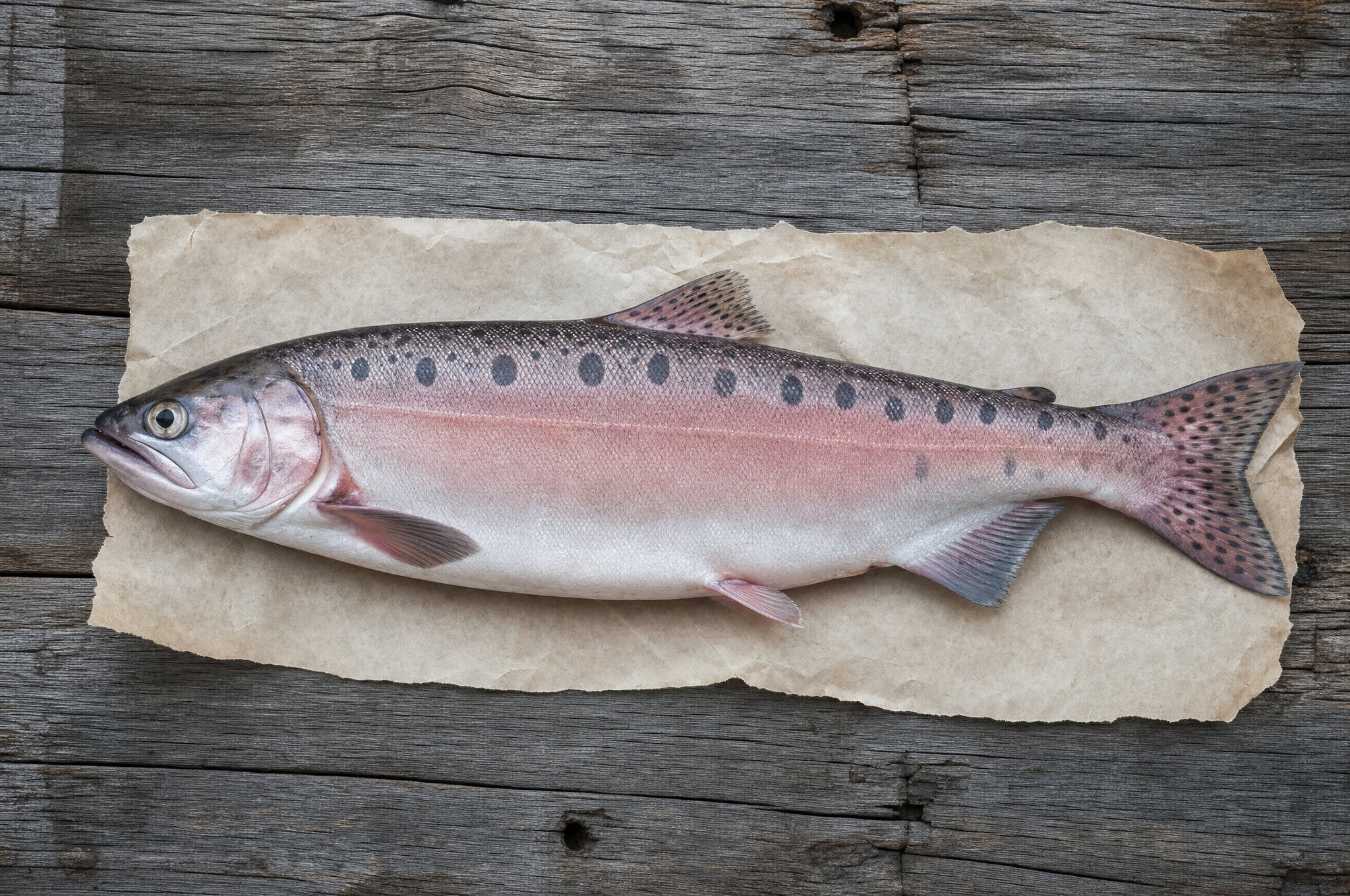
At sea, pink salmon are beautiful, sleek fish — steel blue to blue-green on the back, bright silver on the sides, and white on the belly. The easiest way to tell them apart from other Pacific salmon is to look for large, oval-shaped dark spots on the tail fin and back. No other Pacific salmon has spots quite that size and shape on the tail.
During spawning season, males undergo a dramatic transformation. Their backs develop a pronounced hump (hence “humpback salmon”), their jaws elongate and hook, and their color shifts to dark greenish-brown with reddish blotches on the sides. Females change color too, though less dramatically, and they never develop the hump.
Quick Species Card
- Scientific Name
- Oncorhynchus gorbuscha
- Common Names
- Pink salmon, Humpback salmon, Humpy
- Average Weight
- 3–5 lbs (1.5–2.5 kg)
- Average Length
- 20–25 inches (50–63 cm)
- Lifespan
- Strictly 2 years (shortest of all Pacific salmon)
- Run Timing
- Late June through August in Alaska
- Run Pattern
- Odd-year runs typically much larger than even-year runs
- Flavor
- Mildest of all Pacific salmon; delicate, light texture
- Flesh Color
- Light pink (paler than sockeye or coho)
- Key ID Feature
- Large oval dark spots on tail fin and back
- Conservation Status
- Secure in Alaska (MSC & RFM certified sustainable)
- % of AK Salmon Harvest
- 40–66% by volume in a typical year
Why Pink Salmon Matters to Alaska
Pink salmon is more than just another species on the dock — it is the economic engine of many Alaskan fishing communities. In 2023, pink salmon accounted for 66% of the total salmon harvest by number of fish. The species supports thousands of commercial fishing permits, funds state fish and wildlife management, and generates processing jobs from Ketchikan to Kodiak.
Ecologically, pink salmon are a keystone nutrient transfer species. When millions of pinks pour into rivers to spawn and die, they deliver a massive pulse of marine-derived nitrogen and phosphorus into freshwater and forest ecosystems. Bears, eagles, and dozens of other species depend on this annual nutrient subsidy. Even the trees along salmon streams grow faster thanks to the nutrients deposited by decomposing salmon carcasses.
And for consumers? Pink salmon represents the most accessible entry point into wild Alaskan seafood. If you have ever wanted to eat wild fish two or three times a week — as the American Heart Association recommends — but felt priced out by the cost of king or sockeye, pink salmon is how you make it happen.
Up next in Part 2: We break down the flavor profile, full nutrition data, the best cooking methods, and why professional chefs say pink salmon is one of the most underrated proteins in the kitchen.
Flavor & Texture: Why “Mild” Is a Feature, Not a Flaw
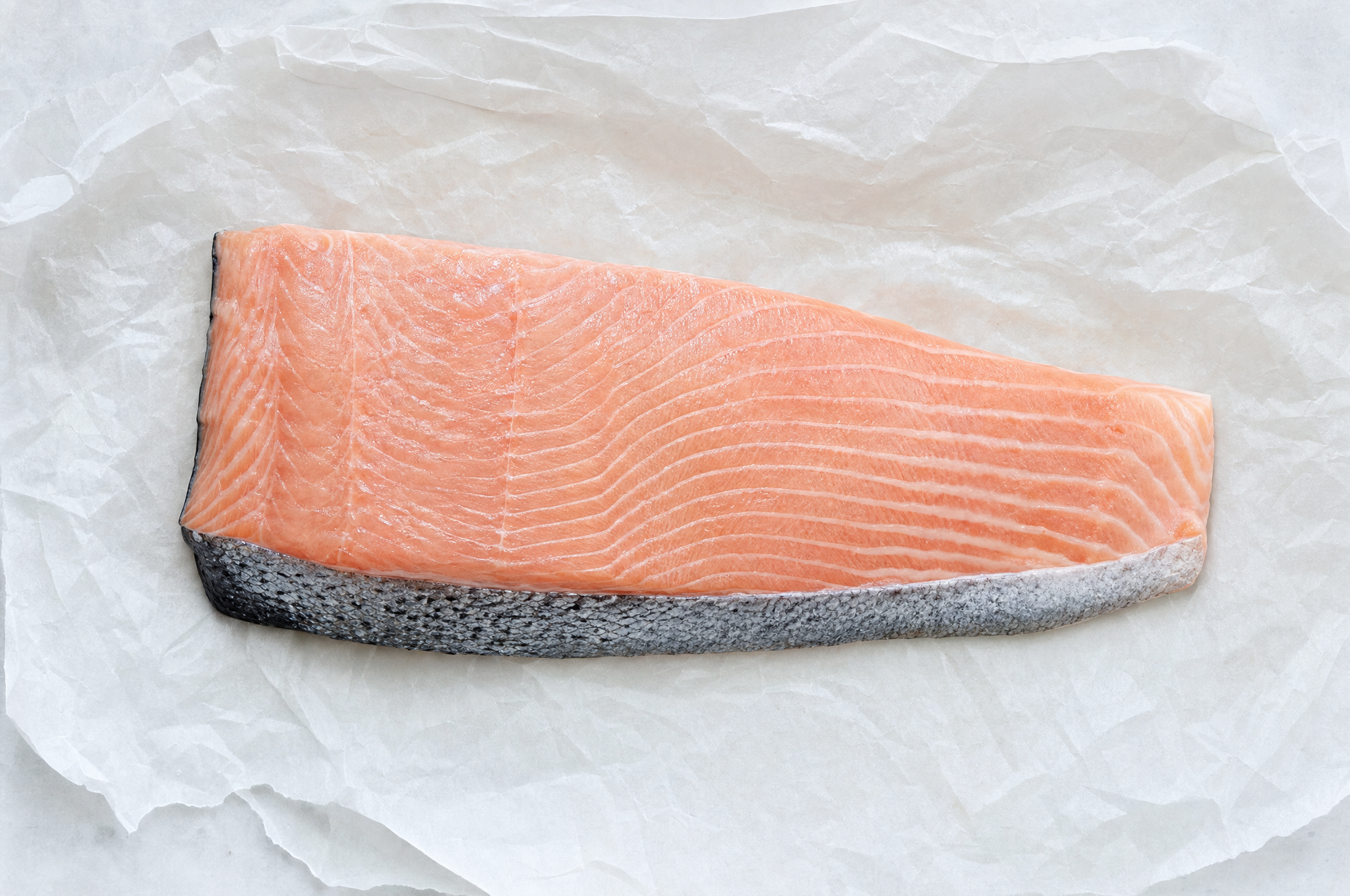
Pink salmon has the mildest, most delicate flavor of any Pacific salmon species. Where sockeye is assertive and rich, and king is buttery and bold, pink salmon is light, clean, and subtly sweet. The texture is softer and flakier than its higher-fat cousins, with a tender mouthfeel that practically melts when properly cooked.
For many people, that mildness is exactly the point. Pink salmon acts as a culinary blank canvas — it takes on the flavor of whatever you pair it with. Cajun blackening spice, citrus-herb marinades, teriyaki glaze, chimichurri, lemon-dill butter — pink salmon absorbs bold seasonings beautifully without fighting back with a strong “fishy” taste.
This makes pink salmon the single most versatile cooking fish in the salmon family. It is the species of choice for salmon burgers, salmon cakes, tacos, creamy pasta, cold salads, and spreads — applications where you want salmon flavor in the background, not dominating the dish.
“Pink salmon doesn’t taste as good as sockeye or king.”
The TruthPink salmon tastes different, not worse. In blind taste tests with seasoning, most people cannot reliably distinguish pink from more expensive species. The mild flavor is an asset for mixed dishes, family-friendly meals, and anyone who finds stronger salmon varieties too intense. Professional chefs routinely choose pink salmon for burgers, cakes, and spreads specifically because it lets other flavors shine.
The Flavor Spectrum of Pacific Salmon
Think of Pacific salmon flavor on a spectrum from mild to intense. Pink and chum sit at the mild end, coho and Atlantic land in the middle, and sockeye and king occupy the rich, bold end. None of these positions is inherently better — they serve different purposes in the kitchen. You would not use king salmon in a salmon burger any more than you would use filet mignon in a hamburger. You use the right fish for the right dish, and for everyday cooking, pink salmon is often the smartest choice.
Pink Salmon Nutrition: The Numbers
Pink salmon is a lean, protein-dense fish with a nutrition profile that puts most grocery-store proteins to shame. Here is how a standard 4-ounce (113g) serving of cooked wild pink salmon breaks down.
| Nutrient | Per 4 oz Cooked | % Daily Value |
|---|---|---|
| Calories | 170 | — |
| Protein | 24 g | 48% |
| Total Fat | 7 g | 9% |
| Saturated Fat | 1.2 g | 6% |
| Omega-3s (EPA + DHA) | 1.0–1.5 g | 63–94%* |
| Cholesterol | 67 mg | 22% |
| Vitamin B12 | 4.7 mcg | 196% |
| Niacin (B3) | 8.6 mg | 54% |
| Selenium | 44 mcg | 80% |
| Phosphorus | 302 mg | 24% |
| Vitamin D | ~14 mcg | 70% |
| Sodium | 75 mg | 3% |
*Based on the NIH recommended adequate intake of 1.1–1.6 g/day for adults. Source: USDA FoodData Central.
What Those Numbers Actually Mean
A single 4-ounce serving of pink salmon delivers nearly half your daily protein, roughly a full day’s worth of vitamin B12, and 80% of your selenium needs — all for about 170 calories with almost no saturated fat. The omega-3 content (1.0–1.5 grams of EPA and DHA) falls in the range recommended by cardiologists for heart health.
Yes, pink salmon has somewhat less fat and fewer omega-3s than king or sockeye. But context matters. Pink salmon still delivers significantly more omega-3s per serving than chicken breast (0.05g), lean ground beef (0.04g), pork loin (0.03g), tilapia (0.15g), or shrimp (0.3g). The gap between pink salmon and the average American’s actual diet is far larger than the gap between pink and sockeye.
The Budget-to-Nutrition Ratio
Here is where pink salmon truly separates itself. When you calculate grams of omega-3 per dollar spent, or grams of protein per dollar, pink salmon outperforms every other wild salmon species — and most other proteins entirely.
At $8–12 per pound (a typical price for frozen wild pink fillets), a 4-ounce serving costs roughly $2–3. That same $2–3 buys you 24 grams of complete protein, more than a gram of marine omega-3s, and a full spectrum of B-vitamins and minerals. No other wild fish matches that value proposition.
Why Pink Salmon Is the Most Underrated Protein in the Grocery Store
Pink salmon suffers from a perception problem. Because it is the most affordable and most abundant salmon, many consumers assume it must be inferior. This is the same logical fallacy that would lead you to believe bananas are a worse fruit than mangoes simply because they cost less. Abundance and affordability are not indicators of quality — they are indicators of supply.
Professional Chefs Already Know This
Walk into any high-volume restaurant kitchen that serves salmon burgers, salmon cakes, or salmon dip, and you will almost certainly find pink salmon in the walk-in. Professional chefs choose pink for these applications because its mild flavor and tender texture produce a better end product than using an expensive, strongly flavored species. You would not make a salmon burger with $40-per-pound king salmon any more than you would make a meatball with dry-aged ribeye. The right tool for the right job.
Canned Pink Salmon Feeds America
The best-selling canned salmon in the United States is wild-caught pink salmon from Alaska. Millions of American households already eat pink salmon regularly — they just may not realize it. When you open a can of salmon for patties, salad, or dip, you are almost always eating pink salmon. And every can is wild-caught, never farmed, and packed with the same omega-3s and protein as a fresh fillet.
The AHA Math
The American Heart Association recommends eating fish at least twice a week. For a family of four, that is eight servings per week. At sockeye or king prices ($15–40/lb), eight weekly servings of wild salmon could cost $30–80 per week — over $150–300 per month on fish alone. Switch to pink salmon at $8–12/lb, and the same eight servings cost $16–24 per week. Pink salmon is how you actually follow through on the recommendation to eat wild fish regularly without breaking your grocery budget.
Cooking Methods & Tips
Pink salmon’s mild flavor and tender texture make it ideal for dozens of preparations. Because it is a leaner fish, the single most important cooking tip is this: do not overcook it. Pink salmon cooks faster than fattier species and dries out more quickly if you push past the ideal internal temperature.
Pull pink salmon off the heat at 125°F internal temperature and let it rest for 2–3 minutes. The carryover cooking will bring it to a perfect finish. Going to 145°F (the USDA guideline for “well done”) will leave you with dry, chalky fish. Most chefs and seafood experts agree: 125°F is the sweet spot for texture and moisture.
Salmon Burgers
Pink salmon’s single best application. Pulse fresh or thawed fillets in a food processor, mix with breadcrumbs, egg, and seasonings, form into patties, and pan-sear 3–4 minutes per side. The mild flavor lets toppings and sauces shine.
Tacos
Season fillets with blackening spice or chipotle, sear in a screaming-hot cast iron pan for 2–3 minutes per side, flake into warm tortillas, and top with citrus slaw and avocado crema. Feeds a crowd for a fraction of what sockeye would cost.
Pasta
Flake cooked pink salmon into cream sauce, lemon-butter, or a light pesto pasta. The delicate flavor blends seamlessly with pasta sauces that would overwhelm more assertive fish. A weeknight dinner in under 25 minutes.
Baked with Glaze
Honey-sriracha, teriyaki, maple-mustard, or lemon-herb — pick your favorite glaze, brush it on a pink salmon fillet, and bake at 400°F for 10–12 minutes. The glaze adds moisture and flavor while the oven does the work.
Salmon Cakes & Croquettes
A classic way to use canned or leftover pink salmon. Mix with mashed potato, Dijon mustard, herbs, egg, and breadcrumbs. Pan-fry until golden. Serve with tartar sauce or remoulade. Freezes beautifully for make-ahead meal prep.
Cold Salads
Poach pink salmon fillets, chill, and flake over greens with cucumber, avocado, radish, and a lemon vinaigrette. The light flavor and soft texture make it an ideal protein for summer salads without weighing the dish down.
Salmon Dip & Spread
Blend canned or smoked pink salmon with cream cheese, lemon juice, dill, and capers. Serve with crackers or crostini. A crowd-pleasing appetizer that comes together in five minutes and costs a fraction of smoked sockeye dip.
Sheet-Pan Meal Prep
Arrange pink salmon fillets on a sheet pan with vegetables (broccoli, sweet potato, asparagus). Season everything together, roast at 425°F for 12–15 minutes. Portion into containers for four days of lunches. The value price makes this viable for weekly rotation.
A Note on Pink Salmon’s Lower Fat Content
Because pink salmon is leaner than king or sockeye, it benefits from cooking methods that add moisture — glazes, sauces, poaching liquid, or wrapping in foil with aromatics. Straight grilling over high heat without any protection is the one method where pink salmon is at a disadvantage compared to fattier species. It can absolutely be grilled, but use a foil packet, cedar plank, or heavy glaze to prevent drying.
The flip side of low fat content? Pink salmon is lower in calories than king or sockeye, making it a preferred choice for anyone watching their caloric intake while still wanting high-quality protein and omega-3s. It is one of the leanest wild proteins available, period.
Up next in Part 3: The buying guide, the full canned salmon breakdown, a species-by-species comparison chart, and the Bristol Bay connection.
Buying Guide: Fresh, Frozen, or Canned?
Pink salmon is available in more forms than any other wild salmon species. Whether you are shopping at a grocery store, ordering online, or stocking your pantry, here is what to look for and what to expect at each price point.
Fresh Fillets
Available July through September during the Alaska season. Mild, delicate, best for baking, pan-searing, or poaching. Shorter shelf life — use within 1–2 days of purchase.
Frozen Fillets
Flash-frozen at sea or at the processor. Available year-round. Often higher quality than “fresh” fish that has been sitting on ice for days. Best overall value for home cooking.
Canned Salmon
The ultimate pantry staple. Wild-caught Alaska pink salmon, shelf-stable for 3–5 years. Bone-in varieties provide extra calcium. Perfect for patties, salads, dips, and quick meals.
What to Look for on the Label
Regardless of format, prioritize these markers when choosing pink salmon:
- Wild-caught — All pink salmon from Alaska is wild. If it says “Alaska,” it is wild by law.
- Product of USA / Alaska — Ensures it was harvested from well-managed Alaskan fisheries.
- MSC or RFM certified — Independent sustainability certifications that verify responsible harvest practices.
- No added colors — Farmed salmon is often color-enhanced; wild pink salmon never needs it.
- Skin-on, bone-in (for canned) — The edible bones add roughly 213mg of calcium per serving.
Why Popsie Chose Sockeye Over Pink Salmon
While pink salmon is a solid everyday fish, we chose to build Popsie Fish Co around wild sockeye salmon because it delivers a premium experience in every category that matters: bolder flavor, firmer texture, deeper red color, and higher omega-3 content. When you build a Popsie mix-and-match box, every fillet is wild Bristol Bay sockeye — the upgrade over pink that makes every meal special.
Compare the displayed box sizes and per-pound prices on the live product page. Larger variants may offer a different per-pound price; confirm the current price before ordering. Explore our options.
Storage Guide
Proper storage preserves both flavor and nutritional value. Here is a quick reference for each format.
| Format | Refrigerator | Freezer | Pantry |
|---|---|---|---|
| Fresh fillets | 1–2 days (on ice) | Up to 6 months | — |
| Vacuum-sealed frozen | Remove vacuum packaging; thaw covered in fridge | 9–12 months | — |
| Canned (unopened) | — | — | 3–5 years |
| Canned (opened) | 2–3 days (covered) | — | — |
| Cooked leftovers | 3–4 days | 2–3 months | — |
Thawing tip: Before refrigerator thawing, open or remove the vacuum packaging. Place the pink salmon in a shallow covered container, keep it refrigerated, and follow any package or processor instructions. For a rapid cold-water thaw, keep the package sealed while submerged, then remove the packaging and cook immediately. Never thaw on the counter.
The Canned Salmon Section: America’s Healthiest Convenience Food
No guide to pink salmon would be complete without a dedicated section on canned salmon. Pink salmon is the dominant species in the American canned salmon market, and for good reason: it is wild-caught, shelf-stable, affordable, and surprisingly nutrient-dense. If you have been sleeping on canned salmon, it is time to wake up.
Canned Pink Salmon: By the Numbers
Those calcium numbers deserve special attention. When canned salmon is packed with bones (which soften during processing and become completely edible), a single serving delivers over 200mg of calcium — roughly 15–20% of your daily needs. That makes bone-in canned pink salmon one of the best non-dairy calcium sources available. If you are lactose intolerant or looking for a dairy-free calcium boost, this is an outstanding option.
What to Look for When Buying Canned Salmon
- Wild-caught Alaska pink salmon — This should be on every can. Avoid anything that does not specify “wild.”
- Bone-in, skin-on — You get the calcium benefit and the bones are soft enough to eat without noticing.
- No added salt (if watching sodium) — Many brands offer low-sodium or no-salt-added versions.
- BPA-free cans — Most major brands have transitioned, but check the label if this matters to you.
- Packed in water, not oil — Lower in calories; the fish provides plenty of its own healthy fat.
Quick Canned Salmon Recipes
Canned pink salmon is one of the most underused convenience proteins in the American kitchen. Here are five ways to turn a can of salmon into a meal in 15 minutes or less:
- Classic salmon patties: Drain the can, mix with egg, breadcrumbs, diced onion, and Old Bay seasoning. Pan-fry until golden on both sides. Serve on a bun or over rice.
- Salmon salad (like tuna salad): Mix drained salmon with mayo or Greek yogurt, celery, lemon juice, dill, and black pepper. Serve on bread, crackers, or over greens.
- Creamy salmon dip: Blend with cream cheese, lemon juice, garlic, dill, and a splash of hot sauce. Serve with crackers, veggies, or toasted pita.
- Salmon pasta: Toss flaked canned salmon into hot pasta with olive oil, garlic, cherry tomatoes, capers, and fresh herbs. Dinner in 12 minutes.
- Salmon quesadillas: Layer drained salmon with cheese, pickled jalapenos, and a squeeze of lime in a flour tortilla. Toast in a dry skillet until crispy.
Species Comparison: How Pink Salmon Stacks Up
Understanding where pink salmon fits among the other Pacific salmon species helps you make better purchasing decisions. Here is a side-by-side comparison.
| Attribute | Pink | Sockeye POPSIE’S PICK | King (Chinook) | Coho (Silver) | Farmed Atlantic |
|---|---|---|---|---|---|
| Flavor | Mild, delicate | Bold, rich, intense | Buttery, rich | Mild-medium, subtle | Mild, fatty |
| Texture | Soft, tender | Firm, meaty | Silky, moist | Medium-firm | Soft, oily |
| Fat Content | Low (3–5%) | Medium (5–8%) | High (10–15%) | Medium (5–7%) | High (12–16%) |
| Omega-3 / 4oz | 1.0–1.5g | 1.2–1.8g | 1.8–2.5g | 1.0–1.5g | 1.5–2.3g |
| Typical Price / lb | $7–$14 | $12–$25 | $30–$70+ | $12–$22 | $8–$14 |
| Wild-Caught? | Always (Alaska) | Always (Alaska) | Always (Alaska) | Always (Alaska) | Farmed |
| Best For | Burgers, tacos, canned, pasta, weekly meals | Grilling, center-plate, sashimi | Special occasions, grilling, sashimi | Baking, pan-searing, smoking | General cooking |
| Sustainability | MSC / RFM certified | MSC / RFM certified | Some runs limited | MSC / RFM certified | Varies; environmental concerns |
Pink vs. Sockeye: The Most Common Comparison
Sockeye is the species people most often compare to pink. The key differences: sockeye has a deeper red color, bolder flavor, firmer texture, and higher fat content. It is the better choice when salmon is the undisputed star of the plate — a grilled fillet, a sushi presentation, or a centerpiece dinner.
Pink salmon excels in every scenario where the salmon shares the stage with other ingredients — burgers, tacos, pasta, salads, cakes, dips. It is also the clear winner on price, often costing 40–60% less per pound than sockeye.
Pink vs. Farmed Atlantic: A Surprising Comparison
Here is a comparison that surprises most shoppers: wild pink salmon is often the same price or cheaper than farmed Atlantic salmon, while being wild-caught, free of antibiotics and synthetic colorants, and sustainably managed. If you are buying farmed Atlantic salmon because you think wild salmon is too expensive, pink salmon is the species that disproves that assumption. You can switch to wild-caught without paying more.
The Bristol Bay Connection
Bristol Bay, Alaska is one of the most prolific wild salmon fisheries on Earth. While it is most famous for its sockeye runs — the largest on the planet — Bristol Bay also supports significant pink salmon returns, particularly during odd-numbered years.
Run Timing and the Rhythm of the Season
Pink salmon typically begin arriving in Alaskan waters in late June, with the peak of the run occurring in July and August. Unlike sockeye, which can have runs extending into September, pinks tend to arrive in a concentrated pulse — a massive wave of fish moving through the fishing grounds over a relatively short window.
The even-year / odd-year dynamic creates a unique rhythm for Bristol Bay fishing communities. Odd years bring larger pink runs, meaning more processing capacity is needed, more crew are hired, and more product hits the market. Even years are quieter for pinks, though sockeye remains the primary target regardless. Fishermen who have worked the bay for decades develop an intuitive understanding of this two-year cycle, planning their seasons, gear, and budgets around it.
Sustainability in Practice
Alaska manages its pink salmon fisheries using in-season monitoring and escapement-based management. Biologists count fish at weirs and sonar stations in real time, opening and closing fishing periods to ensure that enough salmon escape the nets to reach the spawning grounds. This system has maintained healthy pink salmon populations for over six decades of statehood.
The Alaska pink salmon fishery holds both MSC (Marine Stewardship Council) and RFM (Responsible Fisheries Management) certifications — two of the most rigorous independent sustainability standards in the world. When you buy Alaska pink salmon, you are buying from a fishery with a proven track record of long-term sustainability.
Up next in Part 4: The seasonal buying calendar, quick recipe ideas, a comprehensive FAQ answering the 8 most common questions about pink salmon, and links to shop.
Seasonal Buying Calendar
Pink salmon availability follows a predictable annual rhythm. Here is a month-by-month guide to help you plan your purchases and take advantage of the best availability windows.
Odd-year bonus: In odd-numbered years (2025, 2027, 2029), Alaska produces significantly larger pink salmon runs. This typically means better availability, more product variety, and lower prices across all formats. If you are planning a big freezer stock-up, odd years are the time to do it.
Quick Recipe Ideas for Pink Salmon
Pink salmon is the weeknight workhorse of the salmon family. Here are eight recipe concepts that take advantage of its mild flavor and budget-friendly price point. Each is designed to be on the table in 30 minutes or less.
Blackened Pink Salmon Tacos
Season fillets with blackening spice, sear 2–3 minutes per side, flake into warm tortillas. Top with crunchy slaw, avocado crema, and a squeeze of lime. Family taco night for under $15.
Classic Salmon Burgers
Pulse thawed fillets in a food processor with panko, egg, Dijon, green onion, and lemon zest. Form patties, pan-sear until golden. Serve on brioche buns with dill-caper aioli and arugula.
Honey-Sriracha Glazed Fillets
Whisk together honey, sriracha, soy sauce, garlic, and lime juice. Brush over fillets, bake at 400°F for 10–12 minutes. The sweet-spicy glaze keeps the lean fish moist and flavorful.
Lemon-Herb Salmon Pasta
Cook your favorite pasta, then toss with flaked pink salmon, lemon butter, garlic, capers, fresh dill, and a splash of pasta water. Finish with Parmesan and black pepper.
Canned Salmon Patties
Drain a can of pink salmon, mix with egg, breadcrumbs, chopped onion, and Old Bay. Pan-fry in a thin layer of oil until crispy on both sides. Serve with lemon wedges and tartar sauce.
Salmon Caesar Salad
Pan-sear seasoned pink salmon fillets, let cool slightly, flake over crisp romaine with shaved Parmesan, croutons, and a light Caesar dressing. High protein, low effort.
Sheet-Pan Teriyaki Salmon
Arrange pink salmon fillets and broccoli on a sheet pan. Drizzle with teriyaki sauce, roast at 425°F for 12–15 minutes. Serve over rice for a complete meal from one pan.
Smoked Salmon-Style Dip
Blend canned pink salmon with cream cheese, lemon juice, smoked paprika, dill, garlic, and a pinch of cayenne. Serve with crackers, vegetables, or crostini. Game-day appetizer under $8.
For full step-by-step recipes with photos, visit our Recipe Blog. We publish new pink salmon recipes regularly throughout the season.
Frequently Asked Questions About Pink Salmon
1. Is pink salmon good to eat?
Absolutely. Pink salmon is a wild-caught, nutrient-dense fish loaded with protein, omega-3 fatty acids, B-vitamins, and selenium. It is the most widely consumed salmon species in America (primarily through canned salmon), and it is the species most professional chefs reach for when making salmon burgers, cakes, and spreads. Its mild flavor makes it accessible to people who find stronger salmon varieties too intense, and it is an excellent choice for children and picky eaters. That said, if you want a step up in flavor, texture, and nutrition, wild sockeye salmon is the premium upgrade — and it is the only salmon we sell at Popsie Fish Co because we believe you deserve the best.
2. What is the difference between pink salmon and regular salmon?
There is no single “regular” salmon — the term usually refers to whatever species is most common in a particular market. Pink salmon is one of five Pacific salmon species (along with sockeye, king, coho, and chum). Compared to sockeye and king, pink salmon is milder in flavor, lighter in color, softer in texture, leaner, and significantly more affordable. Compared to farmed Atlantic salmon (which many Americans think of as “regular”), wild pink salmon is similarly priced but wild-caught, free of antibiotics, and sustainably managed. For those looking for a truly premium wild salmon experience, we recommend wild sockeye salmon — it delivers bolder flavor, deeper color, and firmer texture.
3. Is canned salmon healthy?
Yes. Canned wild pink salmon is one of the healthiest convenience foods available. A single serving provides roughly 20 grams of protein, over 1 gram of omega-3 fatty acids, and (when packed with bones) approximately 213 milligrams of calcium — about 15–20% of the daily recommended intake. The bones soften during canning and become completely edible. Canned salmon retains virtually all of the nutritional benefits of fresh salmon, with the added advantage of a 3–5 year shelf life and no refrigeration required.
4. What can I make with pink salmon?
Pink salmon is the most versatile cooking salmon. Top uses include: salmon burgers, fish tacos, pasta with salmon, baked fillets with glaze (honey-sriracha, teriyaki, lemon-herb), salmon cakes and croquettes, cold salmon salads, salmon dip and spread, sheet-pan dinners, salmon quesadillas, and salmon chowder. Its mild flavor absorbs bold seasonings well, making it ideal for dishes where you want salmon as a supporting ingredient rather than the dominant flavor.
5. Is pink salmon wild-caught?
Yes. Virtually all commercial pink salmon comes from wild fisheries in Alaska, Russia, and the Pacific Northwest. Pink salmon are not raised in fish farms in any significant commercial quantity. If the label says “Alaska pink salmon,” it is wild-caught by law — Alaska prohibits salmon farming entirely. The Alaska pink salmon fishery is certified sustainable by both MSC and RFM, two of the most rigorous independent standards in global fisheries.
6. How does pink salmon compare nutritionally to sockeye?
Both species are excellent sources of protein and omega-3 fatty acids. Sockeye has slightly more fat and omega-3s per serving (about 1.2–1.8g vs. 1.0–1.5g for pink) and somewhat more calories. Pink salmon is leaner and lower in calories. Both provide outstanding amounts of B12, selenium, and vitamin D. While pink salmon offers good value on a cost-per-nutrient basis, sockeye’s advantages in flavor, color, texture, and omega-3 density make it the better choice when you want the full premium wild salmon experience. Popsie Fish Co exclusively offers wild sockeye salmon because we believe the upgrade in quality is worth every penny.
7. Why is pink salmon so cheap?
Pink salmon is affordable because of abundance, not because of quality. It is the most numerous Pacific salmon species by a wide margin — Alaska alone harvests over 100 million pink salmon in strong odd-year runs. Basic supply and demand: when nature produces vast quantities of a fish, the per-pound price falls. Every pink salmon is still a wild, ocean-going fish that swam thousands of miles through the North Pacific. Its lower price reflects supply dynamics, not nutritional or culinary inferiority. However, if budget allows, upgrading to wild sockeye gives you significantly bolder flavor, deeper red color, and higher omega-3 content — which is why Popsie Fish Co chose to offer exclusively wild sockeye salmon.
8. Can you grill pink salmon?
Yes, with a few adjustments. Because pink salmon is leaner than king or sockeye, it benefits from protection against direct high heat. The best methods are: grilling in a foil packet with aromatics and a splash of liquid, cooking on a cedar plank (which adds flavor and prevents sticking), or using a heavy glaze that creates a caramelized barrier. Marinating for 30 minutes before grilling also helps retain moisture. Pull the fish at 125°F internal temperature to keep it tender. Avoid placing thin fillets directly on grill grates without protection, as they can dry out and fall apart.
Explore More Guides
Ready to Upgrade to Wild Sockeye Salmon?
Popsie Fish Co offers wild Bristol Bay sockeye salmon — bolder flavor, deeper color, firmer texture, and more omega-3s than pink salmon. Join thousands of families who choose sockeye for the premium wild salmon experience.