
Species Guide
The Complete Guide to Wild King Salmon (Chinook)
The biggest, fattiest Pacific salmon — and the one species we don't ship. Here's why we chose sockeye instead.
Key Takeaways
- Largest Pacific salmon species — adults commonly weigh 20–50 pounds and can exceed 100 pounds in rare cases.
- Highest fat content among wild salmon — that means the richest flavor and the most omega-3 fatty acids per serving.
- Two main flesh colors — deep red (most common) and ivory/white (the rare and prized “ivory king”).
- Bristol Bay king salmon run peaks June–July — fresh wild king is a seasonal treasure, available frozen year-round.
- Best cooking methods: grilling, pan-searing, broiling — the high fat content naturally prevents drying out.
- Wild king delivers roughly 2,200 mg of omega-3s per 3 oz serving — the most of any wild Pacific salmon species.
- Sockeye salmon delivers comparable nutrition at a better value — that’s why Popsie chose it as our premium wild salmon.
Why Popsie Chose Wild Sockeye Salmon
While king salmon is the largest and richest Pacific salmon, we chose to offer wild sockeye because it delivers the best combination of bold flavor, stunning deep-red color, nutritional density, and value. Bristol Bay’s sockeye fishery is one of the most sustainable on Earth, producing consistent harvests year after year.
Shop Our Wild Sockeye SalmonIn This Guide
1. Species Overview & Identification
King salmon — scientifically known as Oncorhynchus tshawytscha — is the largest species of Pacific salmon and widely regarded as the finest eating salmon in the world. The common name “Chinook” comes from the Chinookan peoples of the Pacific Northwest, who have relied on this fish for thousands of years. Depending on where you are, you might hear it called Chinook, Tyee (a Nuu-chah-nulth word meaning “chief”), Springs, or Blackmouth (a reference to the distinctive dark pigment along its gum line).
Quick Facts at a Glance
Identifying King Salmon
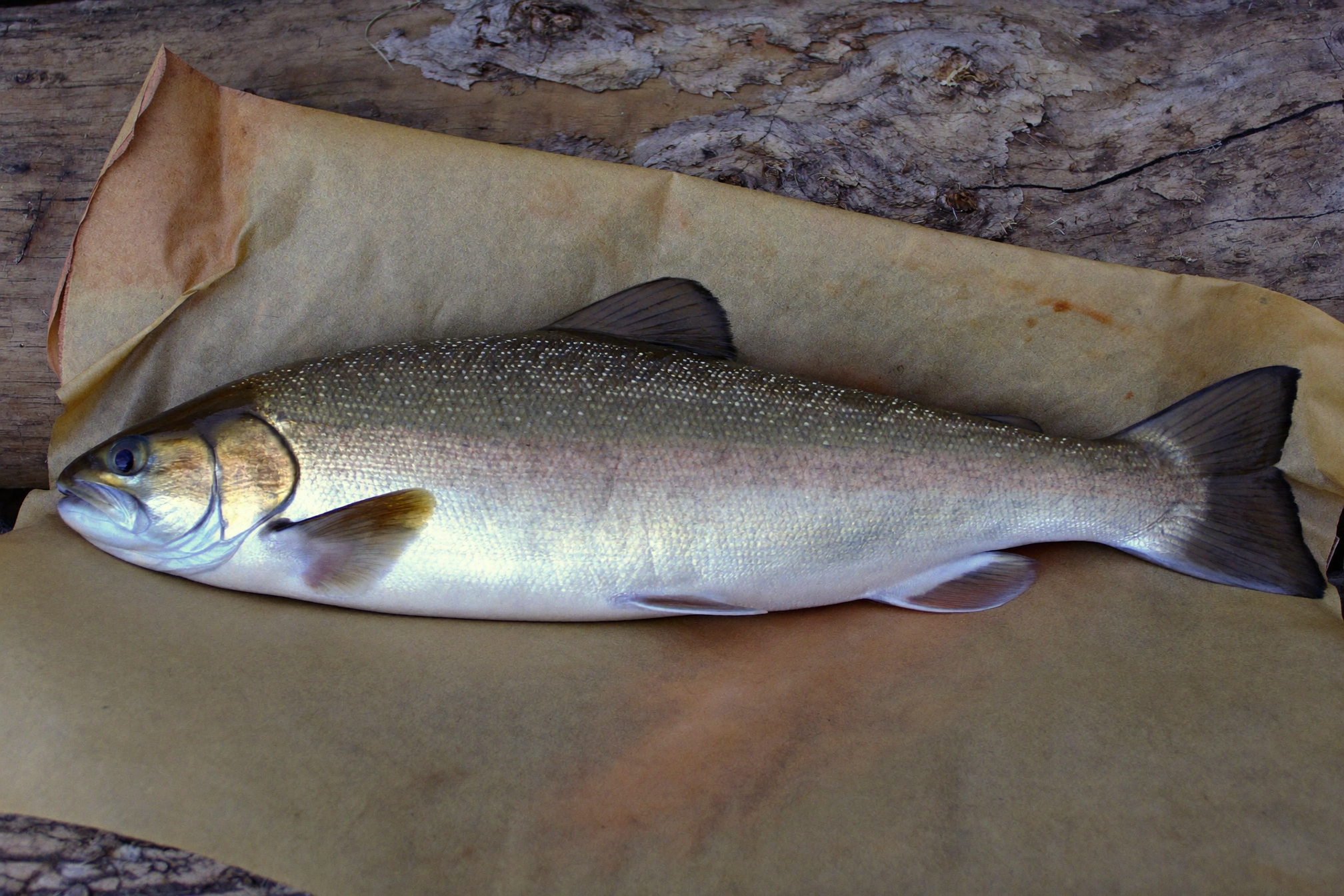
In the ocean, king salmon display a blue-green back, bright silver sides, and a white belly. Black spots cover the upper half of the body and both lobes of the tail fin — this “both-lobed spotting” is a reliable way to tell a king from a sockeye (which has no spots) or a coho (spots on the upper tail lobe only). Flip the jaw open, and you will notice the dark gum line that gives this fish its “blackmouth” nickname.
Kings are built heavier than other Pacific salmon. A mature adult commonly measures three feet long and weighs 30 pounds, though fish in the 40–50 pound range are not unusual in Alaskan waters. The all-tackle world record is a 97-pound, 4-ounce fish caught on the Kenai River in 1985, while commercial nets have documented fish exceeding 100 pounds.
Life Cycle
Like all Pacific salmon, kings are anadromous — they hatch in freshwater rivers, migrate to the ocean as juveniles (smolts), spend one to five years feeding in the rich North Pacific, then return to their natal stream to spawn. Chinook can mature anywhere from their second to seventh year, which is why returning runs include a wide range of sizes: a three-year-old “jack” might weigh under four pounds, while a seven-year-old female can exceed 50 pounds.
Unlike Atlantic salmon, all Pacific salmon — including kings — die after spawning. This single, dramatic spawning event makes every generation a fresh start and gives the fish an almost mythic stature in the ecosystems they support. Decaying salmon carcasses fertilize the rivers and surrounding forests, feeding everything from bears and eagles to the microbial life that nourishes the next generation of salmon fry.
Where King Salmon Live
The native range of king salmon stretches across the North Pacific — from the Sacramento River system in Northern California all the way around to Arctic rivers in Siberia. However, Alaska is the stronghold. The state's vast, undammed river systems in Bristol Bay, the Yukon, the Copper River, the Kenai Peninsula, and Southeast Alaska support the largest and healthiest wild king runs left on Earth.
The Bristol Bay King Salmon Run
Bristol Bay is best known for its massive sockeye returns, but it is also home to important king salmon runs — particularly in the Nushagak River system. The Bristol Bay king run typically arrives from late May through July, with the peak window falling between mid-June and early July.
In recent years, Bristol Bay Chinook returns have fluctuated. The Alaska Department of Fish & Game manages these runs carefully, using in-season sonar counts and escapement goals to ensure enough kings reach their spawning grounds. This conservative management approach means that when you buy Bristol Bay king salmon, you are supporting a fishery that prioritizes long-term sustainability over short-term harvest.
Why is it called “the king”? Simple: no other salmon comes close in size, fat content, or culinary prestige. Among commercial fishermen in Alaska, hooking a king is the gold standard. Among chefs, wild king salmon commands the highest price and the deepest respect of any salmon species. It is, in every measurable way, the apex of the Pacific salmon family.
Red King vs. Ivory (White) King
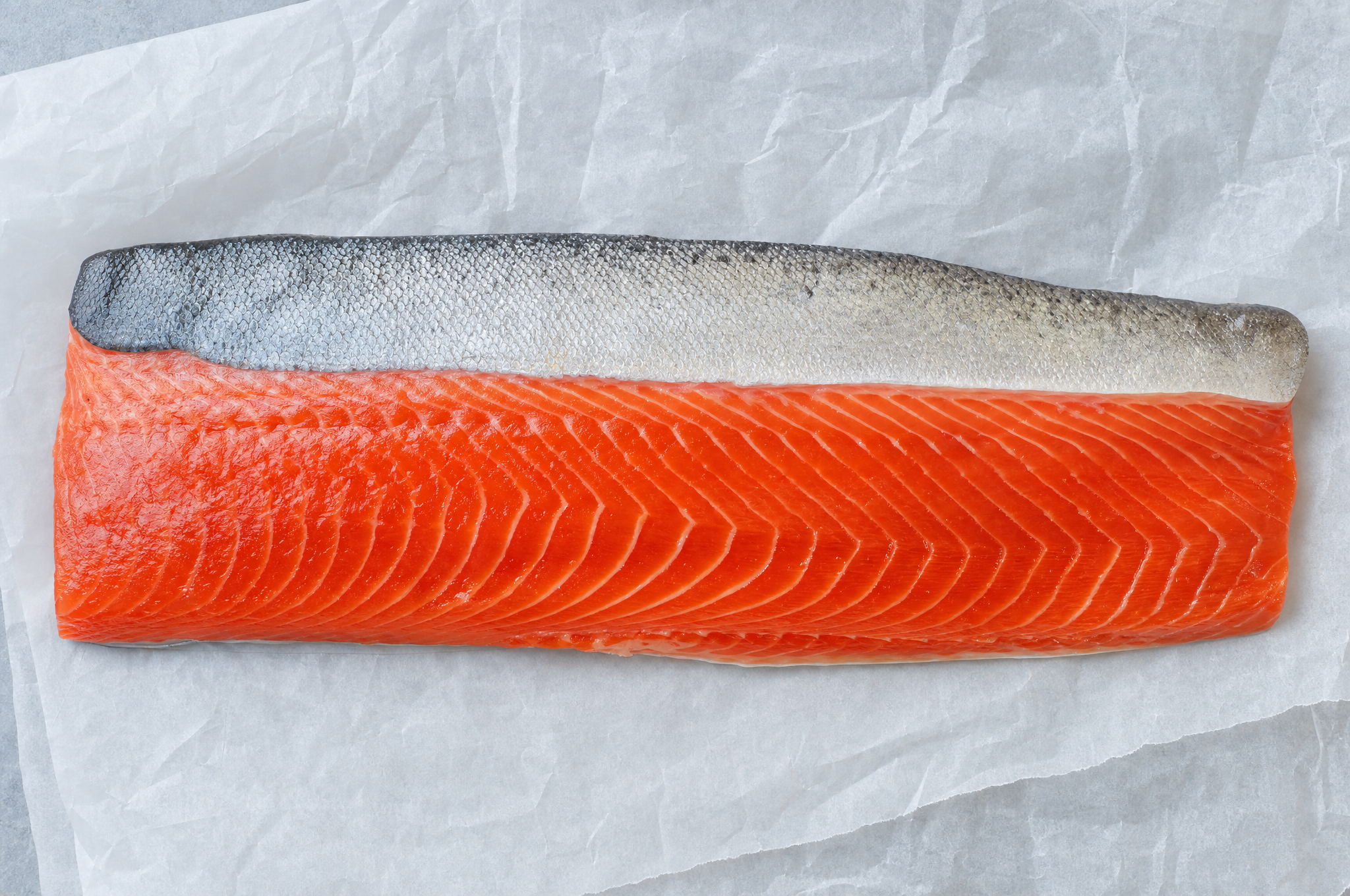
Most king salmon have the deep red-orange flesh that comes from astaxanthin, a naturally occurring carotenoid pigment the fish absorb from their diet of krill and shrimp. However, roughly 5–10% of king salmon carry a genetic variation that prevents them from metabolizing astaxanthin into their flesh. The result is the rare ivory king (also called white king) — a fish with creamy white or pale pink flesh.
Ivory kings taste slightly milder and more delicate than their red-fleshed counterparts, though both share the same rich, buttery fat profile that defines the species. Because of their rarity, white kings are considered a delicacy and often command premium prices at market.
Shop Our Wild Sockeye Salmon2. Flavor, Texture & Culinary Profile
Ask any chef which salmon they would choose for a special occasion, and the answer is almost always king. Wild king salmon has a flavor profile that sets it apart from every other member of the Pacific salmon family — and from farmed Atlantic salmon as well.
What King Salmon Tastes Like
The defining characteristic of king salmon is its rich, buttery flavor. With approximately 10 grams of fat per 100 grams of raw flesh — nearly double the fat of sockeye — king salmon delivers a succulent, almost velvety mouthfeel that melts across the palate. The flavor is full and round without being fishy. Think of it as the Wagyu of the salmon world.
The texture is equally distinctive: firm, large flakes that hold together beautifully on the grill or in the pan. Where leaner salmon can break apart or dry out, king’s generous fat content keeps the flesh moist and cohesive through cooking. The flakes are broad and satisfying, with a silky quality that lighter species simply cannot match.
How King Salmon Compares to Other Species
- King vs. Sockeye: Sockeye has a more assertive, almost meaty flavor with a firmer, denser texture and deeper red color. King is richer and more delicate. Sockeye is excellent for bold preparations; king shines when you want the salmon itself to be the star.
- King vs. Coho: Coho (silver salmon) has a milder, more approachable flavor and a lighter, more tender texture. It is a versatile, everyday fish. King is the upgrade — deeper flavor, more luxurious mouthfeel, and a higher price tag to match.
- King vs. Farmed Atlantic: Farmed Atlantic salmon has a mild, fatty flavor from its controlled diet. Wild king has more complexity, a cleaner finish, and significantly higher omega-3 levels. The fat in wild king comes from a natural diet of krill, herring, and squid, which gives the flavor more depth.
Red King vs. Ivory King — Flavor Differences
Red-fleshed king salmon has a fuller, more robust flavor with the characteristic “salmon” taste amplified by the high oil content. Ivory (white) king is prized for its more delicate, nuanced flavor — slightly sweeter, with less of the bold salmon character. Chefs who work with ivory kings often describe the flavor as “clean” and “refined.” Both varieties share the same high fat content and luscious texture.
Why Chefs Prefer Wild King
At the highest levels of cooking, wild king salmon is treated as a luxury ingredient. Its high fat content makes it extremely forgiving — you have a wider window before overcooking than with leaner species. It takes smoke, char, and seasoning beautifully while still asserting its own flavor. It is equally at home raw (sashimi, crudo) as it is grilled over an open flame. For restaurants that price by the species, king is always at the top of the menu.
3. Complete Nutritional Breakdown
King salmon is not just the best-tasting salmon — it is one of the most nutrient-dense proteins available. A single serving provides extraordinary amounts of omega-3 fatty acids, B vitamins, vitamin D, and selenium, along with high-quality, complete protein.
Nutrition Per 6 oz (170g) Cooked Serving
| Nutrient | Amount | % Daily Value |
|---|---|---|
| Calories | 350–370 | — |
| Protein | 39–42 g | ~80% |
| Total Fat | 20–22 g | ~28% |
| Omega-3s (EPA + DHA) | 3,000–3,800 mg | — |
| Vitamin B12 | ~5.4 mcg | 225% |
| Vitamin D | ~900 IU | ~113% |
| Selenium | ~63 mcg | ~115% |
| Niacin (B3) | ~15 mg | ~94% |
| Vitamin B6 | ~0.7 mg | ~41% |
| Phosphorus | ~430 mg | ~34% |
| Potassium | ~680 mg | ~14% |
| Saturated Fat | ~5.3 g | ~26% |
| Cholesterol | ~85 mg | ~28% |
Nutritional values based on USDA FoodData Central data for wild Chinook salmon. Exact amounts vary by individual fish, preparation method, and portion size.
Omega-3 Fatty Acids: How King Compares
Omega-3 fatty acids — specifically EPA (eicosapentaenoic acid) and DHA (docosahexaenoic acid) — are the headlining nutritional benefit of wild salmon. King salmon leads the pack by a wide margin, delivering roughly 2,200 mg of combined EPA and DHA per 3 oz serving (about 3,500+ mg per 6 oz serving).
Omega-3s per 3 oz (85g) Serving — Wild Salmon Species
For context, most health organizations recommend consuming at least 250–500 mg of combined EPA and DHA daily for general cardiovascular health. A single 3 oz portion of king salmon delivers roughly four to nine times that minimum in one sitting.
Mercury Levels
Despite being the largest Pacific salmon, king salmon is classified as a low-mercury fish by the EPA and FDA. According to FDA monitoring data, the average mercury concentration in commercial salmon is approximately 0.022 ppm (parts per million) — well below the 0.15 ppm threshold that defines the FDA’s “Best Choices” category. Even larger individual Chinook remain far below concern levels. For comparison, swordfish averages over 0.9 ppm — more than 40 times higher.
Salmon, including king salmon, falls into the EPA/FDA’s highest “Best Choices” tier, meaning it is safe to eat two to three servings per week, including for pregnant and nursing women.
Astaxanthin — The Natural Antioxidant
The deep red-orange color of king salmon flesh comes from astaxanthin, a carotenoid pigment absorbed from the fish’s natural diet of krill and other crustaceans. Astaxanthin is one of the most potent natural antioxidants known — research suggests it has hundreds of times more antioxidant activity than vitamin C. A typical serving of wild king salmon provides an estimated 1–3 mg of astaxanthin (sockeye, with its deeper red flesh, provides slightly more at 3–4.5 mg per serving).
4. Best Cooking Methods for King Salmon
King salmon’s high fat content is its superpower in the kitchen. While leaner species can go from perfectly done to dry and chalky in seconds, king gives you a much more forgiving window. That said, the single biggest mistake people make with king salmon is overcooking it. This fish is at its best when it still has a slightly translucent center.
The temperature debate: The USDA recommends an internal temperature of 145°F for all fish. Most professional chefs and experienced home cooks pull king salmon at 120–125°F (medium to medium-rare) and let it carry over to about 130°F while resting. At this temperature, the fish is silky, moist, and at peak flavor. Cook it to 145°F and much of the fat renders out, leaving the flesh drier and firmer.
Grilling
The best all-around method for king salmon. The high fat content prevents sticking and keeps the flesh moist even over direct heat. Use skin-on fillets, start skin-side down over medium-high heat, and flip once. The skin crisps beautifully while the interior stays succulent.
Medium-High Heat 4–5 min per sidePan-Searing
The restaurant method. Heat a cast-iron skillet until it shimmers, add a thin layer of high-smoke-point oil. Place the fillet skin-side down and press gently for 30 seconds to prevent curling. Do not move it. When the skin is deep golden and crispy, flip and finish on the flesh side.
Medium-High Heat 4 min skin + 2 min fleshBroiling
The hands-off oven method. Position a rack 6 inches from the broiler element. Place seasoned fillets on a foil-lined sheet pan. Broil without flipping. The top caramelizes while the interior stays moist. Watch carefully — the line between perfect and overdone is thin under a broiler.
High Broil (500°F+) 6–8 min for 1" filletsBaking
The most foolproof method for beginners. Preheat to 350°F, place seasoned fillets on a parchment-lined sheet pan, and bake until the center is barely opaque. This gentle, even heat is forgiving and works well with any glaze or topping.
350°F 12–15 minSmoking
King salmon is the premium choice for smoking. Its high fat content absorbs smoke flavor deeply while keeping the flesh moist through the long, low cooking process. Both hot-smoked and cold-smoked preparations showcase king salmon at its finest. Brine for 6–12 hours before smoking.
225°F (hot smoke) 2–4 hoursSous Vide
For the ultimate in precision. Vacuum-seal seasoned portions and cook in a water bath at 120°F for 40–50 minutes. The result is an almost custard-like texture that is impossible to achieve any other way. Finish with a quick sear for crust.
120°F water bath 40–50 minCommon Mistakes to Avoid
- Overcooking: The number one mistake. King salmon needs LESS time than you think. Its high fat content means it cooks faster and continues to cook after you remove it from heat (carry-over cooking).
- Starting with wet fish: Always pat fillets completely dry with paper towels before searing or grilling. Moisture on the surface prevents browning and causes sticking.
- Moving the fish too soon: Whether on a grill or in a pan, let the fish release naturally. When the skin is properly crisped, the fillet will release on its own. Trying to flip too early tears the skin.
- Removing the skin: King salmon skin is edible, nutritious, and delicious when crisped. It also protects the flesh from direct heat. Leave it on for almost every preparation.
- Cooking from a microwave thaw: Microwaving unevenly thaws and partially cooks the edges. Always thaw in the refrigerator overnight or in cold water.
For detailed step-by-step instructions with photos, explore our king salmon recipe collection.
Explore King Salmon Recipes5. How to Buy King Salmon
Whether you are shopping at a fish counter, a farmers’ market, or ordering online, knowing what to look for ensures you get the best king salmon available. Here is what matters.
What to Look For
- Color: Deep red-orange flesh (or creamy white/pale pink for ivory king). The color should be vibrant and consistent, not dull or brown-tinged at the edges.
- Firmness: The flesh should spring back when gently pressed. If it holds the indentation, the fish is past its prime.
- Smell: Fresh king salmon should smell clean and oceanic — like the sea, not “fishy.” Any strong, ammonia-like odor is a red flag.
- Skin: Should be bright and metallic (silver), not dull or slimy.
- Eyes (whole fish): Clear and convex, not cloudy or sunken.
Wild vs. Farmed King Salmon
While farmed Chinook salmon does exist (primarily in New Zealand), wild king salmon is the clear choice for flavor, nutrition, and environmental integrity. Wild king salmon feeds on a natural diet of krill, herring, squid, and other marine life in the open North Pacific, developing its characteristic deep color, complex flavor, and exceptional omega-3 content. Farmed Chinook, raised on processed feed pellets in net pens, produces a milder, less complex fish with a different fatty acid profile.
Fresh vs. Frozen: The Surprising Truth
Properly flash-frozen wild salmon is often superior to “fresh” salmon at the fish counter. Here is why: wild king salmon is caught in remote Alaskan waters, often hundreds of miles from the nearest airport. The fish that reaches your local store as “fresh” may be 5–10 days post-catch by the time you buy it. By contrast, fish that is flash-frozen at sea (or within hours of landing) locks in peak freshness at the point of harvest.
When you thaw that fish at home, it is effectively fresher than the “fresh” fish that traveled for days on ice. This is why many sushi restaurants actually prefer previously frozen fish — it is at its peak.
Cuts and Portions
- Whole fillets: The entire side of the fish, from collar to tail. Best for large gatherings, roasting, or cutting your own portions.
- Center-cut portions (6–8 oz): The most consistent thickness for even cooking. The best all-purpose cut for home cooking.
- Belly strips: The fattiest section — prized for smoking, grilling, or sashimi.
- Collar and cheeks: Underrated, incredibly flavorful cuts that serious seafood lovers seek out.
Seasonal Availability
Fresh, never-frozen king salmon is available during the Alaskan harvest season, primarily June and July. Outside this window, properly frozen king salmon is available year-round and — as discussed above — retains all the quality of fresh-caught fish. While Popsie does not sell king salmon, our wild sockeye salmon is flash-frozen at peak freshness, vacuum-sealed, and shipped directly to your door — delivering comparable nutritional benefits at a better value.
Why Popsie Chose Sockeye & Our Mix-and-Match Pricing
While king salmon is extraordinary, Popsie Fish Co chose to specialize in wild Bristol Bay sockeye salmon — it delivers bold flavor, stunning deep-red color, excellent omega-3 nutrition, and outstanding value. We do not sell king salmon, but we believe in educating our customers about all Pacific salmon species so you can make informed choices. Our sockeye is available through our mix-and-match tier pricing system:
- Starter Box (5 lbs): Perfect for trying our wild sockeye salmon.
- Value Box (10 lbs): The most popular option for families.
- Family Box (15 lbs): Stock your freezer and save more per pound.
- Freezer Pack (20 lbs): The best per-pound price — ideal for serious seafood households.
6. Storage & Thawing Guide
Proper storage and thawing are just as important as cooking technique. Treat your king salmon right from freezer to plate, and it will taste like it was caught that morning.
Freezer Storage
Vacuum-sealed wild king salmon maintains peak quality for up to 12 months in a standard home freezer (0°F / -18°C). After 12 months the fish is still safe to eat, but texture and flavor may gradually diminish. For the best results, store packages in the coldest part of your freezer — away from the door.
Thawing Methods
Refrigerator Thaw (Recommended)
Transfer the vacuum-sealed package from the freezer to the refrigerator 8–12 hours before cooking (overnight is ideal). This slow, gentle thaw preserves the cellular structure and keeps the fish at a safe temperature throughout. This is the method we recommend for king salmon.
Cold Water Thaw (Quick Method)
Place the sealed package in a bowl of cold water. Change the water every 30 minutes. Most portions thaw in 1–2 hours. Do not use warm or hot water — it will partially cook the outer layer and create uneven texture.
Cook From Frozen
Yes, you can cook king salmon directly from frozen. Add approximately 50% more cooking time than you would for thawed fish. This works best for baking (375°F, 18–22 min). Not ideal for pan-searing or grilling, where a thawed surface is needed for proper browning.
Never Microwave Thaw
Microwave thawing creates hot spots that partially cook portions of the fish while leaving other areas still frozen. The result is uneven texture and a significant loss of quality. Avoid this method for king salmon.
After Thawing
- Once thawed, use within 1–2 days. Keep refrigerated at all times.
- Open the vacuum seal before or immediately after thawing to allow the fish to breathe.
- Pat fillets completely dry with paper towels before cooking for the best sear and crust.
- Do not refreeze thawed king salmon — the ice crystals that form during a second freeze damage the cellular structure, resulting in mushy texture.
7. King Salmon vs. Other Salmon Species
Not sure whether to choose king, sockeye, coho, or something else? This comparison breaks down the key differences to help you pick the right salmon for your meal.
| Attribute | King (Chinook) | Sockeye (Red) | Coho (Silver) | Pink |
|---|---|---|---|---|
| Fat Content | Highest (~10g/100g) | Moderate (~5g/100g) | Moderate (~6g/100g) | Low (~3.5g/100g) |
| Flavor | Rich, buttery, luxurious | Bold, assertive, meaty | Mild, delicate, approachable | Light, mild |
| Texture | Large, firm flakes; silky | Dense, firm | Medium flake, tender | Soft, fine flake |
| Flesh Color | Deep red or ivory (white) | Deep, vivid red | Orange-red | Light pink |
| Omega-3s (3 oz) | ~2,200 mg | ~1,500 mg | ~1,200 mg | ~900 mg |
| Average Size | 20–50 lbs | 5–8 lbs | 8–12 lbs | 3–5 lbs |
| Best Uses | Grilling, searing, sashimi, smoking | Grilling, baking, bold preparations | Baking, poaching, everyday meals | Canning, salads, burgers |
| Price Point | Premium (highest) | High | Moderate | Affordable |
| Best For | Special occasions, when salmon is the star | Bold-flavored dishes, health-focused meals | Weeknight dinners, versatile cooking | Budget meals, canned preparations |
Popsie’s Pick: Wild Sockeye Salmon. While king salmon has the highest fat content, sockeye delivers excellent omega-3 nutrition with bolder flavor and better value — which is why it’s the only salmon we offer. Shop our wild sockeye →
King vs. Farmed Atlantic Salmon
This is the comparison many shoppers face at the grocery store. Farmed Atlantic salmon is widely available and less expensive, but the differences go deeper than price:
- Nutrition: Wild king salmon has significantly more omega-3s from its natural diet and a better omega-3 to omega-6 ratio. Farmed Atlantic salmon has higher total fat (much of it from its processed feed) and a less favorable fatty acid balance.
- Flavor: Wild king has more complexity and a cleaner finish. Farmed Atlantic is milder and more uniform — which some people prefer but chefs generally do not.
- Environment: Wild Alaskan king salmon comes from sustainably managed fisheries in pristine waters. Farmed Atlantic salmon is raised in net pens that can produce waste, require antibiotics, and pose risks to wild fish populations through disease transfer and escapement.
- Color: The deep red of wild king comes from natural astaxanthin in its diet. Farmed Atlantic salmon is naturally gray; the orange-pink color comes from synthetic astaxanthin added to its feed.
8. The Bristol Bay Connection
Popsie Fish Co exists because of Bristol Bay, Alaska — one of the most productive and well-managed wild fisheries on Earth. Our founder Tony is a Bristol Bay fisherman who has spent seasons on the water, setting nets in some of the coldest, cleanest, most remote waters in North America.
[PLACEHOLDER: Tony’s personal quote about catching king salmon in Bristol Bay — what the experience is like, what these fish mean to the community, and why he started Popsie Fish Co. To be filled from interview.]
— Tony, Founder, Popsie Fish Co & Bristol Bay FishermanThe King Salmon Run
Bristol Bay’s king salmon begin arriving in late May, with the main push occurring from mid-June through early July. The Nushagak River system is the primary king salmon river in the Bristol Bay region. Unlike the massive sockeye runs (which can exceed 60 million fish), king salmon returns in Bristol Bay are smaller and more carefully managed, making each fish that much more valuable.
In recent years, the Alaska Department of Fish & Game (ADF&G) has managed Nushagak kings as a stock of concern, implementing conservative harvest strategies that prioritize escapement — ensuring enough spawning adults reach the headwaters to sustain future generations. This means harvest limits are adjusted in real-time based on in-season sonar counts. It is careful, science-driven management that puts long-term fish populations ahead of short-term commercial harvest.
How Popsie Catches Wild Salmon in Bristol Bay
Popsie’s wild sockeye salmon is caught using drift gillnets in Bristol Bay — the same method that has been used in this fishery for over a century. Small, independently operated boats (typically 32 feet) set and retrieve nets by hand. There are no factory trawlers, no bycatch-heavy methods. Each fish is handled individually, bled and chilled immediately after harvest, and delivered to processing within hours. This rapid cold-chain process is what preserves the exceptional quality of the final product.
Sustainability You Can Trust
- State management: The Alaska Department of Fish & Game manages every salmon run in real-time, adjusting harvest openings based on in-season escapement data.
- Escapement goals: Fishing only opens when enough fish have passed upriver to meet spawning targets. If runs are low, fishing is restricted or closed entirely.
- Constitutional protection: Alaska’s constitution mandates that fish and wildlife be managed on a sustained-yield basis — sustainability is the law, not a marketing choice.
- Pristine habitat: Bristol Bay has no dams, no mines, no industrial development. The rivers that produce these fish flow through some of the last truly untouched wilderness in North America.
When you eat Popsie’s wild sockeye salmon, you are eating fish from the cleanest waters on Earth, caught by independent fishermen, and managed by one of the most rigorous fisheries management systems in the world. That is not a slogan — it is a verifiable fact backed by decades of ADF&G data and independent scientific review.
9. Seasonal Availability Calendar
King salmon is a seasonal treasure. Fresh, wild-caught king is available during a narrow summer harvest window. Here is what to expect year-round.
Pro tip: To stock up for the year, order during or just after peak harvest (July–August) when supply is highest and you can fill your freezer with fish caught at its prime.
10. King Salmon Recipes
Ready to cook? Here are our favorite king salmon recipes by occasion, each designed to let wild king salmon shine.
Quick Weeknight
Pan-Seared King Salmon with Lemon Butter
Crispy skin, buttery flesh, 20 minutes start to finish. The go-to weeknight recipe.
Quick Weeknight
Teriyaki-Glazed King Salmon
Sweet-savory glaze caramelized under the broiler. Serve with rice and stir-fried vegetables.
Impressive Entertaining
Grilled King Salmon with Fresh Herb Crust
A showstopper for summer grilling. Herb crust adds color and fragrance without masking the fish.
Impressive Entertaining
Cedar Plank King Salmon
Slow-roasted on soaked cedar for smoky flavor and dramatic presentation. A crowd favorite.
Meal Prep
High-Protein Salmon Meal Prep
Season, bake, portion. Four lunches of restaurant-quality protein, ready in 25 minutes.
Meal Prep
King Salmon Power Salad Bowls
Flaked king salmon over greens, grains, and roasted vegetables. Nutrient-dense and keeps well.
Smoking & Curing
Hot-Smoked King Salmon
The definitive smoking recipe. Brown sugar brine, alder wood smoke, 3 hours to perfection.
Smoking & Curing
King Salmon Gravlax
Salt-cured with dill and juniper. No cooking required — just patience. A Scandinavian classic.
11. Frequently Asked Questions
King salmon has a rich, buttery flavor with a velvety mouthfeel. As the fattiest Pacific salmon species, it has a lush quality that melts on the palate — full and savory without being fishy. The texture features firm, large flakes that hold together beautifully. Many chefs consider it the finest eating fish in the world.
Yes, they are the same species: Oncorhynchus tshawytscha. "King" is the common commercial name; "Chinook" is the scientific and regulatory name. Regional names include Tyee, Springs, and Blackmouth.
Wild king salmon provides roughly 2,200 mg of EPA+DHA omega-3s per 3 oz serving and 3,500+ mg per 6 oz serving — the highest of any wild Pacific salmon, about 30% more than sockeye and nearly double coho. A single serving exceeds most recommended daily intakes of 250–500 mg for cardiovascular health. Wild sockeye salmon, at roughly 1,500 mg per 3 oz, still far exceeds daily recommendations and is the species Popsie Fish Co offers.
About 90–95% of king salmon have deep red-orange flesh from the carotenoid astaxanthin. The remaining 5–10% carry a genetic variation that produces ivory or white flesh. Both have the same fat content and nutrition. Ivory king has a milder, more delicate flavor, while red king is fuller and more robust. Ivory kings are a rare delicacy that often command a premium.
Don't overcook it. Pull from heat when the center is still slightly translucent, at 120–125°F (USDA says 145°F, but most chefs find that too high). Rest 2–3 minutes — carryover cooking brings it to a perfect 130°F. Pat dry before cooking, start skin-side down, and don't move the fish until it releases naturally.
King salmon is extraordinary for special occasions, offering the highest fat, richest flavor, and most omega-3s of any wild salmon. However, for everyday meals and overall value, wild sockeye salmon is the smarter choice — it delivers bold flavor, deep-red color, excellent omega-3 nutrition (roughly 1,500 mg per 3 oz serving), and a more accessible price point. That’s exactly why Popsie Fish Co chose to specialize in wild Bristol Bay sockeye. Shop our wild sockeye salmon →
Vacuum-sealed, flash-frozen wild king salmon keeps peak quality for up to 12 months at 0°F (-18°C). After that it remains safe but flavor may diminish. Store in the coldest part of your freezer, away from the door. Once thawed, use within 1–2 days and do not refreeze.
Best: slow refrigerator thaw. Move the sealed package from freezer to fridge 8–12 hours before cooking (overnight is ideal). Faster option: place the sealed package in cold water, changing every 30 minutes — most portions thaw in 1–2 hours. Never microwave-thaw, as it creates uneven hot spots that partially cook the fish.
Yes — its high fat content gives a buttery, melt-in-your-mouth quality raw. For safety, fish for raw consumption should be previously frozen to kill parasites (FDA: -4°F for 7 days, or -31°F for 15 hours). Popsie's flash-frozen king salmon meets these standards. Always consume promptly after thawing.
Popsie Fish Co does not sell king salmon — we specialize in wild Bristol Bay sockeye salmon, which we believe delivers the best combination of bold flavor, nutrition, and value. Our founder Tony fishes Bristol Bay each summer, catching sockeye by drift gillnet. Each fish is bled and chilled immediately, processed within hours, and flash-frozen at peak freshness. Bristol Bay has no dams, mines, or industrial development, and the fishery is managed by Alaska Fish & Game using real-time escapement monitoring. Shop our wild sockeye →
Explore More Guides
Ready to Taste the Difference?
Wild Bristol Bay sockeye salmon, flash-frozen at peak freshness and shipped directly to your door. Build your custom box and save.