
How to Grill Salmon
By Tony Neal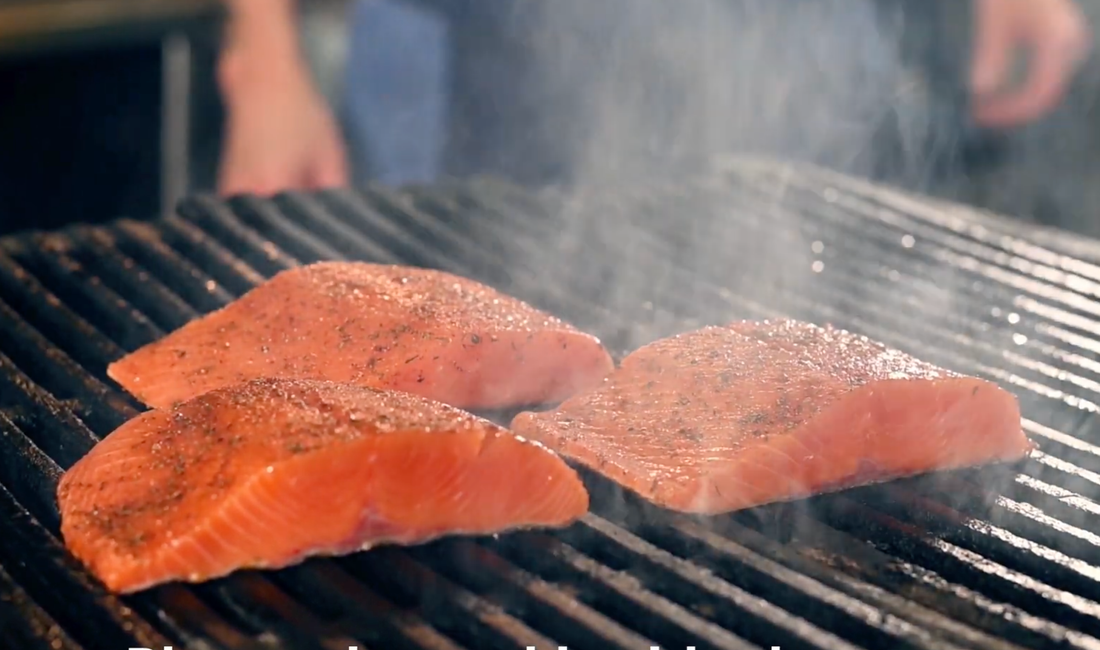
Wild sockeye salmon is one of the easiest, most rewarding fish you can put on a grill. The direct heat sears the outside into a smoky, savory crust while the inside stays moist and flaky. After 37 years setnet fishing in Bristol Bay, we have grilled thousands of sockeye fillets, and the method below is the one we come back to every summer. It works on a gas grill, over charcoal, or on a cedar plank.
What You'll Need
- Wild sockeye salmon fillets or portions, skin on (a good wild-caught sockeye comes already cut, boned, and scaled)
- Olive oil or avocado oil
- Coarse salt and fresh-ground pepper
- A clean, well-oiled grill grate
- A thin metal spatula and an instant-read thermometer
How to Grill Salmon, Step by Step
- Thaw and pat dry. If your salmon is frozen, thaw it in the fridge overnight, then pat both sides completely dry. A dry surface is what gives you a crisp crust instead of a steamed one.
- Heat the grill to medium-high. Aim for about 400 to 450°F. Let the grate get fully hot before the fish goes on.
- Oil the fish, not just the grate. Drizzle the fillet with oil on both sides, then season generously with salt and pepper. Oil on the fish plus a clean, oiled grate is the best defense against sticking.
- Lay it skin-side down, across the grates. Place the fillet skin-side down and close the lid. The skin protects the flesh and lifts cleanly once it has crisped.
- Grill the first side 4 to 6 minutes. Resist the urge to move it. When the skin releases easily from the grate, it is ready to turn.
- Flip once and finish. Turn the fillet and cook 2 to 4 more minutes, until the center is just opaque and flakes with gentle pressure.
- Pull it early and rest. Sockeye is lean and goes from perfect to dry in about a minute. Take it off a touch before it looks done and let it rest 3 to 5 minutes; it keeps cooking off the heat.
Grill Times and Temperature for Salmon
Sockeye is leaner than farmed Atlantic salmon, so it cooks faster. Grill over medium-high heat (400 to 450°F) and use total time as a guide, but trust an instant-read thermometer over the clock.
| Fillet thickness | First side | Second side | Pull at internal temp |
|---|---|---|---|
| 3/4 inch | 3 to 4 min | 2 to 3 min | 120–125°F |
| 1 inch | 4 to 6 min | 3 to 4 min | 125–130°F |
| 1 1/4 inch | 5 to 7 min | 4 to 5 min | 130°F |
The FDA lists 145°F as the fully cooked temperature for fish. Many cooks prefer wild sockeye pulled at 125 to 130°F for a moist, just-opaque center, then rested so it climbs a few more degrees. Cook to the temperature you are comfortable with.
Gas Grill, Charcoal, or Cedar Plank?
Gas grill
The most controllable option. Preheat to medium-high, keep the lid closed between flips, and you will get consistent results every time.
Charcoal grill
Adds the deepest smoky flavor. Build a two-zone fire with the coals banked to one side so you can sear over direct heat, then slide the fish to the cooler side if it is browning too fast.
Cedar plank
Soak the plank in water for at least an hour, set the salmon on top skin-side down, and grill with the lid closed. The plank steams and smokes the fish at once, so there is no flipping and no sticking. Plan on 12 to 15 minutes.
Foil packet
The gentlest method and the most forgiving for beginners. Seal the seasoned fillet in oiled foil with lemon and herbs and grill 10 to 12 minutes. You trade the seared crust for guaranteed moisture.
Skin On or Skin Off?
Grill skin-side down first, every time. The skin is a built-in heat shield that keeps the delicate flesh from overcooking and sticking, and crisped sockeye skin is genuinely delicious and full of omega-3s. Serve it on or peel it off at the table; once grilled, it lifts away easily. For more on crispy skin, see our guide to salmon skin.
How to Tell When Grilled Salmon Is Done
Three signals tell you it is ready: the flesh turns from translucent to opaque, it flakes when you press it with a fork, and an instant-read thermometer in the thickest part reads in your target range. Sockeye keeps a hint of deep red at the very center even when cooked. For a full breakdown, read how to tell when salmon is done.
Seasoning and Flavor Ideas
Premium sockeye that has been handled with care does not need much. Salt, pepper, and a squeeze of lemon let the fish speak for itself. If you want to build on that, these all pair well with salmon: dill, parsley, basil, tarragon, thyme, rosemary, cilantro, garlic, and fennel. A simple miso or soy-ginger glaze brushed on the last minute is hard to beat.
Common Grilling Mistakes to Avoid
- Grilling straight from frozen. Thaw first so the fish cooks evenly.
- Moving the fish too soon. Let it release on its own, or it will tear and stick.
- Cooking on a cold or dirty grate. Preheat fully and scrape it clean.
- Walking away at the end. The last two minutes are the difference between moist and dry. Watch it closely.
- Cutting into it right away. Rest it a few minutes so the juices settle.
Watch: How to Grill Salmon
Learn these fast, easy steps to a perfect piece of grilled salmon from Chef Kevin Benner, formerly of Aqua by El Gaucho.
Frequently Asked Questions
What is the best way to grill salmon?
Grill it skin-side down over medium-high heat (400 to 450°F) on a clean, oiled grate. Cook the first side 4 to 6 minutes until the skin releases, flip once, and finish 2 to 4 minutes until the center is just opaque. Pull it a touch early and let it rest.
Do you grill salmon skin-side up or down first?
Always skin-side down first. The skin shields the flesh from the direct heat, prevents sticking, and crisps up while the inside stays moist.
How do you keep salmon from sticking to the grill?
Start with a fully preheated, clean grate, oil both the grate and the fish, lay the fillet skin-side down, and do not move it until it releases on its own. A dry fish surface also helps it sear instead of stick.
How long do you grill salmon per inch?
Figure roughly 8 to 10 minutes total for a 1-inch fillet over medium-high heat, split about 4 to 6 minutes skin-side down and 3 to 4 minutes after the flip. Thinner sockeye cooks faster, so check early.
Can you grill salmon without flipping it?
Yes. On a cedar plank or in a foil packet you never flip it; cook skin-side down with the lid closed for 12 to 15 minutes. Skipping the flip trades a bit of seared crust for an easier, more forgiving cook.
What temperature do you grill salmon at?
Grill over medium-high heat, about 400 to 450°F. Pull wild sockeye when the center reaches 125 to 130°F for moist, just-opaque flesh, up to 145°F if you prefer it fully cooked through.